Flooring Material Durability by Room: Kitchens, Bathrooms, and High-Traffic Areas

The hardwood that looks stunning in the living room could be a disaster in the kitchen. This is because the same materials, when used in different rooms, can yield completely different outcomes depending on the environment. Most general flooring advice ignores that, which is why homeowners end up replacing floors more often than they should. Below, we share which flooring material works best in each room of the house, what to avoid, budget picks, and the specific sub-type that will give you long-lasting results.
The three stressors that change by room
Durability is not a single thing; it’s several things, and each one matters more in some rooms than in others. For the broader material picture across elements such as countertops, siding, and roofs, the home materials and durability guide covers the full comparison.
- Moisture exposure. Look out for moisture, bathrooms, basements, mudrooms, and kitchens, often see standing water, steam, or seasonal humidity. Most wood, laminate, and porous stone don’t work well in this wet environment. Opt for sealed tile, vinyl, and concrete instead.
- Foot traffic and impact. Hallways, entryways, and high-use kitchens get the most foot traffic per day. You’ll want to avoid soft materials such as cork, bamboo, and softwood (pine) as they can wear visibly. Choose hard materials like porcelain, stone, hardwood, and maple/hickory that can stand up to the wear and tear.
- Temperature swings. Basements and garages cycle between damp-cold and dry-warm frequently. This means that materials like solid wood, which expand and contract, are a bad idea. Go for flooring such as engineered wood, vinyl, and tile that can better handle it. Stone and concrete don’t care about this sort of abuse at all.
When choosing the right floor material, pick the one that matches the dominant stressor in that room the closest. Here’s an important durability chart that can help you narrow down your decision based on the room it’s in.
Flooring material durability by room, ranked
Color key: green is the best fit, pale green is good, amber is limited (works with some caveats), and red is to be avoided. The flooring rankings are based on real-world lifespan, failure rate, and maintenance burden.
BestGoodLimitedAvoid
| Material | Kitchen | Bathroom | Basement | Living Rm | Hallway | Mudroom | Bedroom | Garage |
|---|---|---|---|---|---|---|---|---|
| Solid hardwood | Limited | Avoid | Avoid | Best | Good | Avoid | Best | Avoid |
| Engineered hardwood | Good | Limited | Good | Best | Best | Limited | Best | Avoid |
| Luxury vinyl plank (LVP) | Best | Best | Best | Good | Best | Best | Good | Limited |
| Sheet vinyl / linoleum | Best | Best | Good | Limited | Good | Best | Limited | Limited |
| Laminate | Limited | Avoid | Limited | Good | Good | Limited | Good | Avoid |
| Porcelain tile | Best | Best | Best | Good | Best | Best | Limited | Best |
| Ceramic tile | Good | Best | Good | Limited | Good | Good | Limited | Limited |
| Natural stone | Good | Best | Best | Good | Best | Good | Limited | Limited |
| Carpet | Avoid | Avoid | Limited | Best | Limited | Avoid | Best | Avoid |
| Cork | Good | Limited | Limited | Best | Good | Limited | Best | Avoid |
| Bamboo | Good | Avoid | Avoid | Best | Good | Avoid | Best | Avoid |
| Concrete / epoxy | Good | Good | Best | Limited | Good | Best | Avoid | Best |
Kitchens

Kitchens are the most-spilled-on floor in the house. They constantly deal with heat, water, dropped pans, and scratches from chairs. Our types of kitchen flooring guide covers the broader options. Here’s the kitchen flooring durability ranking:
- Best: luxury vinyl plank, sheet vinyl, porcelain tile. All three handle water, scratches, and impact. LVP is the new default for a reason.
- Good: engineered hardwood in the kitchen (the modern engineered floors handle moisture better than solid), ceramic tile, sealed natural stone, cork. Cork flooring pros and cons covers why cork works in kitchens despite the softness.
- Limited: solid hardwood (hardwood floors in the kitchen pros and cons covers the realistic picture), laminate (water at seams is the killer). Both can work in low-use kitchens. Both fail in busy ones.
- Avoid: Bamboo if you cook regularly.
- The hardwood-vs-tile question: tile vs hardwood in the kitchen covers when each one wins.
- Budget kitchen floors: kitchen floor ideas on a budget cover the under-$8-per-square-foot picks that still hold up.
Bathrooms

Bathrooms deal with standing water and steam that hit it hard every day. Our guide to the best material for bathroom flooring covers the room-specific picks. Here’s the top choice to consider:
- Best: porcelain tile, ceramic tile, luxury vinyl plank, sheet vinyl. All four are waterproof or near-waterproof. Sealed natural stone joins the list for premium bathrooms.
- Good: concrete or epoxy in modern bathrooms. Slate bathroom floor tiles and travertine bathroom floor both work with proper sealing.
- Limited: engineered hardwood (only if it’s the waterproof variant). Engineered wood flooring in the bathroom covers the conditions where it works. Waterproof wood flooring for bathrooms covers the newer products. Cork survives if sealed properly.
- Avoid: solid hardwood (will warp), laminate (laminate wood flooring in bathroom shows what happens), bamboo, carpet.
- Vinyl specifics: vinyl flooring in bathroom pros and cons covers the durability and seam-failure questions.
Basements

Basements deal with moisture from below and the walls, temperature swings, and an often-damp concrete subfloor. Most flooring fails after one or more of those conditions. Our guide to basement flooring ideas covers the broader options to use.
- Best: polished concrete or epoxy, porcelain tile, luxury vinyl plank, sealed natural stone. All four handle moisture and temperature.
- Good: engineered hardwood (only with a moisture barrier and a dry basement), sheet vinyl, ceramic tile.
- Limited: carpet (only with a moisture barrier and good ventilation). Cork and laminate work if humidity is controlled, but fail when it isn’t.
- Avoid: solid hardwood and bamboo. Both warp from below-grade moisture, even when the basement looks dry.
- Painted concrete option: painting a basement floor pros and cons is the cheapest option, but won’t fix moisture problems. Use as a budget refresh, not a long-term fix.
Living rooms

Living spaces generally have moderate foot traffic, little to no water exposure, and a focus on comfort. These living room flooring ideas cover the most popular design options. Here’s the durability ranking:
- Best: solid hardwood, engineered hardwood, carpet (in the right home), bamboo, cork. Living rooms with hardwood floors covers the wood-first take.
- Good: luxury vinyl plank, laminate, porcelain tile (works in warm climates).
- Limited: ceramic tile, natural stone (both feel cold), sheet vinyl (reads cheap). Concrete and epoxy work in modern industrial homes only.
- Avoid: nothing is genuinely off-limits for a living room. Every material works if it matches the design.
- Resale angle: what color hardwood floor is best for resale matters if you’re going to sell within five years. Mid-tone oak beats most trendy choices every time.
Hallways and entryways (the high-traffic zone)
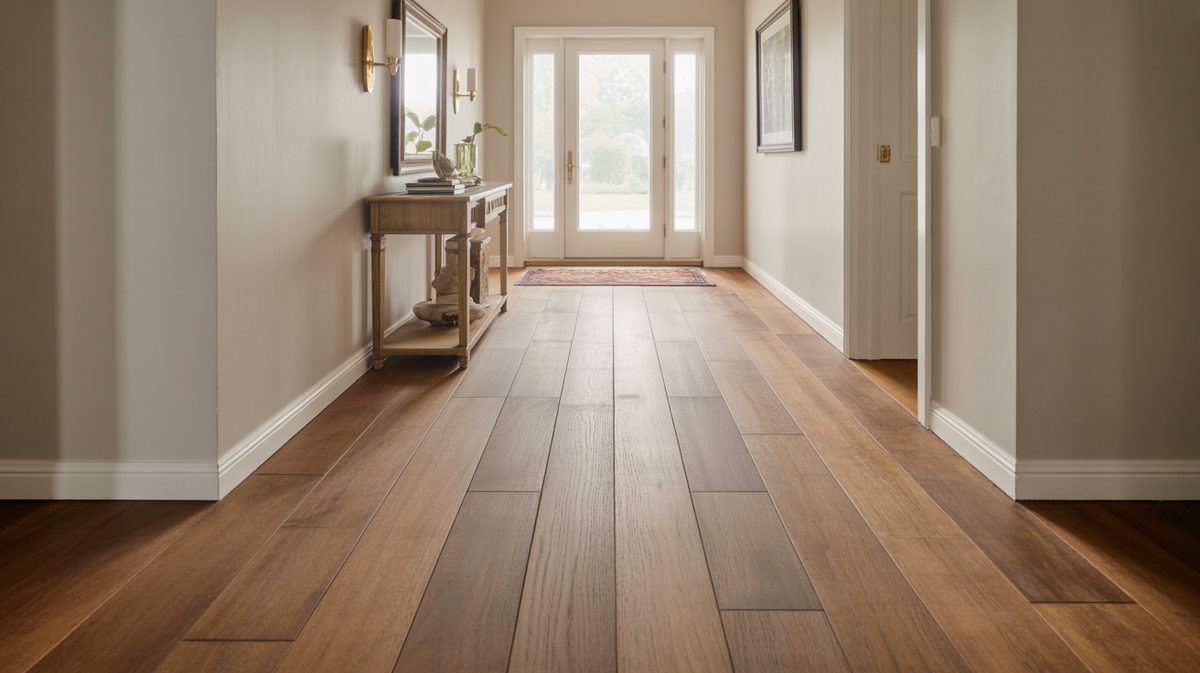
Hallways get the most steps per square foot of any space in the house. Our gallery of hallway flooring ideas covers the design choices, but the durability picture matters more.
- Best: porcelain tile, luxury vinyl plank, engineered hardwood, natural stone. All four handle thousands of steps without showing wear.
- Good: solid hardwood (maple hardwood flooring and hickory flooring pros and cons both rank high on Janka hardness, which is what matters in hallways), ceramic tile, sheet vinyl, laminate, cork, bamboo.
- Limited: Wears in visible traffic paths within 3 to 5 years, even in good carpet.
- Avoid: nothing structurally. Just match the rest of the house.
- The Janka hardness reality: softwood flooring (pine, fir) wear faster in hallways than people expect. Hard species (maple, oak, hickory) hold up. Distressed hardwood flooring hides wear better than smooth finishes.
Mudrooms and laundry rooms

Mudrooms constantly deal with water, dirt, leaks, dropped detergent, and pet messes. Our gallery of mudroom flooring ideas and laundry room flooring cover the room-specific picks.
- Best: porcelain tile, luxury vinyl plank, sheet vinyl, concrete/epoxy. All four are waterproof and easy to clean.
- Good: ceramic tile, sealed natural stone, laundry room floor tile ideas covers the design crossover.
- Limited: engineered hardwood (if the room stays dry), cork, laminate (water at seams will kill it if there’s a washer leak).
- Avoid: solid hardwood, bamboo, carpet.
Sunrooms

Sunrooms with a lot of windows have constant UV exposure, temperature swings, and occasional moisture for outside. Sunroom flooring ideas covers the picks.
- Best: porcelain tile (UV-stable), natural stone, luxury vinyl plank with UV-rated wear layer.
- Limited: hardwood and engineered hardwood will fade in direct sun. Light woods show it less. Teak wood flooring is the exception (UV-resistant by nature).
- Avoid: laminate (UV breaks down the photographic layer), carpet (fades and traps moisture).
Garages and utility spaces

Garage flooring deals with a lot of abuse, such as vehicle weight, oil and chemical spills, and freeze-thaw cycles. Most flooring is wrong here; that’s why concrete is the universal standard. Garage floor ideas covers the actual options to choose.
- Best: epoxy garage floors, polished concrete garage floor, and porcelain garage floor tiles. All three handle vehicle weight and chemical exposure.
- Good: polyaspartic coatings for garage floors are the modern upgrade to epoxy. Faster cure, better UV resistance, higher cost.
- Avoid: everything else. Hardwood, laminate, vinyl, carpet, cork, bamboo, and standard tile all fail under vehicle loads or oil exposure.
- Pre-coating prep: garage floor sealer and pros and cons of sealing garage floors cover the prep that determines whether a coating sticks.
Bedrooms and closets

Bedrooms don’t get a lot of foot traffic, have no water exposure, and their comfort and warmth matter the most. Bedrooms with wood floors covers the wood-first approach. Closet flooring ideas covers the smaller-room version.
- Best: carpet, cork, solid hardwood, engineered hardwood, bamboo. Comfort underfoot is the deciding factor.
- Good: luxury vinyl plank, laminate.
- Limited: porcelain tile, ceramic tile, natural stone, sheet vinyl. All read cold and harsh in bedrooms unless the climate is hot year-round.
- Avoid: concrete and epoxy in bedrooms. Too cold.
Side-by-side material comparisons
When the choice is between two specific materials, these comparisons cover the durability question, so you can easily compare.
- Hardwood decisions: carpet vs hardwood, laminate vs hardwood, engineered hardwood vs laminate.
- Vinyl and laminate matchups: laminate vs vinyl flooring and laminate flooring vs linoleum cover the engineered-floor decisions.
- Alternative materials: cork vs bamboo flooring covers the renewable picks. Wood flooring alternatives covers the broader category.
- Tile decisions: porcelain vs ceramic tile is the most-asked question in the tile category.
- Concrete options: epoxy floor vs polished concrete covers the basement, garage, and modern-industrial picks.
What “high-traffic” actually means for flooring
High-traffic is one of the most-used flooring terms and one of the least-defined. Here’s an easy-to-understand and practical breakdown:
- Light traffic (under 50 steps/day per square foot): bedrooms, closets, formal living rooms. Material choice barely matters for durability.
- Moderate traffic (50 to 200 steps/day per square foot): main living rooms, family rooms, dining rooms. Most flooring lasts 15+ years here.
- High traffic (200 to 500 steps/day per square foot): kitchens, hallways, entryways. This is where soft materials wear visibly within 5 years.
- Extreme traffic (500+ steps/day per square foot): mudrooms, commercial entries, high-use family kitchens with kids and pets. Porcelain tile, LVP, and concrete are the only materials that genuinely don’t show wear.
- The hardness benchmark: for high-traffic hardwood, Janka hardness ratings above 1,300 (hickory, maple, oak) handle it. Below 1,000 (pine, cherry, walnut) shows wear fast.
Installation mistakes that kill flooring durability
A great material installed the wrong way will ruin its durability. Here are some installation tips to consider.
- Skipping the moisture barrier on concrete subfloors: the #1 cause of premature flooring failure in basements and first floors over slabs.
- Vinyl plank install errors: mistakes when installing vinyl plank flooring covers the expansion gap, underlayment, and locking-system errors that cause seam failure.
- Laminate install errors: mistakes when laying laminate flooring covers the moisture and expansion mistakes.
- Laying over the wrong subfloor: pros and cons of laying vinyl over tile covers the floating-floor case, and what type of flooring can you put over ceramic tile covers the reverse decision.
- No acclimatization for hardwood: solid and engineered wood need 3 to 7 days in the room before install. Skipping this is why gaps and buckling appear in year one.
Care that adds years to any floor
Most flooring lifespan numbers assume you give it frequent, routine care. Here is the individual material maintenance that actually extends its life:
- Hardwood care: fix scratched wood floors, remove scuff marks from wood floors, stop squeaky wood floors, and fix water-damaged wood floors cover the common repairs.
- Furniture protection: how to keep furniture from sliding on wood floors covers pad and stopper options.
- Tile and stone care: clean tile floors with vinegar and baking soda, how to care for granite tile floors, and pros and cons of sealing flagstone cover the maintenance routines for each.
- Linoleum and vinyl care: how to clean linoleum floors covers the dos and don’ts.
- Carpet on stairs: best way to clean carpet on stairs covers the highest-wear carpet location.
How to pick the right floor for the right room
When you’re stuck between options for a specific room, these questions can help you address many of the problems you face.
- What’s the dominant stressor? Moisture, traffic, or temperature. Pick the material that handles that one. The other two matter less.
- How long do you plan to stay? Under 5 years: prioritize the material that the next buyer expects. Over 10 years: pick what you actually want to live with the most.
- How much maintenance will you actually do? Annual sealing of stone or hardwood isn’t optional. If you won’t do it, pick LVP or porcelain tile.
- Cost planning: the flooring cost calculator and the carpet cost calculator break down material-by-material installed pricing.
- Cost-per-year math: wood flooring cost divided by expected lifespan is the only fair comparison. Cheap floors replaced twice cost more than premium floors replaced once.
The bottom line
The same flooring material can be the right answer in one room and the wrong answer in the one next to it. The rule of thumb is to match the material to the room’s dominant stressor. Install it correctly and give it regular maintenance so that the floor outlasts everything else in the renovation.
To showcase highly specific designs, some images on this website use advanced AI-generation software to illustrate ideas and room inspiration. See our editorial policy to learn more.