Should You Consider Distressed Hardwood Flooring?

Distressed hardwood flooring provides interior designs with a weathered, reclaimed wood look that adds character and beauty to a home. Creating a unique space has never been easier with all the options available. One great option is distressed hardwood flooring. This product typically creates a rustic design or country-inspired feel in a home. The look has shifted since then. The heavy country scrape has mostly given way to lighter distressing on wide plank white oak, often wire brushed instead of gouged. Same idea, softer hand. That’s why the same product can read modern in a stripped back room and rustic in a farmhouse one, and it’s a big part of why distressed floors are still getting specified in 2026.

Distressed hardwood brings out texture, grain variation, color and will add charm to any space. Different variations of patterns and sizes of boards can also create an immensely unique look. Wide planks are available which can make a space appear larger than it is. Adding a herringbone pattern can take the feel from countryside to contemporary in a heartbeat. Even something as simple as adding a border can create a space unlike anything you have ever seen.
What Makes a Floor Distressed
Knowing the difference between distressed wood and hand scraped wood floors will be a big difference when designing your space. Hand Scraped wood is made by hand by pulling a draw knife, which contains a single blade with handles one both end for gripping, repeatedly towards the woodsman shaving off layers of the wood. This is how all floors were made to even out any irregularities. Now the technique is used to add irregularity.
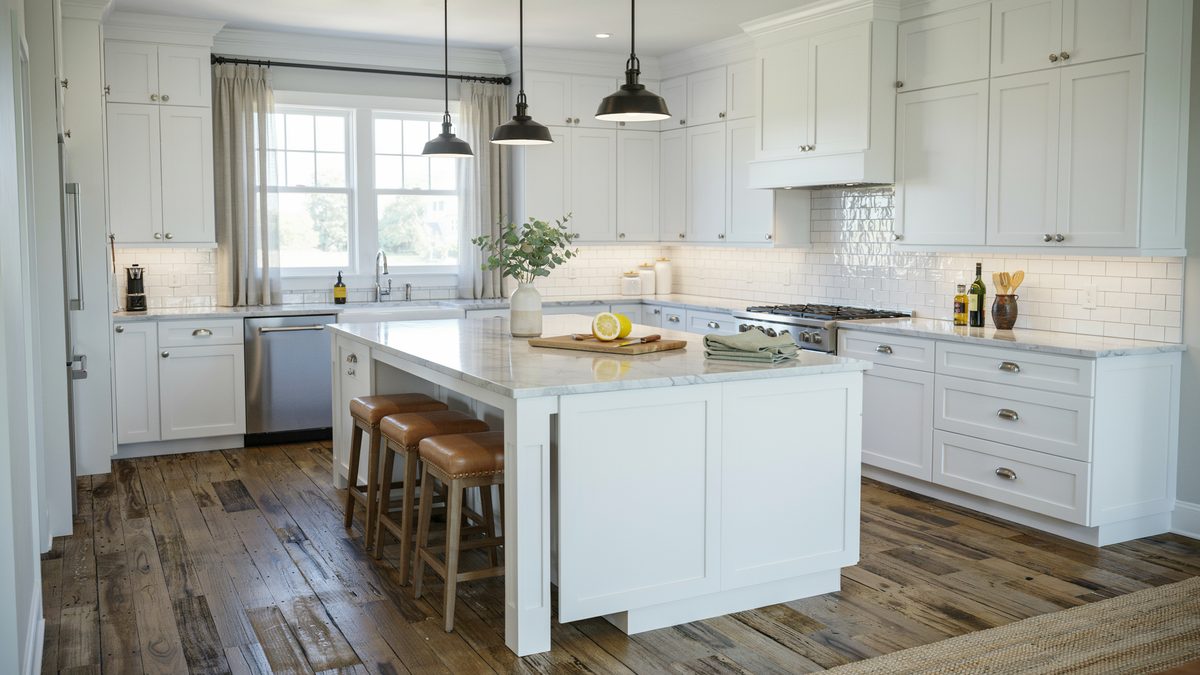
Distressed wood will be done similarly, but by a machine. The machines will skim the surface of the wood and create rows with depressions in the wood. When the wood is sanded each sanding wheel will be a different size to make the gouges and scrapes seem random. This creates different sorts of marking that will create a more wire brushed look.
| Method | How it’s made | What you see | Best for |
|---|---|---|---|
| Hand scraped | A draw knife pulled down each board by hand, shaving off layers | Irregular and genuinely one off. No two boards match | Old world character, if the budget allows |
| Distressed | Machine milled, with sanding wheels of different sizes so the gouges land randomly | Consistent rustic texture across the whole run | The worn look without the hand scraped price |
| Wire brushed | Wire brushes scrub out the soft early wood and leave the hard grain standing proud | Fine linear texture rather than dents and gouges | Hiding scratches with a cleaner, more current feel |
All three come on solid and engineered construction, so the texture isn’t tied to the build.
What Distressed Hardwood Costs
This method can be done on both solid and engineered hardwood flooring similar to hand scraped wood. Due to the extra machine work needed to create the worn appearance distressed wood flooring is higher priced than the average wood flooring. Prices for distressed hardwood flooring will vary based on the type of wood selected and any extra finishes, installation patterns, etc that you may want.
| What you’re paying for | Cost per square foot |
|---|---|
| Solid hardwood, installed | $11 to $25 |
| Engineered hardwood, installed | $9 to $20 |
| Materials only | $6 to $15 |
| Installation labor | $3 to $10 |
By species, materials only: maple runs $4 to $12, red oak $5 to $10, white oak $6 to $12, and hickory $6 to $14. Distressing is a milling upcharge layered on top of whichever species you pick.
One thing that softens the blow. The rustic grades used for a distressed look, character grade and cabin grade, sit at the cheap end of the grade scale because knots and color swings are the whole point. So you’re often paying a milling premium on a board that started out less expensive. It doesn’t cancel out, but it helps.
Figures from HomeGuide’s 2026 hardwood flooring cost data.
Picking a Species
Species does more work than finish when it comes to how the floor holds up. The Janka scale measures how much force it takes to press a steel ball halfway into a board, which is a decent proxy for how easily it dents.
| Species | Janka (lbf) | What that means for you |
|---|---|---|
| Hickory | 1,820 | Hardest of the common domestics. Mills narrow, so wide planks are tough to find |
| Sweet birch | 1,470 | Pale and even. Takes a light distressing well |
| Hard maple | 1,450 | Tight grain, so the texture reads more than the grain does |
| White oak | 1,360 | The default for a reason. Wide planks are everywhere and it takes stain evenly |
| Red oak | 1,290 | Cheaper than white oak with a stronger pink undertone |
| Yellow birch | 1,260 | Softest here. Fine in a bedroom, less so in a hallway |
Here’s the part nobody mentions though. On a distressed floor, Janka matters less than it would on a smooth one. The surface is already beat up on purpose. A new dent just joins the crowd. If you’re choosing between hickory and white oak, plank width and grain will probably drive the decision more than the hardness number will.
If red oak is on your shortlist, we go deeper on it in our guide to red oak flooring. Hardness figures come from the Janka hardness test data.
Wide Plank Distressed Flooring
A popular variation is wide plank distressed hardwood flooring which offers wider boards. Typically the width for wide planks starts at 5″ and can go all the way up to an incredible 20″. However the more popular size is 7 1/2″. Interior designs with wide plank distressed wood tend to have a bit more distinction and character than a smaller strip plank. The type of wood species you select will play an impact in the available width of boards. Hardwoods such as oak and hickory often run narrower and are not as available in wide plank form.
In addition to width, choosing a longer plank such as one that is 7′ in length will allow you to reduce the number of seams in your floor. Overall, using wide plank flooring has benefits such as creating the illusion of a larger space, reducing noticeable seams, and showcasing the characteristics of the wood such as whirls, streaks, and knots.
So when people say wide plank installation is trickier, this is what they mean. It’s not vague caution. It’s a different set of requirements.
Getting It Installed
Before anything gets nailed down, the room and the wood need to agree with each other. The National Wood Flooring Association, the industry body whose standards most manufacturers tie their warranties to, is specific about the numbers.
Acclimation is about matching moisture, not counting days. Leaving boxes in the room for a week and calling it done is the most common version of this mistake. Skip the meter and you get cupping, crowning or gaps a few months after everyone’s gone home, which is a miserable conversation to have with an installer who’s already been paid.
Installation will be a little trickier than the average hardwood flooring installation. This will mean hiring a professional may be the best way to go to avoid damaging the already expensive decorative distressed boards. This will potentially save you money, and in the long run save a lot of stress.
Living With a Distressed Floor
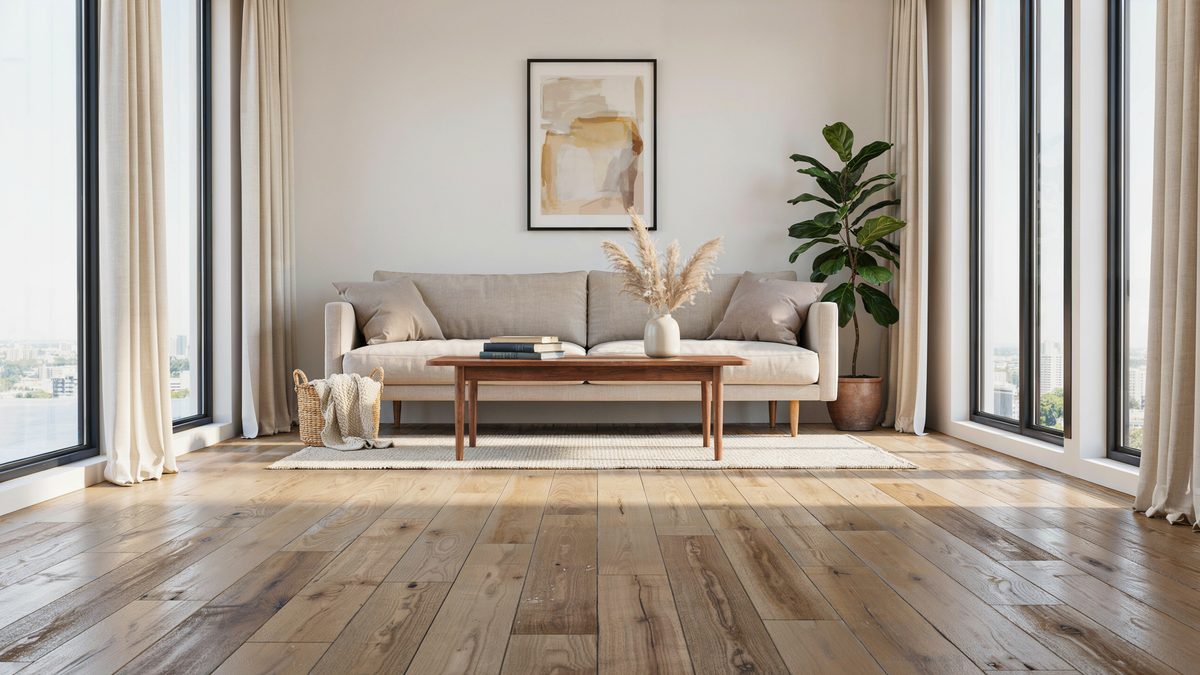
Distressed hardwood is an easily maintainable product. This is because distressed hardwood flooring is not an extremely uniform product (on purpose), making any additional scratches and scrapes easily hidden on the surface. These will even add more character and life to the distressed and worn look to your flooring over time.
Due to the matte finish usually used on the distressed hardwood flooring dirt and dust are not easily seen. Distressed woods can still be finished with urethane, which is a clear coating that will allow the wood to be more durable and need less maintenance. Distressed hardwood flooring will be a good option for heavily used rooms as its rough appearance won’t show normal wear and tear as easily.
Common Questions
Can you refinish a distressed hardwood floor?
Yes, but think about what you’re sanding off. Take it flat and you’ve removed the texture you paid for. Most pros screen and recoat instead, which refreshes the finish without touching the character. If it’s engineered, you’re limited by the wear layer anyway, so you get fewer shots at it.
Does distressed flooring really hide scratches?
It does, and this is the strongest practical argument for it. The surface is deliberately uneven and usually matte, so a new scuff blends into what’s already there instead of catching the light. Dogs, kids, dining chairs. The floor absorbs all of it.
Is distressed hardwood still in style?
The heavy country scrape has cooled off. Lightly distressed and wire brushed white oak in a wide plank hasn’t, and it’s still one of the most specified floors going. If you’re worried about dating your house, go lighter on the texture rather than skipping it.
How much more does distressed cost than smooth?
The distressing itself is a milling upcharge on top of the species price, since the extra machine work has to be paid for somewhere. It’s partly offset by the rustic grades typically used for the look, which cost less to begin with. Ask your supplier to quote the same species smooth and distressed side by side, because the gap varies a lot by mill.
For more ideas visit this page to see our gallery of distressed wood kitchen cabinets.
To showcase highly specific designs, some images on this website use advanced AI-generation software to illustrate ideas and room inspiration. See our editorial policy to learn more.