Best Sofas & Seating for Different Living Room Styles: Modern, Rustic, Coastal & Farmhouse

If you’ve ever picked out a sofa, purchased it, and it showed up at your home looking totally wrong for your room, you’re not alone. This happens a lot because most people pick sofas by color and material and forget all about their style. Color and material aren’t a style, and a white sofa can be modern, coastal, farmhouse, or traditional depending on several factors. The things that decide the style are the shape of the frame, including the arm style, leg height, cushion depth, and back profile. Get the shape right, and the style is obvious, but if you get it wrong, there’s no color or upholstery choice that will save it. Below, we break down the right sofa profile, also known as the silhouette, for each major living room style, plus the seating choices (accent chair, sectional, loveseat, ottoman) that belong in each room.
Why the sofa profile matters more than the fabric
A sofa is the largest single piece of furniture in most living rooms, so its shape sets the visual baseline for the entire space. Fabric is second, and color comes in third.
- Arm style is the loudest signal: rolled, Chesterfield-style arms read traditional. Track arms (straight, low) read modern. English roll arms read farmhouse. Mission-style flat arms read craftsman.
- Leg height changes the whole feel: exposed slim legs read modern or mid-century. Skirts to the floor read traditional or farmhouse. No visible legs and a blocky base read industrial or low-slung modern.
- Back profile reads as decade: tight backs read mid-century. Tufted backs read traditional. Loose pillow backs read “coastal” or “farmhouse”. Channel-tufted backs read art deco or modern glam.
If you want the full vocabulary, our sofa arm styles guide covers every arm shape in easy to understand language.
Which sofa shape fits which style, at a glance
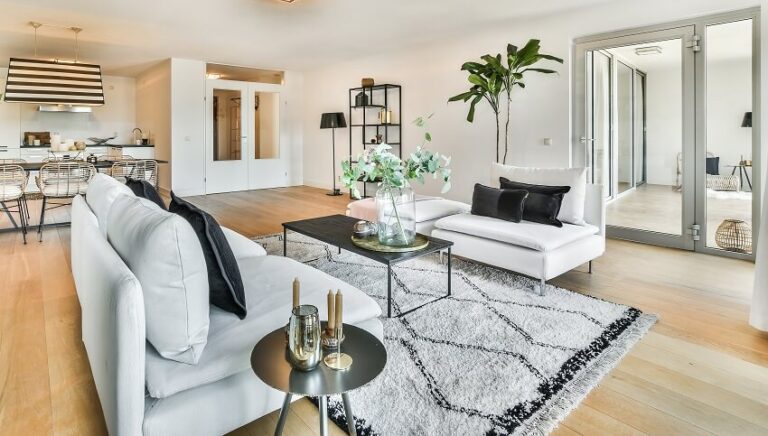
- Modern: track arms, low profile, exposed slim legs.
- Mid-century: splayed wood legs, slim arms, tight back.
- Rustic: chunky frame, weathered leather or canvas slipcover.
- Coastal: slipcovered in white or pale linen, English or roll arm.
- Farmhouse: deep cushion, slipcovered, English roll arm.
- Industrial: distressed leather, tufted, dark, low base.
- Traditional: Chesterfield or camelback, tufted, rolled arms.
- Bohemian: low and plush, layered with throws and floor cushions.
- Craftsman: Mission-style straight lines, exposed oak frame.
Modern living rooms
A modern living room is defined by clean lines, restrained color, and an absence of clutter. Any modern sofa you choose should match that discipline.
- Best sofa: a low-profile track-arm sofa with tight cushions and exposed slim legs. Think B&B Italia or Camerich silhouette.
- Material: performance fabric in solid charcoal, bone, or oatmeal. Leather works too if it’s smooth (not distressed).
- Sectional option: a long, low chaise sectional with a tight back. How to choose a sectional covers the decision.
- Accent seating: a single sculptural chair (Eames, Wishbone, or a contemporary cantilever). Don’t add a second one. Types of accent chairs have a broader vocabulary.
- Avoid: tufting, skirts, rolled arms, or anything labeled “Chesterfield.” Those are different rooms.
Style cousin: contemporary living rooms follow the same sofa rules, with slightly more curves and color, and incorporate the latest design trends.
Mid-century modern living rooms
Mid-century is its own beast, as it looks modern, but the silhouette rules are different. They often have clean lines like a modern sofa with lower profiles, vibrant colors, and wood legs that taper.
- Best sofa: splayed wood legs, slim track arms, tight-back cushions. The 60-inch sofa proportion (lower and narrower than a 90-inch contemporary sofa) is the giveaway.
- Material: tweed, boucle, or velvet in mustard, teal, olive, or burnt orange. Tan leather also works.
- Accent seating: a Womb chair, Egg chair, or any sculpted-shell lounge. One per room.
- Avoid: overstuffed cushions. The whole look is about clean wood frames showing through.
Rustic living rooms
A rustic living room is about weight, texture, and warmth. It’s got that hand-crafted look that makes the sofa look substantial.
- Best sofa: chunky frame with a rolled or English roll arm. Either weathered full-grain leather or a heavy canvas slipcover. Avoid anything that looks delicate.
- Material: distressed brown leather is the classic move. Heavyweight linen or canvas in oatmeal or sand works for slipcovered versions.
- Sectional option: an oversized leather sectional with deep cushions. The bigger and more sit-into-it, the better.
- Accent seating: a wingback chair in leather, or a wood-frame armchair with cowhide or wool upholstery.
- Avoid: anything black, anything tufted, anything with chrome or steel legs. Rustic is wood, leather, and woven texture only.
For the rustic-with-modern-touches variant, rustic themed living room ideas show the style with a contemporary spin.
Coastal living rooms
A coastal living room depends on light and texture. A sofa in a coastal style needs to feel relaxed and washable.
- Best sofa: a slipcovered sofa with an English roll arm or a relaxed track arm. White, pale linen, or sand canvas. The slipcover is non-negotiable because it has to wash.
- Material: linen, cotton canvas, or performance fabric in coastal colors. Solid is better than pattern (save the pattern for pillows).
- Sectional option: a U-shaped or L-shaped slipcovered sectional. Coastal rooms tend to be larger, and the sectional reinforces the casual-gather feel.
- Accent seating: a rattan or wicker armchair. A second slipcovered armchair in the same fabric as the sofa. What is a settee covers a smaller bench-style option that suits coastal entry spots.
- Avoid: dark leather, anything heavy or formal, anything tufted. Coastal is light, casual, washable.
Budget-friendly version: beach-themed living room on a budget shows how to get the look without needing a designer price tag.
Modern farmhouse living rooms
A modern farmhouse living room is the most-copied living room style of the past decade, and the sofa is what people get wrong the most.
- Best sofa: a deep, slipcovered sofa with an English roll arm. Cream, oatmeal, or soft white. The sofa should look like you could nap on it without thinking about it.
- Material: slubby linen or cotton with a slipcover. Leather doesn’t belong here unless it’s a small accent piece.
- Sectional option: a slipcovered L-shaped sectional with a built-in chaise. Pottery Barn’s “Comfort” shape is the template.
- Accent seating: a wingback chair in neutral linen, or a black metal-framed dining chair pulled into the seating area.
- Avoid: anything tight-back, anything mid-century, anything that says “low profile.” Farmhouse is overstuffed and relaxed.
Décor follow-through: modern farmhouse living room decor ideas covers what goes around the sofa.
Industrial living rooms
Industrial style mixes metal, leather, and exposed structural elements. The farmhouse-industrial hybrid is currently the most-searched variant lately.
- Best sofa: a distressed leather Chesterfield or a low-profile leather sofa with a tufted back. Dark brown, cognac, or black.
- Material: full-grain leather, preferably aged. Distressed beats new. The leather vs fabric sofa comparison covers the durability case.
- Sectional option: rare in true industrial. If you want one, choose dark leather with metal-frame legs and no skirt.
- Accent seating: a leather club chair or a metal-frame factory chair. Steel and wood, never plush.
- Avoid: light fabrics, slipcovers, anything described as “soft” or “cozy.”
Traditional and formal living rooms
A formal living room rewards classic shapes, and the sofa is meant to be a statement piece within the space.
- Best sofa: a Chesterfield (deep button-tufting, rolled arms equal to back height) or a camelback sofa (curved back, exposed wood legs).
- Material: velvet in jewel tones (emerald, sapphire, burgundy) or leather in oxblood or cognac. Damask or jacquard in restrained patterns also works.
- Pairing: two facing sofas with a coffee table between, or a sofa plus two matching wingbacks. Symmetry is part of the look.
- Accent seating: a tufted Bergère chair, a wingback, or a Louis XVI-style accent chair.
- Avoid: anything that looks casual, anything overstuffed, anything sectional.
For the upscale variant, elegant living rooms shows the modern take on formal.
Bohemian and eclectic living rooms
Bohemian style is the most forgiving on this list, but can be hard to pull off without it coming across as a shabby thrift store. To get the best results, you’ll need to commit to the layered look. Bohemian style furniture covers the broader style tips needed to get the look right.
- Best sofa: a low, plush, soft-line sofa with deep cushions. Color is fair game (jewel tones, dusty rose, ochre, terracotta).
- Material: velvet, embroidered fabrics, or natural linen. Texture-rich is the goal.
- Layering is non-optional: poufs, floor cushions, kilim throws, a stack of pillows in mixed patterns. The sofa is a starting point, not the whole seating plan.
- Accent seating: a rattan papasan, a Moroccan pouf, or a peacock chair. Mismatched on purpose.
- Avoid: matched sets. Anything that looks delivered-as-a-collection. Bohemian fails the moment it looks coordinated.
Craftsman living rooms
A craftsman living room is built around wood and handcrafted elements and architectural details. The sofa choice has to defer to it and often will feature many of the same wood aspects.
- Best sofa: a Mission-style sofa with an exposed oak frame, straight lines, and leather or canvas cushions. Stickley is the patron saint.
- Material: brown leather or heavy canvas. Solid, warm, earthy.
- Accent seating: a Morris chair (reclining wood-frame chair with leather cushions) is the iconic craftsman accent piece.
- Avoid: anything upholstered to the floor, anything with chrome or steel, anything that hides the wood structure.
Seating beyond the sofa
Most living rooms need more than one piece to work. The right combination of additional seating options matters as much as the primary sofa choice.
- Sectionals: the types of sectional sofas buying guide breaks down which shape fits which room. Coastal, farmhouse, modern, and rustic all work with sectionals. Traditional and formal generally don’t.
- Loveseats: a loveseat is useful in small rooms or as a perpendicular partner to the main sofa. Reasons to choose a loveseat covers when the swap makes sense.
- Settees: a settee is a small bench-style seat with arms. Works well in traditional, coastal, and entry-adjacent living rooms. Settee design styles covers the silhouettes.
- Recliners: types of recliners shows the silhouettes that work in modern and rustic rooms. Skip them in formal or coastal.
- Ottomans: the ottoman vs coffee table decision swings on style. Farmhouse, coastal, and bohemian rooms love an upholstered ottoman. Modern and traditional usually want a hard-surface table.
Material rules by style
Fabric and material choices reinforce or undermine the sofa’s silhouette. The general matches are:
- Leather: rustic, industrial, traditional, craftsman. Leather couch pros and cons has the durability picture.
- Linen and cotton slipcover: coastal, farmhouse. Sofa fabric types covers weave and durability.
- Velvet: traditional, mid-century, bohemian, art deco. Velvet sofa pros and cons covers the wear question.
- Performance fabric: modern and suitable for any family room with kids or pets. Color choice should still match style rules.
- Polyester or microfiber: polyester couch pros and cons covers the trade-offs. Acceptable in modern and casual rooms, harder to make work in farmhouse or traditional.
The sofa-by-style mistakes that wreck the look
The common mistakes when buying a sofa guide covers the broader list. Here are some of our designer inspired, style-specific ones:
- Picking by color first: a gray sofa can be modern, farmhouse, or traditional. The color doesn’t tell you which style. The silhouette/profile does.
- Mixing tufted with modern: tufting is traditional or industrial. A tufted sofa in a modern room doesn’t fit the overall style.
- Slipcovers in formal rooms: slipcovered sofas look more casual, no matter the fabric. It’s the wrong room if you’re going for a more modern look.
- Sectionals in formal living rooms: formal layouts depend on symmetry. Sectionals break it up and are inherently more relaxed.
- Wrong leg height for the style: farmhouse with bare metal legs looks modern. Mid-century with a skirt reads farmhouse, and the tapered legs are the giveaway.
- Mixing two strong styles: a Chesterfield in a coastal room. A track-arm modern sofa in a craftsman room. Both of these fail, and style consistency matters more than any single piece.
The bottom line
Sofa style isn’t just about the color, fabric, or price tag. It’s about the silhouette, which breaks down to the arm shape, leg height, cushion depth, and the back profile. Get this right, and you’re like 80 percent there. Once the silhouette matches the style, you can pick whatever fabric and color you want. For inspiration, try looking at the sofas in rooms you wish yours looked like. Don’t pay attention to the upholstery, instead look at the frame to find what pleases you the most.
To showcase highly specific designs, some images on this website use advanced AI-generation software to illustrate ideas and room inspiration. See our editorial policy to learn more.