29 Timeless Granite Colors for Countertops That Add Elegance

The beauty of granite’s colors, durability, and versatility make this natural stone one of the most sought-after materials used in interior design. Many different types of materials are used for kitchen countertops, such as quartz, marble, and copper. However, granite remains the most popular for new home construction and kitchen remodel projects in both residential and commercial areas. Granite countertops are beautiful, come in various hues and patterns, are durable, and are easy to clean and maintain.
Granite countertops are available in a wide range of colors, from whites to darker hues, which can complement any style of kitchen cabinet. Other considerations are how thick you want your granite slab to be, its edging, polish detail, and whether you opt for a marble or quartz pattern. In 2026 the material alone runs roughly $40 to $60 per square foot, and installers charge $35 to $85 per hour or around $35 per square foot installed, according to HomeAdvisor’s 2026 cost data.
The national average granite countertop project runs about $3,250, with most kitchens landing between $2,000 and $4,000. A single vanity or a bar top can come in near $500, and a large kitchen in a premium stone can reach $9,000. The purchase of granite counters often includes fabrication and installation. Many sellers of natural stone, including marble and quartz, refer to different granite countertop levels.
The line items nobody quotes you up front are the ones that sting. Budget about $100 for each sink cut-out and $200 for a cooktop cut-out. Hauling away your old counters adds $100 to $200, or $4 to $7 per square foot, unless it’s already written into the quote.
They can range from levels 1 to levels 3 and basically indicate how readily available or abundant a specific type of granite, such as white or copper-toned, is to find. Granite countertop levels I and II are more affordable than Level III. Level 3 granite countertops are rarer and thus more expensive to purchase.
Those who are price-conscious granite buyers, such as those who own condos and apartments, often save money by purchasing prefabricated granite. This type is often mass-produced in countries like China or India. Prefabricated stone, including marble and quartz options, comes in standard widths and has one type of edge choice. Custom slab granite, on the other hand, provides fewer seams, offers many different widths, and can be shaped to your exact specifications.
What Each Granite Color Costs
Color drives price and two slabs of identical thickness from the same fabricator can differ by $50 a square foot purely because of what’s in the stone. Blues are expensive because blue minerals are rare. Common whites and browns are cheap because there’s a lot of them. Here’s where the granites named on this page actually land, using material-only prices from HomeAdvisor’s 2026 data.
| Granite Color | Material Per Sq. Ft. | Where It Lands |
|---|---|---|
| Ubatuba | $30 to $60 | Budget, wide availability |
| Alaska White | $35 | Budget |
| Silver Cloud | $35 to $40 | Budget |
| Santa Cecilia (St. Cecilia) | $40 | Budget beige |
| New Venetian Gold | $45 | Mid-range |
| New Caledonia | $45 | Mid-range |
| Absolute Black | $45 to $60 | Mid-range |
| Bianco Antico | $45 to $75 | Mid to upper |
| Giallo Ornamental | $50 to $55 | Mid-range |
| Black Galaxy | $50 to $70 | Mid to upper |
| Solarius | $60 | Upper mid |
| Costa Esmeralda | $70 | Premium green |
| Blue Louise | $70 to $100 | Premium blue |
| Crema Bordeaux | $80 | Premium |
Material only. Add fabrication, installation and cut-outs on top. Prices vary by region and by what your local yards happen to be holding. Source: HomeAdvisor, 2026
One thing worth knowing before you fall for a blue: exotic colors aren’t just pricier per square foot, they’re also harder to match if you ever need a second slab. If your kitchen needs more stone than one slab covers, ask whether both pieces come from the same block before you commit.
Pictures of Granite Colors
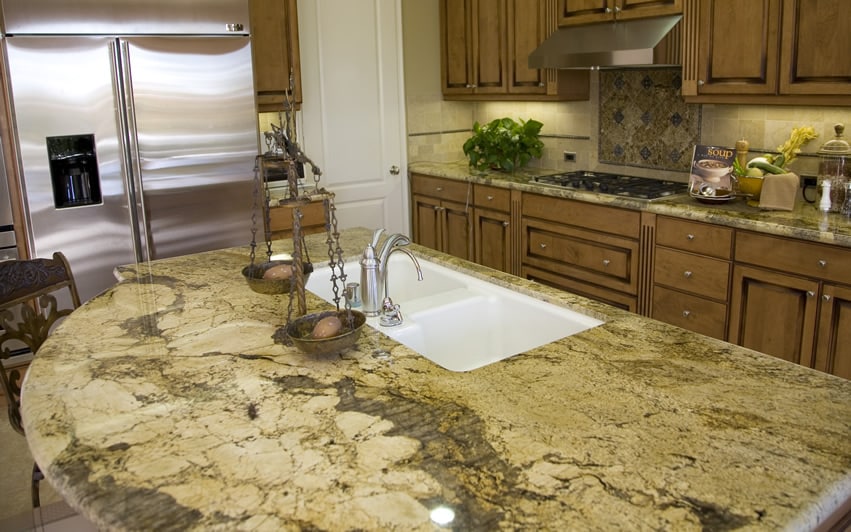
Choosing granite colors for your kitchen is rarely an easy choice. Pictures don’t exactly represent the true colors and beauty you’ll find when you view granite, marble, or quartz countertops in person. Below are some popular types of granite countertops colors. With the wide variety of granite available, you’re sure to find the right color for your kitchen based on its style, size and cabinet colors.
The Finish Changes the Color
Here’s the part that catches people out. The same slab looks like three different colors depending on how it’s finished. If your sample chip looked richer than the counter that got installed, this is usually why.

Three finishes side by side. Gloss deepens the color, matte flattens it, and the textured one hides fingerprints better than either.
| Finish | How the Color Looks | Cost vs Polished |
|---|---|---|
| Polished | Darker and richer. High gloss, mirror-like reflection, shows the full color range in the stone. | Standard, no upcharge |
| Honed | Lighter and flatter. Matte to satin, smooth and velvety, quieter look. More porous than polished, so it takes stains more readily. | Add $10 to $20 per sq. ft. |
| Leathered | Keeps the stone’s natural color. Soft low-luster sheen with a dimpled texture you can feel. Hides fingerprints, smudges and crumbs. | Add $15 to $25 per sq. ft. |
Polished is the default for a reason. It’s cheapest, more of the pores are sealed by the buffing itself, and it makes a mid-priced stone look expensive. Honed suits a quieter kitchen, but be honest about your household before you pick it. Because it’s more porous, it stains more readily, needs resealing more often, and shows the fingerprints and grease a polished surface would shrug off.
Leathered is the one people fall for in the showroom. It’s made by running diamond-tipped brushes over honed stone, which wears away the softer minerals and leaves that dimpled surface. On dark granites especially it kills the glare, and the texture hides water spots better than honed does. It costs the most because the extra brushing takes time.

Leathered granite along a run of counter next to pale wood. The texture kills the glare you’d get from a polished slab in the same spot.
One thing to ask before you commit: not every granite can be honed or leathered. Some colors have a mineral makeup that won’t hold up to the extra processing, so the slab you love may only be available polished. There’s also a fourth option, flamed, where the surface is torched until the crystals burst. It leaves a rough, slightly muted finish that belongs outdoors or in high-traffic areas, not on a kitchen counter. Finish pricing above is from HomeAdvisor’s 2026 data.
How to Pick the Actual Slab
Every photo on this page is a photo of one slab. Yours will be different. That’s the whole appeal of granite and also the thing that trips people up, so it’s worth going to the yard with a plan.
White Granite
White granite is really not as plain white as one would think. It’s actually loaded with flecks and veins of different colors depending on the style you choose. White granite is a great choice for smaller kitchen spaces because it can make an area look bigger, and lighter.
In addition to offering a beautiful contrast, a white counter pairs well with dark kitchen cabinets, creating a touch of elegance in your family‘s kitchen space. Visit this page to see the white granite countertops picture gallery, where you can explore various options and get tips on choosing the right quality stone for your kitchen.
To ensure you make the right choice, consider visiting a showroom where you can see and feel the different types of granite countertops in person. This allows you to experience the options more closely, as many people prefer to see the actual products before making a decision.
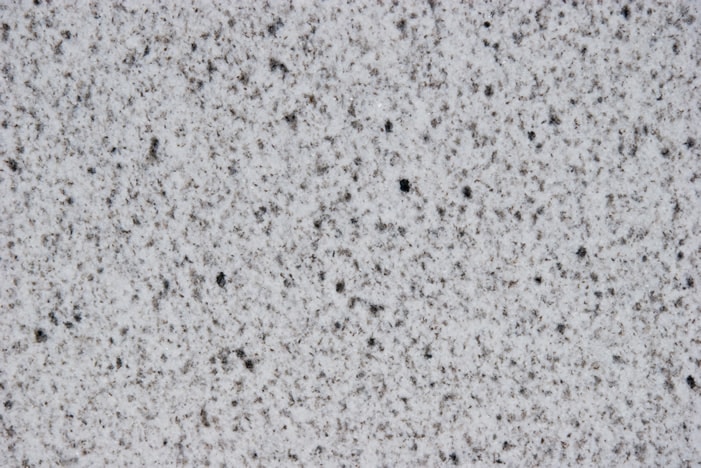
Bethel White Granite Kitchen Slab Bethel white granite hails from the small town of Bethel Vermont’s granite quarry. This quality stone features a brilliant, even grain and pure color that makes it highly sought after for building projects, lifting the blues of any space with its pristine appearance.
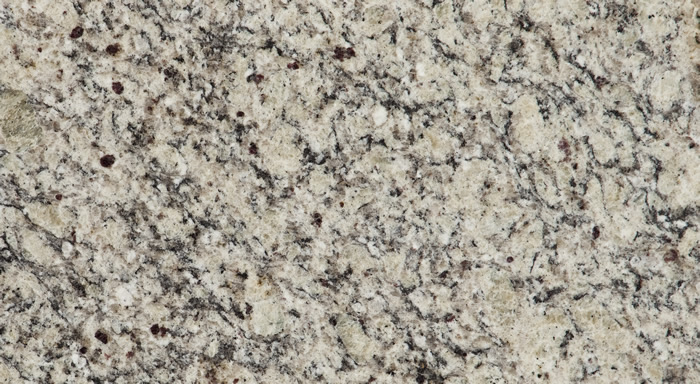
Brazilian Venetian Ice White Granite Slab Venetian ice is a type of granite quarried from Brazil. It is characterized by its golden color with white and brown minerals and colors mixed in along with numerous black or dark red flecks.
Venetian Ice is a mid-range cost wise granite that has a beautiful natural golden color that is often used in kitchens and islands, and can complement either white or dark cabinetry. Its water-resistant properties make it a popular choice among many people.
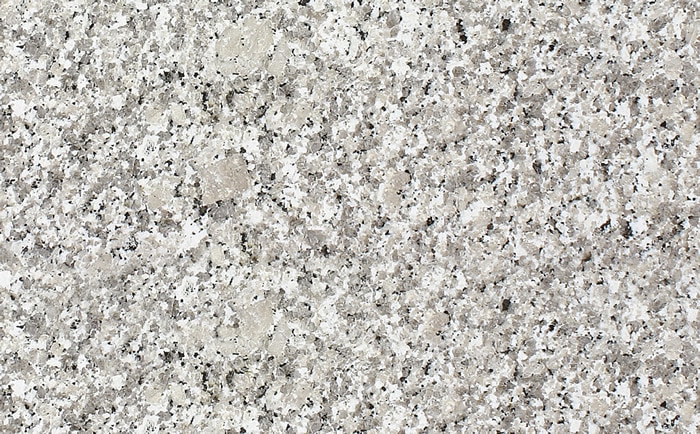
Kashmir white granite has small flecks of grays and cream colors throughout. It is known for it’s beautiful appearance, however is known for being a more porous stone. For this reason it’s advised to have the surface sealed to avoid staining and re-seal the surface every six months.
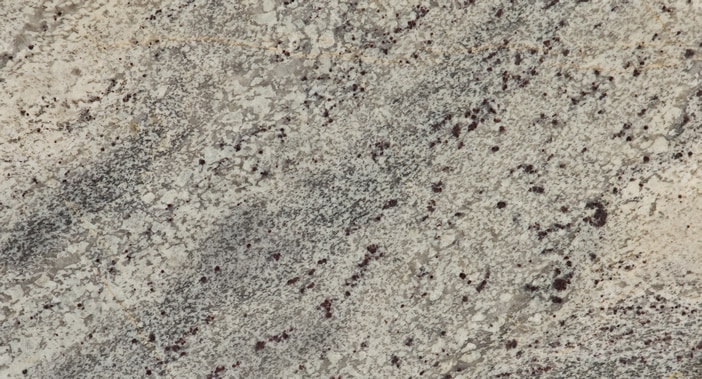
Classic White Granite can vary wildly depending on the stone yard. There are many different varieties of white granite with some yards even calling it quartzite. When used in kitchens these counters are light and bright and due to it mostly white appearance can help make a smaller space look bigger.
Beige & Gold Granite
For many homeowners beige granite is a timeless choice that provides plenty of decorating flexibility since it matches well with many color combination. Beige granite can be combined with wood cabinetry or both light and dark color cabinets.
Beige granite countertops are also versatile when it comes to working well with a variety of kitchen designs, such as traditional, country and contemporary. Visit this page to see the beige granite countertops picture gallery.
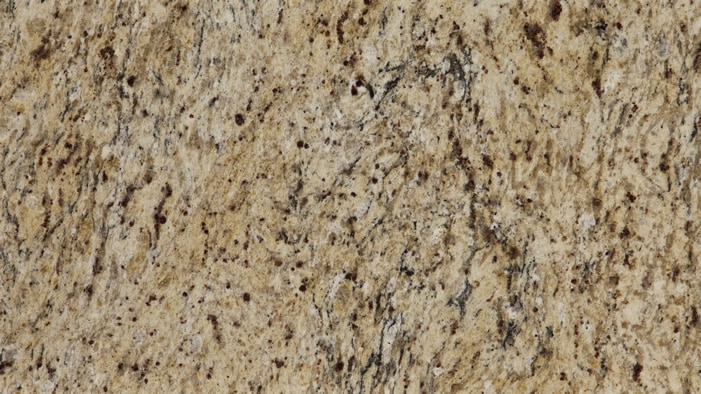
Santa Cecelia granite is imported from Brazil and is characterized by its warm gold and brown coloring with dark gray veins. This natural stone is considered a medium variation granite with a beige background.
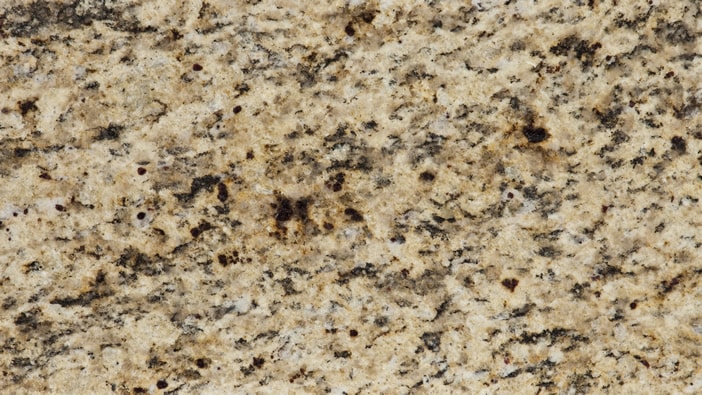
Giallo Ornamental Gold Granite is a Brazillian stone that is occasionally called Giallo Santo, Amarello Ornamental, or Juparana Gold. While having a white to beige base color it is heavily accented with brown, black and gray flecks. This type has medium variations from different slabs.
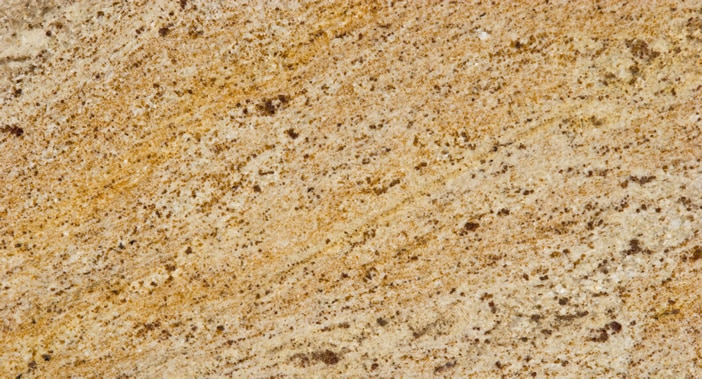
Millenium Gold Granite also called Millenium Cream is imported from India and is a light color stone with gold and grey veins. It has medium variations from slab to slab and is known to be durable, low maintenance and come with a polish finish.
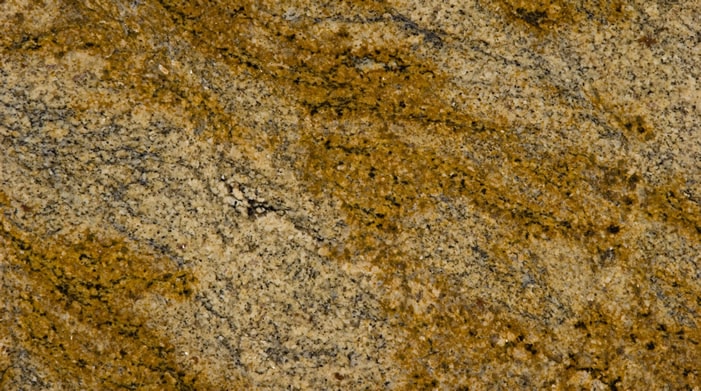
Giallo Renoir Granite Slab Giallo Renoir granite is frequently imported from Brazil and has a rich golden color with lighter yellow and deep brown flecks.
Depending on the slab you select, it can vary from lighter yellow to golden in color. This granite features elegance in the form of ivory streaks, giving it added depth and visual interest.
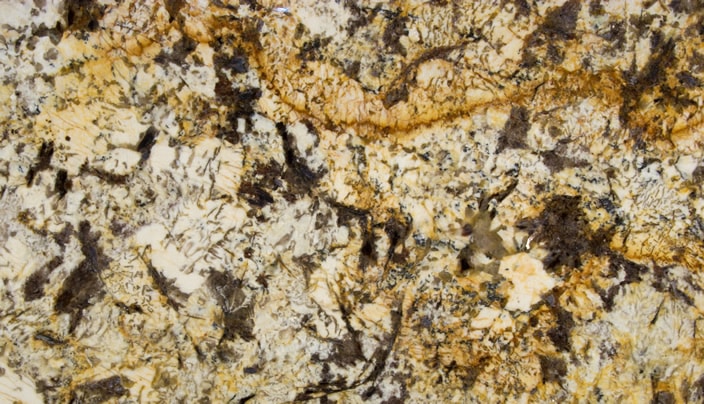
Fireworks Granite Slabs come from Brazil and have a beautiful yellow background with white, gold, grey, and black marbling. This stone is suitable for kitchen countertops or flooring and is sure to make a great impression for your home remodeling projects.
The blue pearl-like speckles add an extra touch of elegance to this already stunning granite. See more types of flooring here.
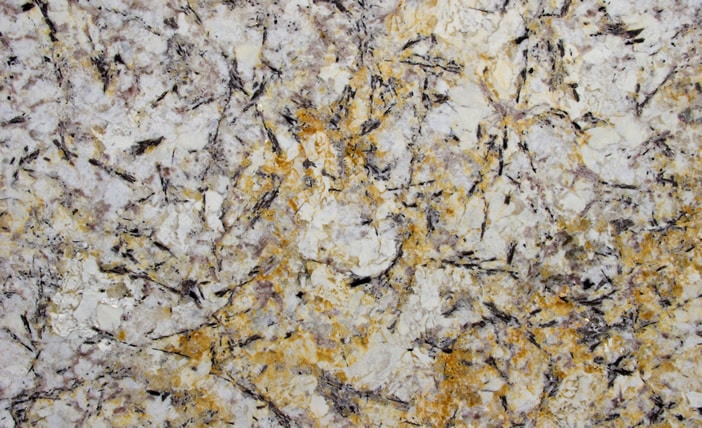
Gold and Silver Granite Slabs often come from Brazil and feature primarily an overall gold background with white and grey interspersed with black.
The presence of golds and silver speckles throughout the stone enhances its beauty. This type is an attractive low budget stone that is often used in bathroom vanities and kitchens.
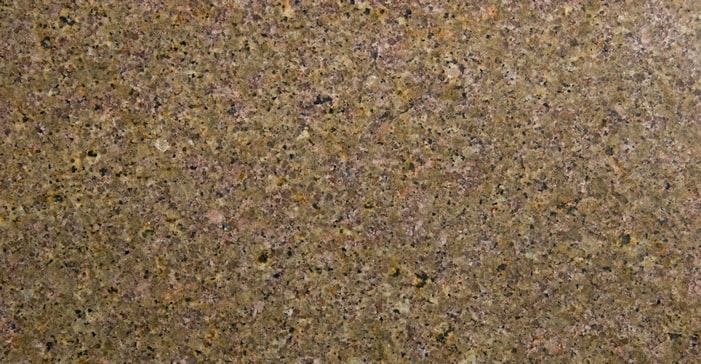
Sunrise Yellow Granite Slab is quarried in India with a medium beige background with specks of black, white, and pink colors. It makes a great addition to help brighten up a kitchen space. The ivory and gold streaks featured in this stone add an extra layer of depth and luxury to your design.
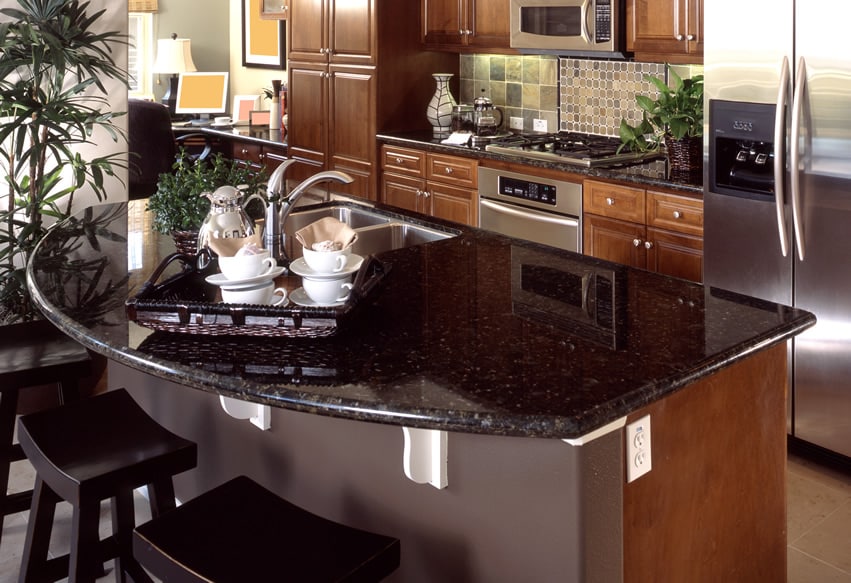
The beauty of granite countertops colors are its wide variety of choices, long-standing durability, and ability to incorporate elements such as stones and speckles for extra depth. These reasons make it an ideal choice for the majority of kitchen designs.
In addition, granite has not gone out of style and continues to be highly sought after for use in new home remodel projects. Above is an example of a dark granite kitchen countertop.
Black Granite
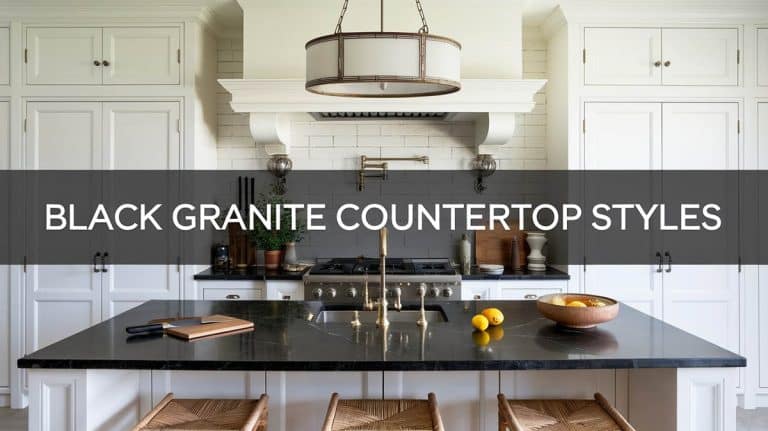
To make a dramatic statement many homeowners opt for using black or gray granite counters. Dark color granite’s’ compliment light wood and white cabinetry the best and are often used in traditional and contemporary kitchen designs.
A big pro about many darker granite counters is they tend to be denser, and less likely to absorb stains making them easier to maintain. See the black granite countertops gallery here.
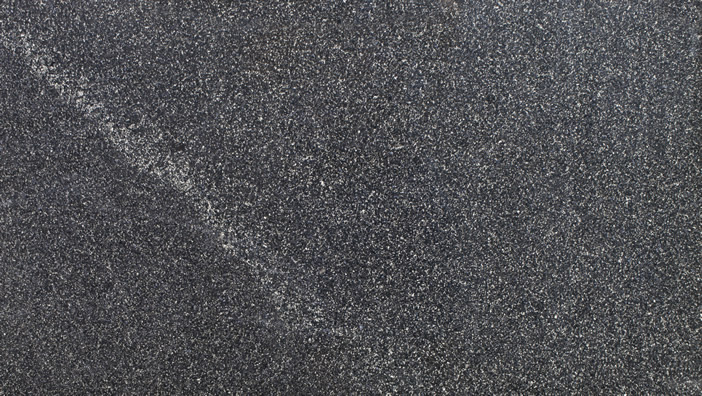
Bengal black granite is flecked with grey, green and white stones. Mined in South India this granite is non-porous, hard, and known for its polished surface and durability.
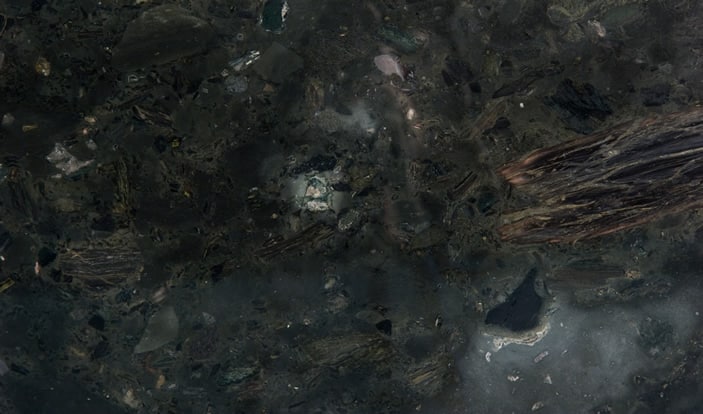
There are several different variations of Volcano Black Granite depending on the location it originates from. In the image above is featured Volcano Black Granite from from Brazil.
The Brazilian variation is noted for its long pronounced veining and elegant blue pearl-like speckles, while the slabs imported from India have a very different pebbled texture.
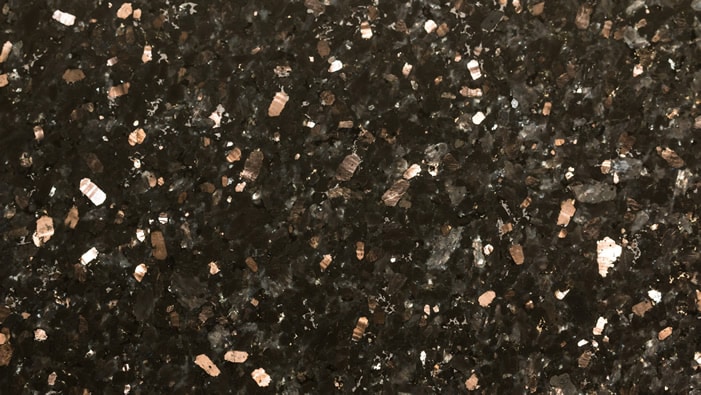
Black Galaxy Polished Granite offers a sleek, contemporary look for your kitchen countertops. It has a polished high sheen with shimmering golden flakes throughout and a moderate variation between slabs.
It is typically imported from India and is a popular choice for lower cost building projects. The presence of stones and other elegant features make this granite a versatile option for various designs.
Brown Granite
Brown is one of the most popular granite color choices due to the warm feeling it provides.Brown granite, with its coffee brown swirls and durable surfaces, is often used to create a rustic/country kitchen design and matches perfectly with a variety of wood cabinet shades to create an inviting atmosphere.
The material’s resistance to scratches and easy cleaning make it an excellent choice for backsplashes as well. However, many interior designers feel that browns match best with lighter color cabinetry for a rustic kitchen look.
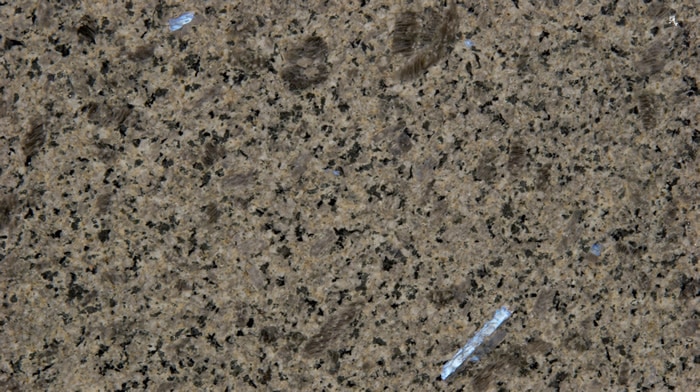
Desert Eyes is a brown color granite quarried from Saudi Arabia. Desert Eyes is medium-grained with dark flakes and a dark beige background. From slab to slab there is a wide variation of colors and veining.
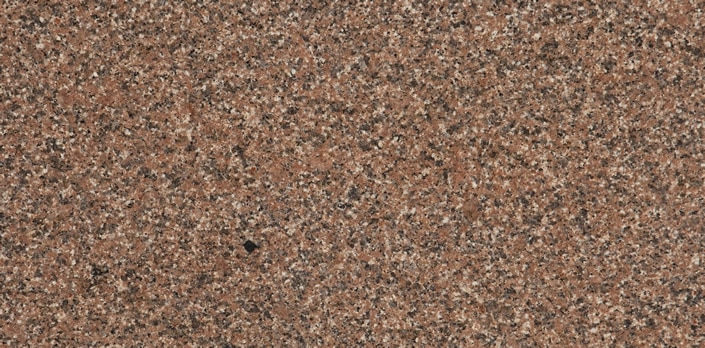
Brown Sao Paulo Granite is from Brazil and has average granulation. It is similar to Golden Caju, and Dourado Caju which are two others that are mined in the smae general area.
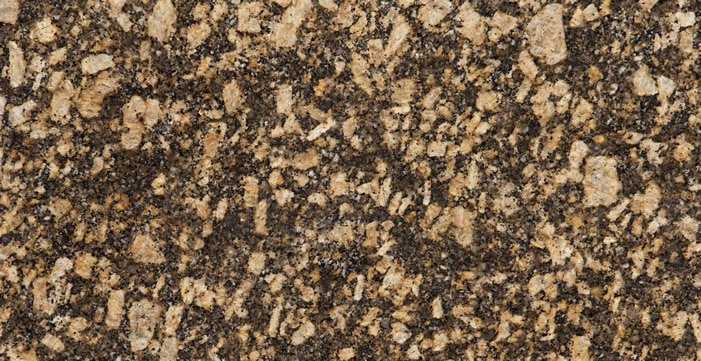
Giallo Boreal is a brown granite quarried in Brazil with a dark beige background and lighter colors randomly speckled throughout. It is also similar to Amarillo Boreal Granite, and Amarillo Gold.
Jewel-Toned Granite
Jewel-Toned Granite – This rich color tone granite is called Jewel tones because they resembles precious or semi-precious gemstones.
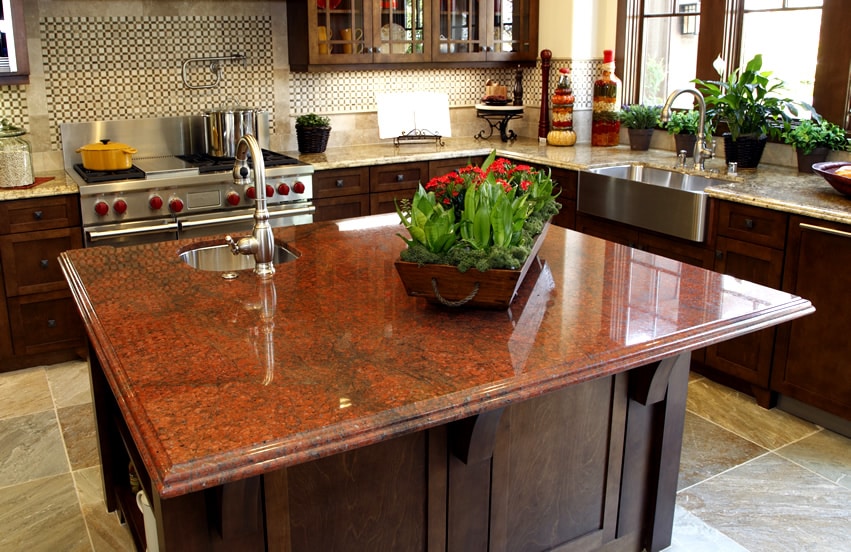
They often have a distinctive, bold look with a high level of color saturation. Popular colors of jewel tones include ruby red, turquoise blue, emerald green, sapphire blue, topaz yellow, and amethyst purple to name a few.
Blue Granite
Blue Granite – Blue minerals embedded in the granite gives it a unique and exotic look. Kitchens designed with blue granite are very popular and likely to spark a conversation due to their reflective appearance and striking appeal.
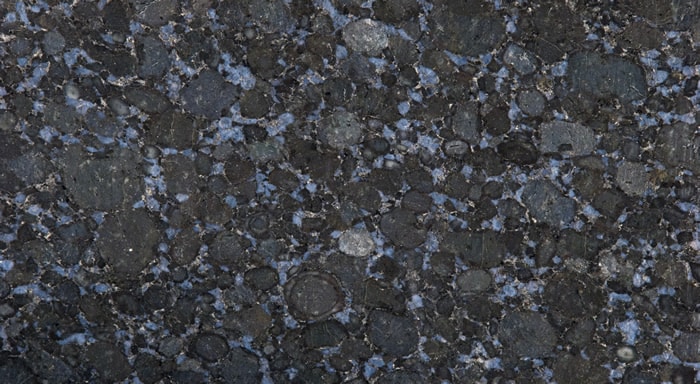
Blue Star Granite is quarried in China and is known for its striking blue coloration combined with patches of white and beige with larger patches of greys and black inter-spaced with beautiful blue striations.
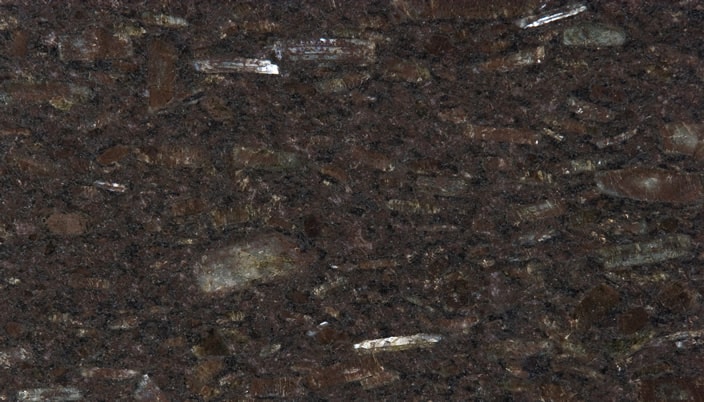
Flash Blue Granite is mined in India and is known for its distinct cobble and Pebble characteristics with low variations between slabs. It is widely used for countertops, as well as in flooring and for wall/backsplashes. Another name for this tone is Montevedo.
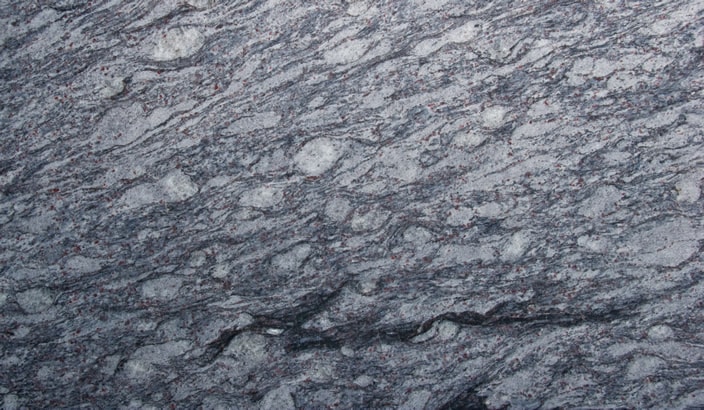
Lavender Blue Granite sometimes referred to as Orion Blue, or Orissa Blue is mined in India. The stone has several different variations and due to its durability is used extensively in countertops, flooring, and in wall cladding.
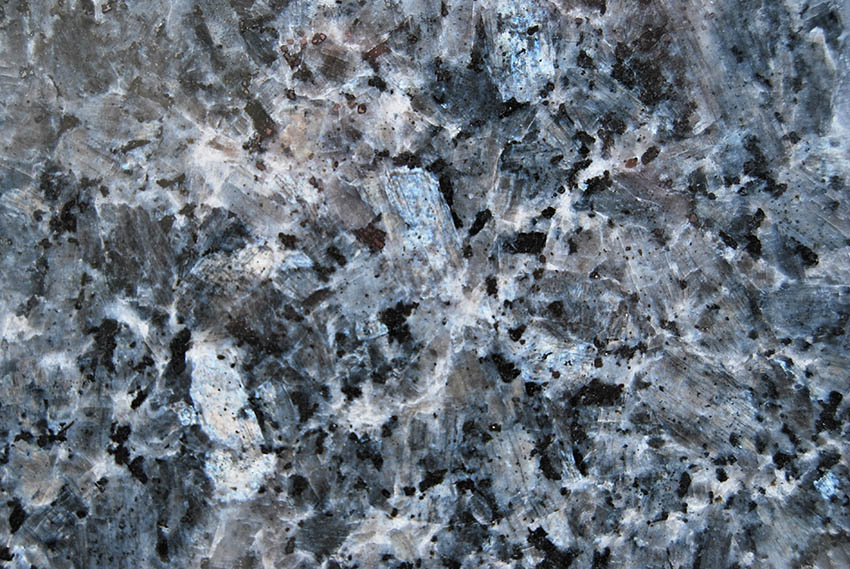
Blue Pearl Granite has a blue and silver white backdrop that is hard to miss, and it’s a popular bar and kitchen island granite coloration. The laminate countertops simulate the gorgeous display of blue-shaded specks sprinkled with silver or white crystals. White- and cream kitchen cabinets work well with your blue pearl granite for that traditional look, but you can enjoy your laminated blue pearl granite with blue-gray or gray-toned cabinets.
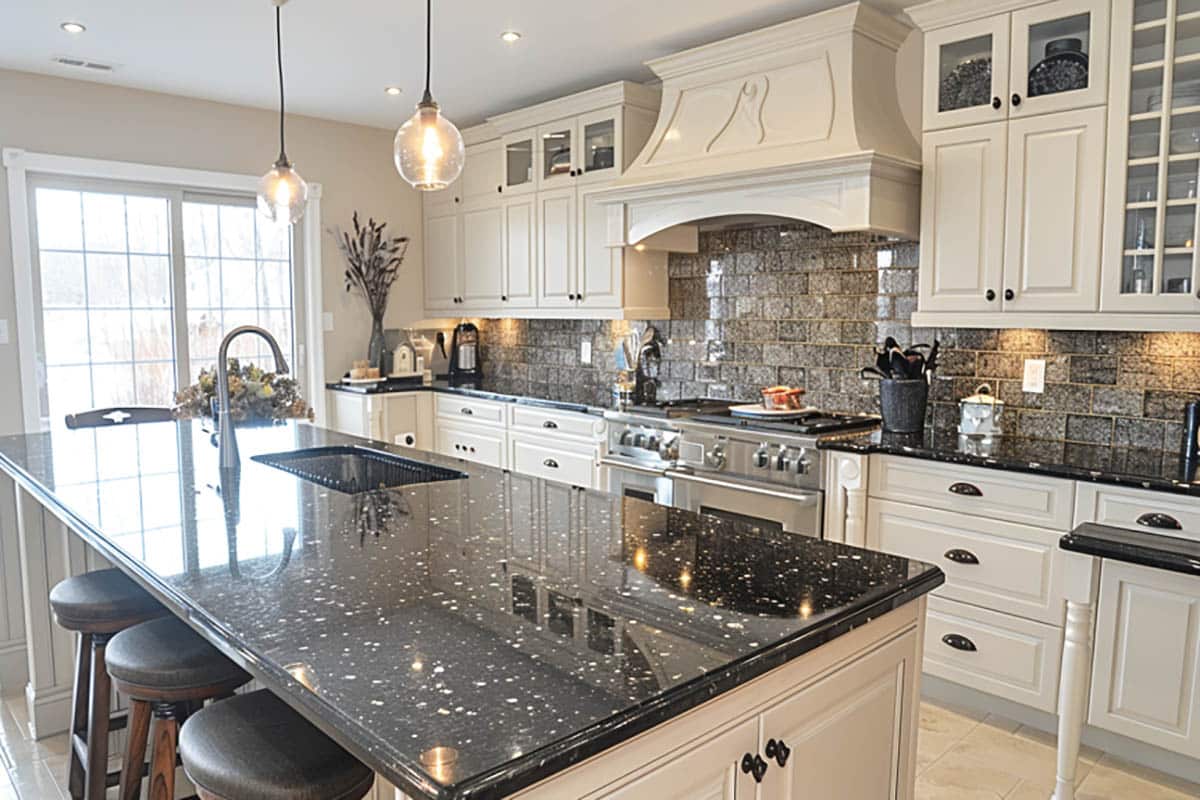
Labrador Blue Pearl is a mood-provoking granite color, the Labrador Blue Pearl Granite is a popular variation of the Blue Pearl but is darker in color and can be gorgeously showcased in layered lighting.
Red Granite
Red granite offers a vast selection of shades to make a bold statement and add a sense of energy to your kitchen space.
Red granite countertops are not as popular as other choices but they certainly make an eye-catching statement. They are often paired with light colored cabinets with a muted paint color pallette to create a stunning kitchen design.
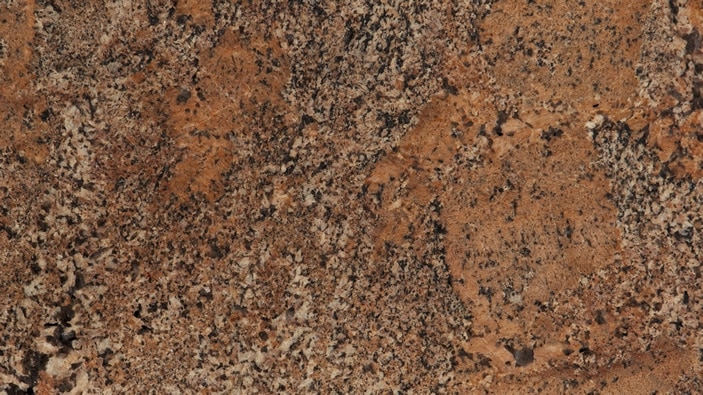
Bordeaux granite has a rich red color mixed with gray, gold, brown, and beige veining. It is a popular choice because of it’s warm tones and bold look that compliments cherry stained cabinetry.
Green Granite
Kitchens designed with green granite evoke a sense of tranquility and relaxation. Not only are these types of countertops stimulating to the eyes, they bring a sense of nature to your kitchen area.
Green matches well with a variety of wood cabinet colors and can give your indoor space the high end look you desire. Visit this page to see the green granite countertops gallery.
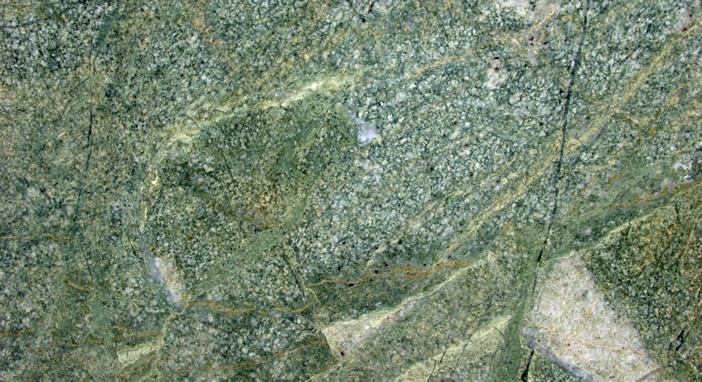
Costa Esmerelda Granite is an absolutely beautiful addition to any kitchen. Its deep, rich, and exciting colors make it a popular choice for discriminating homeowners.
It is a durable stone that doesn’t show fingerprints well and is not prone to staining. One of the unique characteristics of these slabs is the fissures that run throughout.
These fissures give the stone its uniqueness, however not everyone will appreciate this look. There can be a lot of variation between stone slabs with darker and lighter slabs coming from the same quarry.
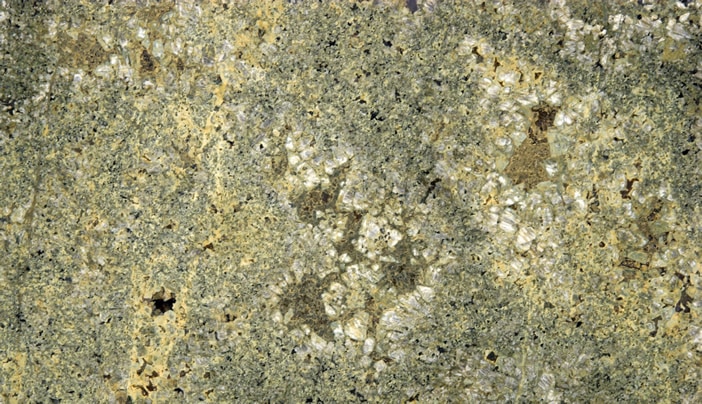
Sea Foam Green Granite is an exotic stone quarried in Brazil and used for countertops, flooring and walls. The stone offers medium variation between slabs. It is known as a difficult stone to find, mine and produce, thus it ranges on the higher side price wise.
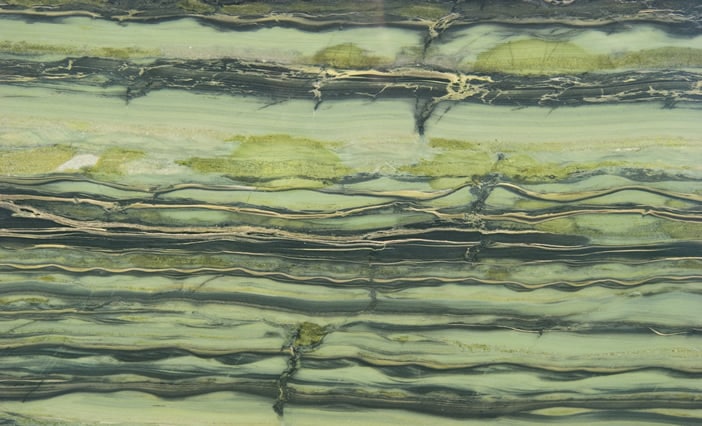
Verde Bamboo Granite is quarried in Brazil and has stunning striations of greens, beige, black and cream coloring. It is often used in both exterior and interior applications.
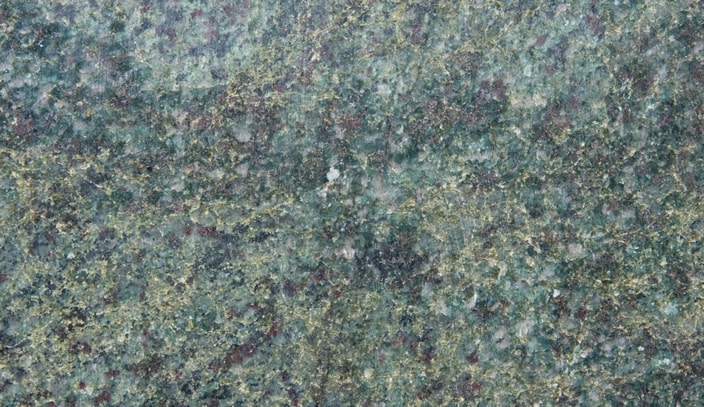
Beautiful granite colors such as the Green Pearl granite pictured above are also called jewel-toned for their exotic look. Jewel tone granite has an impressive appearance that is often paired with muted color cabinetry to keep the design from being too overwhelming.
Green Pearl Granite is mined primarily in India and has low amounts of variations between slab pieces. This stone matches well with lighter cabinets and wall colors.
Which Cabinet Colors Go With Each Granite
Most people arrive at a granite page with the cabinets already decided, or at least half-decided. Here’s the shortcut version, sorted by granite family.
| Granite | Cabinets That Work | What to Skip | Style It Suits |
|---|---|---|---|
|
White |
Navy, charcoal, deep green, black, warm walnut | Cream cabinets in a different white than the stone | Transitional, small kitchens |
|
Beige and gold |
Cherry, oak, maple, cream, soft sage | Cool gray cabinets, they fight the warm undertone | Traditional, country, transitional |
|
Black |
White, light gray, natural maple, light oak | Dark espresso cabinets unless the room has real light | Contemporary, traditional |
|
Brown |
Cream, light oak, honey maple, off-white | Dark wood, the whole room goes muddy | Rustic, country |
|
Blue |
White, cream, blue-gray, gray | Warm yellow-toned wood | Contemporary, islands and bars |
|
Green |
Cream, white, natural oak, muted taupe | Competing green cabinets in a different tone | Traditional, nature-led schemes |
|
Red |
Cherry, light neutrals, muted greige walls | Anything else that’s also saturated | Statement kitchens |
The rule underneath all of that is contrast. If the counter is busy, the cabinets should be quiet, and if the cabinets are the star, pick a stone with less movement. Trouble comes when both want the attention.

Light granite over a navy island. The stone stays quiet so the cabinet color does the talking.

Beige and gold granite with cherry cabinets. Both are warm, which is exactly why they work together instead of fighting each other.

Black granite against white shaker doors. It’s the highest-contrast pairing on this page and it never really goes out of date.

Green granite with cream cabinets. The cream keeps the green from feeling heavy across a long run of counter.
Does Your Granite Need Sealing? Try the Water Test
Granite is porous. How porous depends entirely on the stone, which is why a light Kashmir white behaves nothing like an absolute black. Rather than guess, test it.
Faster absorption means a more urgent problem. If the stone darkens in the first few minutes, that counter has essentially no protection and it’s soaking up every cleaner and every drip of olive oil that lands on it. The good news, per Granite Gold, is that you can’t over-seal natural stone. Resealing a counter that passed the test does no harm.
As a general rhythm, most granite gets resealed about once a year, and professional sealing runs around $100 or more unless it’s bundled into your installation quote, according to HomeAdvisor. Lighter, more porous stones need it more often than dense dark ones. For day-to-day upkeep between sealings, see our guide on how to clean granite countertops.
Granite Edge Styles
Choosing an edge for your granite countertop is an important decision that must be made before you have the stone fabricated and installed in your kitchen. Popular edge styles are the straight, bullnose, 1/2 bevel and 3/4 bevel. The straight edge is also called the eased edge or flat edge and is considered the free option.
Upgraded edge styles often require more time to polish and are thus more expensive. Some upgrade options are the ogee, deep ogee, knife edge, extreme bevel, inverted extreme bevel, and full bullnose.
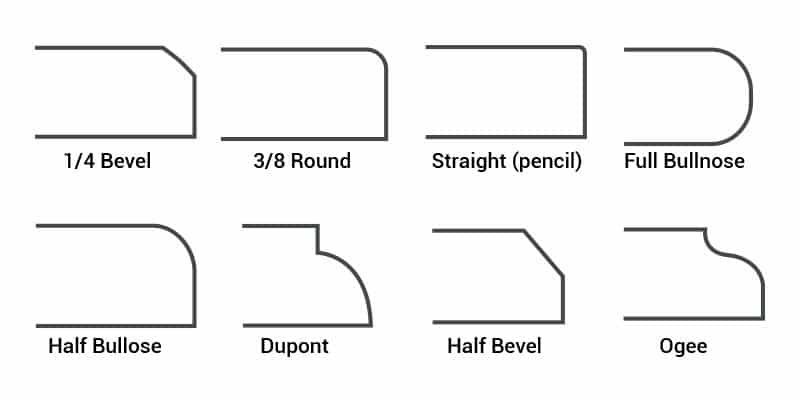
Edge choice isn’t only about style. It should answer to the stone. A heavily veined, high-movement granite already has plenty going on, and a decorative profile just adds noise to a busy edge. Quiet, uniform stones are the ones that can carry an ogee without looking fussy.
| Edge | The Look | Best With |
|---|---|---|
| Straight / eased | Clean and flat, softened corner. The no-upcharge default. | Busy, high-movement granite |
| Bullnose | Fully rounded and soft. Reads traditional and forgiving on hips. | Beige and brown, family kitchens |
| Half and three-quarter bevel | Crisp angled cut, a sharper modern line. | Black and gray, contemporary rooms |
| Ogee and deep ogee | S-curve profile, formal and decorative. Costs the most to polish. | Quiet, low-variation stone |
One practical note. Decorative edges have more surface to catch crumbs and more places for a sealer to wear thin. If you cook a lot, the simple edge earns its keep.
Visit our granite kitchens gallery for more ideas for your next remodel or redesign. To add granite colors to your own kitchen design, check out our page sharing popular interior design software to try out different ideas.
Granite vs Quartz on Color
If you’re comparing the two, the color question is really a question about predictability.
| Granite | Quartz | |
|---|---|---|
| Color consistency | Every slab is different. You have to see yours. | Engineered, so the pattern repeats predictably. |
| Sealing | Porous. Generally resealed about once a year. | Non-porous. No sealing needed. |
| Hot pans | Handles heat well. | Direct heat can damage the binding resins. |
| Lifespan | 100 years or more with routine care. | Long, but resin can discolor with heat and UV. |
Granite also holds its value at resale, recouping up to about 25% of its installation cost, per HomeAdvisor. If you want to see how both stack up against everything else on the market, we compare the full field in our guide to types of kitchen countertops.
Granite Color FAQs
Is granite safe? What about radon?
This is the question that keeps circulating, so here’s what the actual sources say. Granite, like any stone, can contain trace veins of naturally occurring uranium and thorium, which decay into radon. The concentration varies from slab to slab and even within one slab. The EPA is direct about the scale of it: radon coming up from the soil under a house is a far more common problem and a far larger public health risk than radon from granite building materials, and it’s extremely unlikely that a granite countertop would push a household above normal background radiation levels.
The research backs that up. The Natural Stone Institute points to peer-reviewed work by Environmental Health & Engineering that reviewed more than 500 radon emission measurements from granite. Emissions came in roughly 300 times lower than radon levels in ordinary outdoor air, about 1,000 times below the average concentration measured inside U.S. homes, and around 3,000 times below the EPA’s recommended indoor action level.
The takeaway isn’t “don’t buy granite.” It’s “test your house.” The EPA recommends every home be tested for radon whether or not it has stone counters, and if the reading comes back at 4 pCi/L or higher, to mitigate. If a test does come back high, venting the house fixes it. Tearing out the counters doesn’t.
What granite color goes with white cabinets?
Almost anything, which is why white cabinets stay popular. For contrast, black granite or a dark brown reads crisp and graphic. For something softer, beige and gold granites keep the room warm. Blue and green granites turn white cabinets into a frame and let the stone be the story. The pairing that needs care is white granite with white cabinets, because two whites in different undertones look like a mistake rather than a choice.
Does dark granite cost more than light granite?
Often, but not because of the color itself. Dark granites are popular for their depth and their ability to hide stains, and demand moves price. What really drives cost is rarity. Blue Louise runs $70 to $100 per square foot because blue minerals are uncommon, while Alaska White sits around $35 because there’s plenty of it. Absolute Black lands at $45 to $60, which is mid-range, not premium.
Which granite colors hide crumbs and stains best?
Mid-tone speckled granites are the most forgiving. Santa Cecilia, Ubatuba and the brown Sao Paulo family all have enough busy grain to swallow crumbs between wipe-downs. Solid absolute black looks stunning and shows every water spot and fingerprint. Very light polished whites show coffee rings. If your kitchen is the family thoroughfare, pick something with movement in it.
How often does granite need to be sealed?
About once a year for most stones, though the water test above is a better guide than the calendar. Porous light granites may want it every six months. Dense dark stones can go longer. Professional sealing costs around $100 or more unless it’s included with your installation.
Is granite out of style?
No, though it’s no longer the automatic default it was fifteen years ago. Granite still held the largest share of the U.S. countertop market in 2025 at 27.9%, ahead of quartz, laminate, solid surface and marble, according to Grand View Research. Engineered quartz is the faster-growing segment, forecast at a 7.0% annual growth rate through 2033, so the gap is closing. What has changed is the look. The speckled gold granites of the early 2000s read dated now, while leathered blacks, quiet whites and honed mid-tones are where the current interest sits.
To showcase highly specific designs, some images on this website use advanced AI-generation software to illustrate ideas and room inspiration. See our editorial policy to learn more.