How To Get A Cape Cod Kitchen Design Style

A Cape Cod style kitchen originated from cottage styles made to withstand the rough weather of New England. Since the focus was more on the house’s exterior and how it would hold up, the interiors were pretty simple in design. In this article, we’ll be sharing updated and renovated Cape Cod kitchen ideas. In essence, a Cape Cod style kitchen is all about creating a space that feels warm, inviting, and timeless, with a nod to coastal living. Let’s explore further and I’ll share more of the details that go into this design.
What is a Cape Cod Style Kitchen?
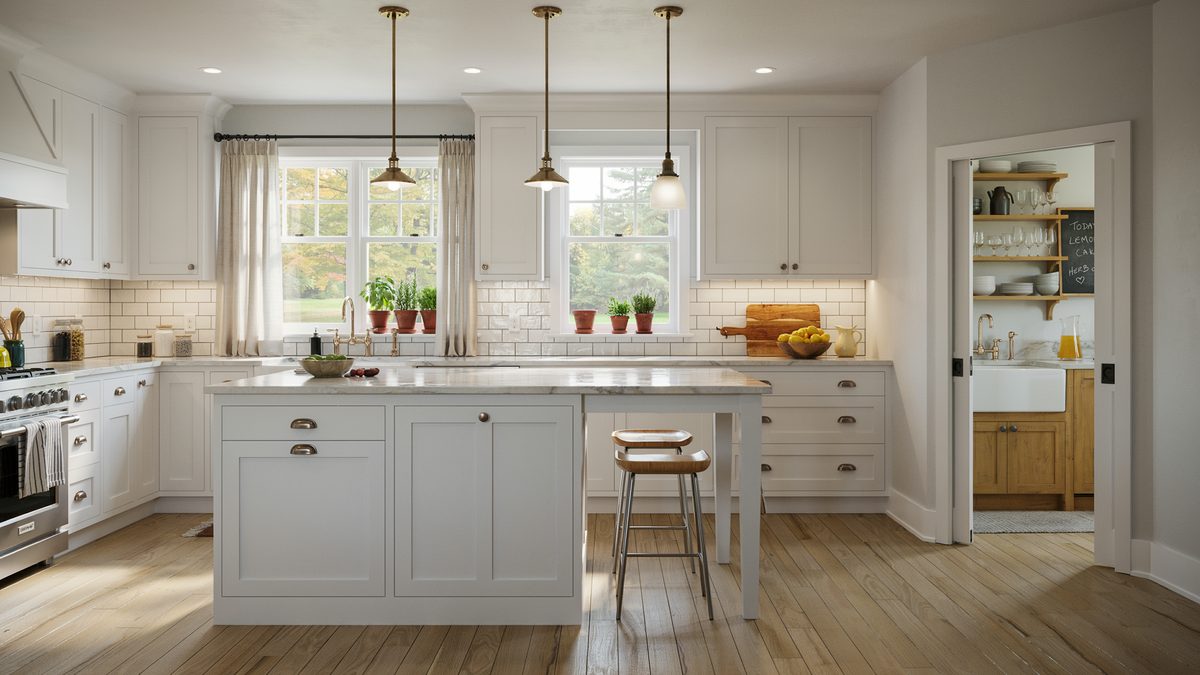
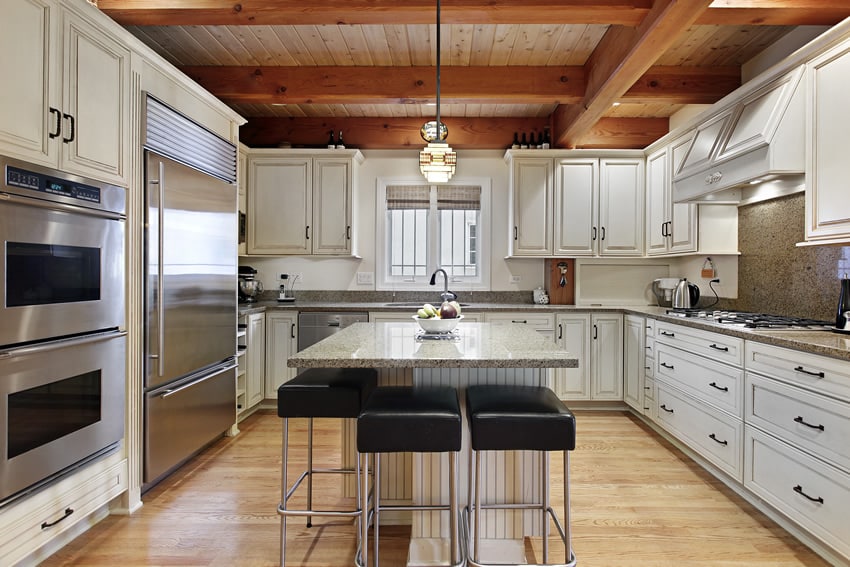
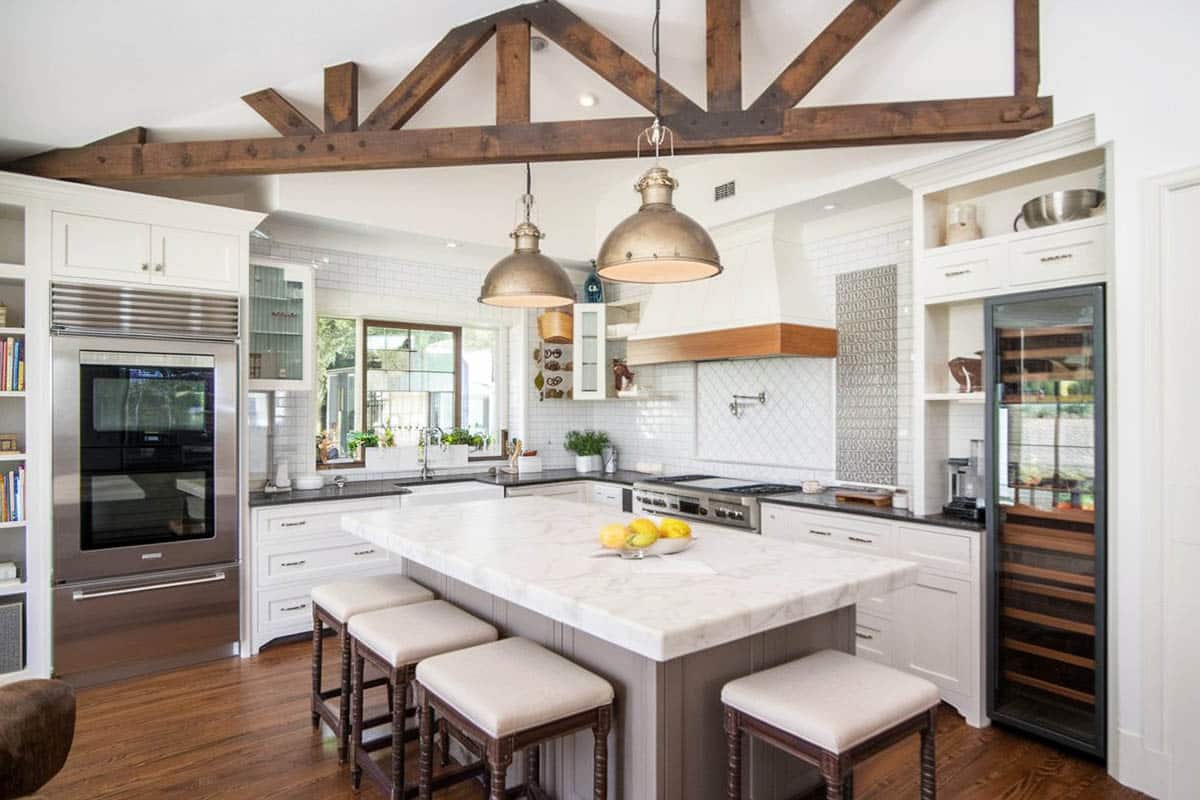
The modern version of this style typically includes a standard kitchen that is kept bright with lighter color cabinetry. The layout typically has an open plan with an eat in counter or island. The island is pretty common in Cape Cod style kitchens. This is to eliminate the need for the dining room altogether, by letting people eat on the kitchen’s island or peninsula. There is commonly a large window over the sink to give the space a light and larger feel, as they are not usually super spacious.
How to Get A Cape Cod Kitchen Style
A Cape Cod kitchen isn’t one fixed look. It’s a handful of elements that keep showing up, and how you treat each one decides whether the room reads old-school classic or freshly updated. Here’s how the signature pieces stack up, side by side.
| Element | The classic look | A modern update | Quick tip |
|---|---|---|---|
| Cabinets | White raised-panel or beadboard doors, often with a few glass-front uppers. | Clean white or soft off-white Shaker fronts, flat and simple. | Keep the trim detailing. It’s what stops white cabinets from looking flat. |
| Countertops | Honed marble or a butcher block island top with a lived-in feel. | White quartz for the perimeter, wood on the island for warmth. | Mix materials. Wood island, stone counters reads intentional, not busy. |
| Flooring | Wide-plank hardwood, light and a little worn on purpose. | Light oak or durable engineered wood in a natural finish. | Go lighter than you think. It makes a small kitchen feel bigger. |
| Backsplash | White subway tile or a rougher stacked stone for texture. | Handmade zellige or a soft blue tile for a nod to the water. | Texture beats color here. A little variation reads coastal, not loud. |
| Ceiling | Exposed or painted wood beams, sometimes a low cottage height. | Shiplap panels or slim stained beams for a lighter touch. | Even fake beams work. They add the age the room is reaching for. |
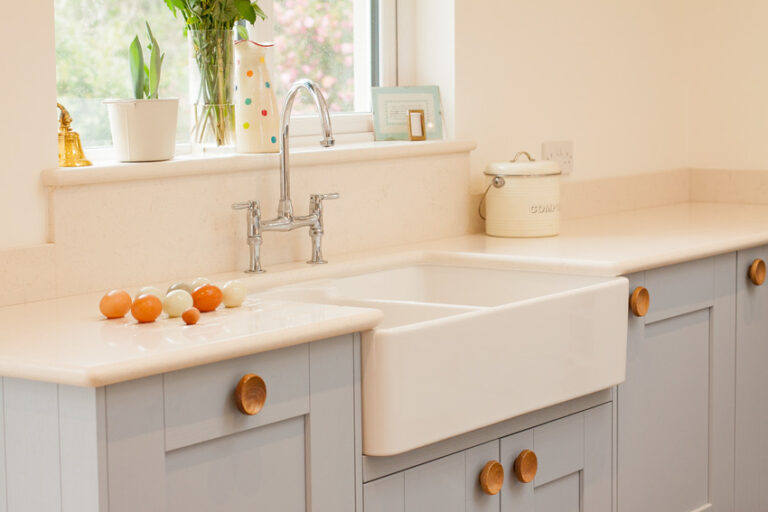
| Sink & faucet | Farmhouse apron sink with a classic bridge faucet. | Fireclay apron sink paired with brushed nickel or warm brass. | The apron sink is the anchor. Splurge here if you splurge anywhere. |
| Lighting | Schoolhouse pendants over the sink or island. | Clear glass globe or slim lantern pendants for an airier feel. | Hang two or three over the island. One lonely pendant looks unfinished. |
| Hardware | Polished nickel cup pulls and round knobs, nothing flashy. | Mixed metals, often matte black or aged brass for contrast. | Cup pulls on drawers, knobs on doors is the safe, timeless combo. |
| Color palette | Whites, beige, and pale blues borrowed from the shoreline. | Mostly white with one saturated accent, usually navy or sage. | Pick one accent color and let it repeat. Two fights, three is chaos. |
The coastal palette at a glance
| Warm white | Soft blue | Sea gray | Sage | Navy |
You don’t need every row on this list to land the style. Get the cabinets, the palette, and one honest natural material right, and the rest is just polish.
Finishes
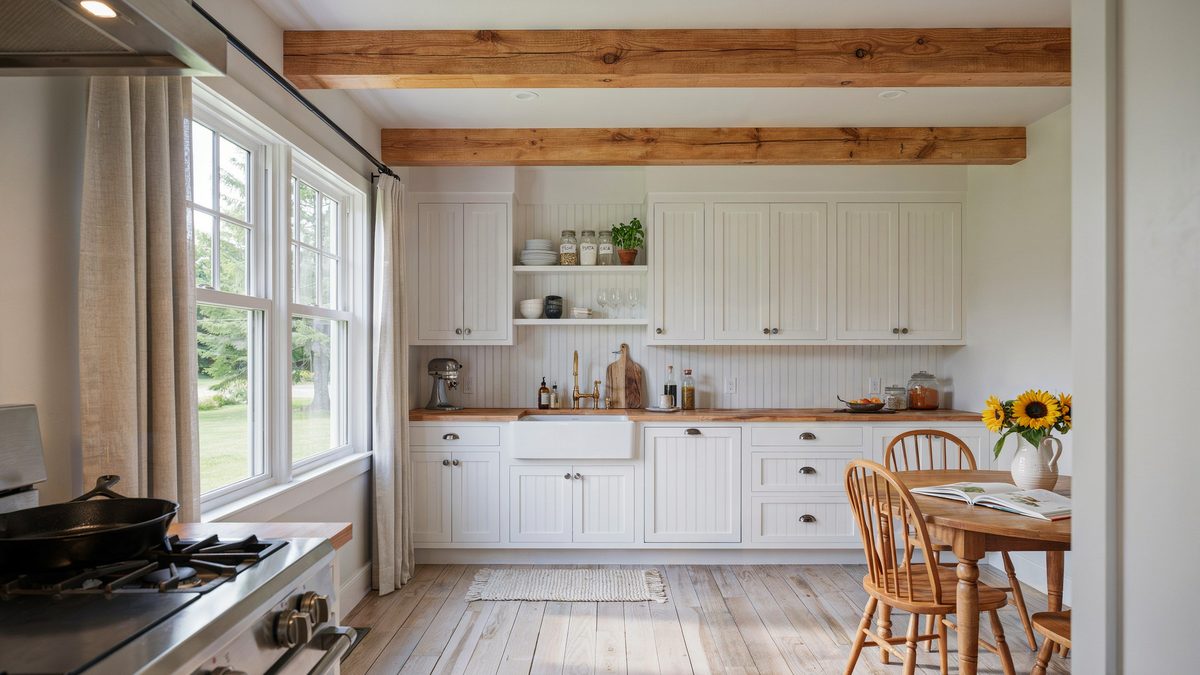
Typically, the style incorporates wood flooring, though it is not a requirement to fit the style. They often showed their wear and were more hand-built, so they show the imperfection in the flooring, but they sure had sturdy construction. The wood was typically lighter to make the kitchen seem larger. The molding on the cabinets was iconic, and it always looked hand-done. There is a crown molding as well as trims surrounding the home to make it distinct and work on.
Sometimes the cabinetry doors will have trim and glass panels to show off the ornamental glassware inside the cabinets. The color schemes for the Cape Cod style are usually light, airy, and beachy due to its proximity to the water. Using beige, whites, blues, and light yellows, greens are best for these designs. There can be a few darker ones mixed in to add contrast to the design. See more beach kitchen ideas here.
Style

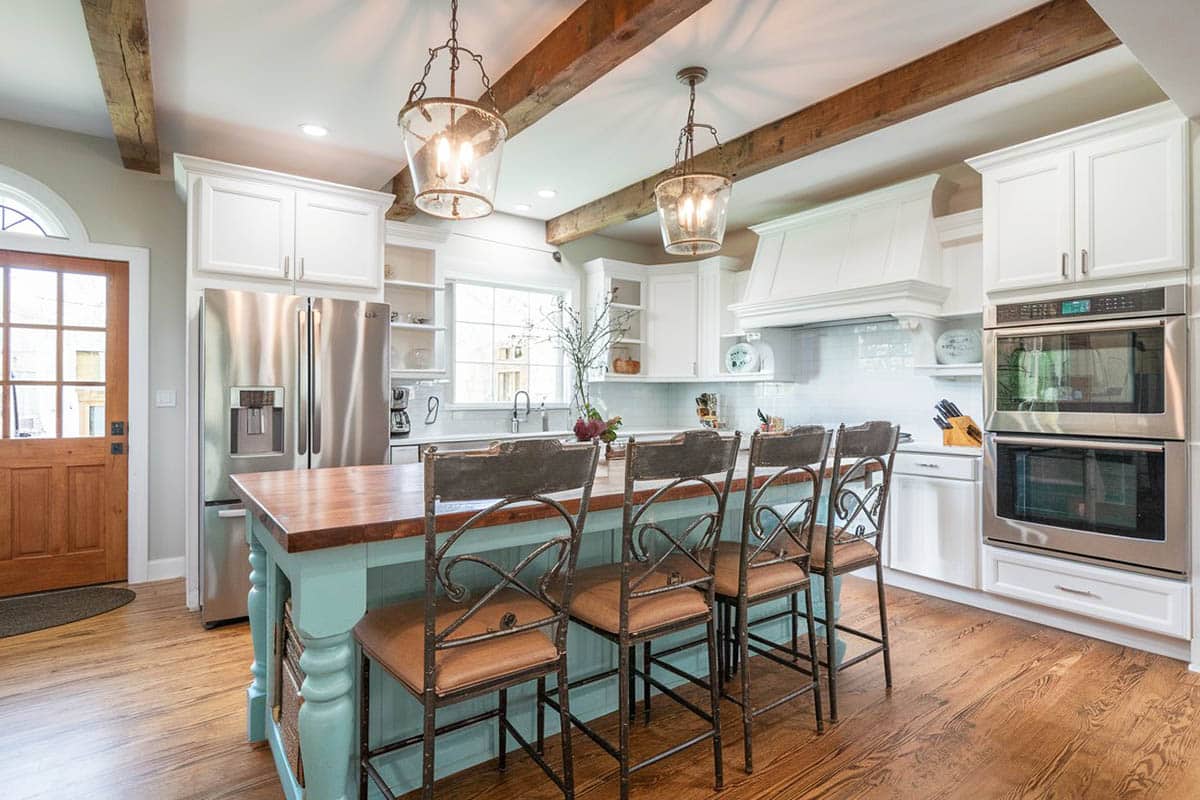
Kitchen with bead board island and Shaker style cabinets.
In historically correct versions of the Cape Cod style kitchen, there is a specific focus on fireplaces and stoves, as these are what keep the house warm and is the way that everything was cooked in the homes. In more modern designs, they do not need to be as focused on, but they can still be ornamental. Cape Cod style, nowadays, is typically used for vacation or summer homes, which lends itself to the style of light colors and a smaller footprint. Vacation homes hold less structured family dinners and permanent items.
Countertops

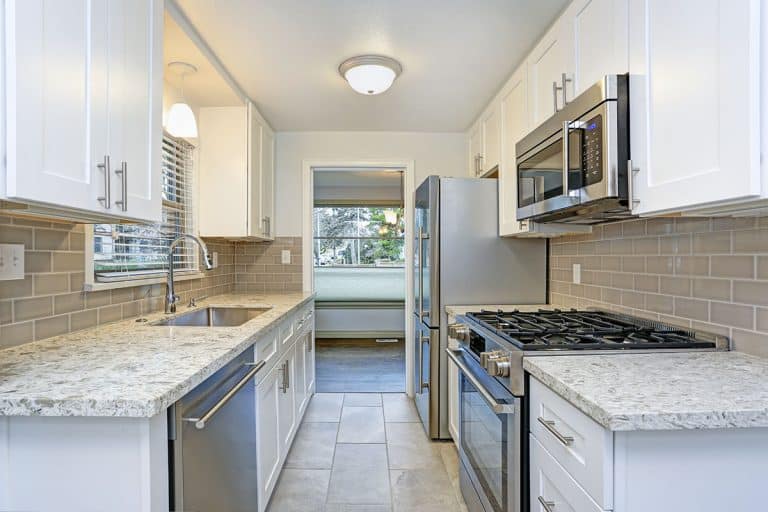
The countertops used in cape cod style kitchens can vary depending on your preferences. Most frequently, countertops are found in quartz, granite, Corian or wood butcher block. Considering a wood countertop with white cabinets is appropriate in this style, as the natural element is there without overwhelming the space. Wood counters can be used for the center island, with different main countertops for the remainder of the kitchen layout.
Sometimes, a darker contrasting countertop can be eye-catching or a lighter color to mix well with the rest of the space depending on what the flooring and cabinetry selection are. This style does not want too many dark colors present. The Cape Cod style is often an ode to the sea, with local dealers often featuring ocean and nautical inspired selections for countertops, backsplashes and other types of tiles that may be needed in the design.
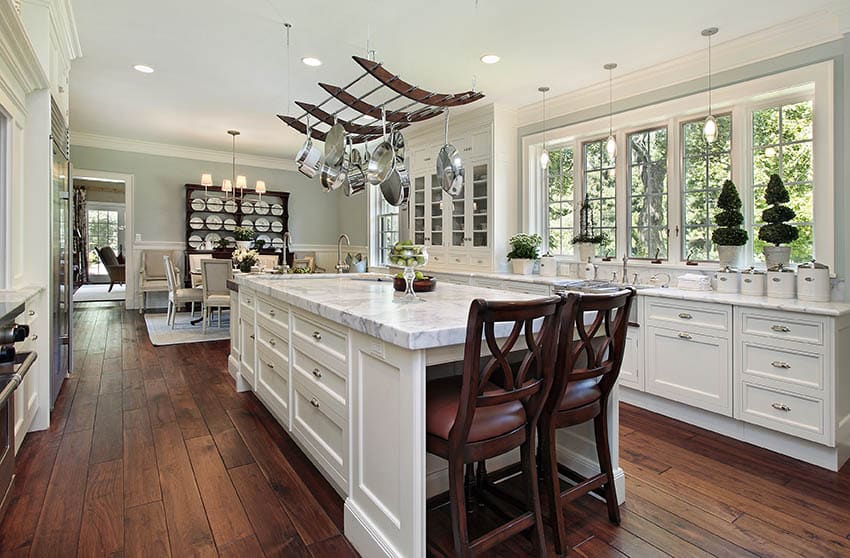
Cape-Cod Kitchen Remodel Ideas (How to Get the Look)

Step one for getting the look of the cape cod style kitchen is to open it up. The space should connect to the dining room or living area, depending on space and functional needs.
One of the most important parts of the cape cod kitchen style is that the kitchen is open and airy, while it may commonly be small it cannot feel stuffy, it should be bright and open. – interior designer Savannah.
Step two of getting that dream cape cod kitchen is to buy a lot of white paint. Cover up whatever purples or oranges you had in the home before because it is time for whites and pastels. The color palette for the style is seaside colors, including beige, whites, light pale blues, greens, and yellows.
Step three to that cape cod kitchen is to buy white cabinetry. This is one of the most popular colors for cabinetry, and it fits the theme perfectly. This gives the option to add natural elements to the flooring or even the countertops. These cabinets should also have some sort of detailing to them. Historically, the Cape Cod houses has a lot of trims and glass paneling.
Step four, if you desire, is to finish off by adding seaside or nautical themes and decor accessories. This will help create the right ambiance. The trick is to not go overboard with decor but select a few pieces that can reinforce them without becoming overwhelming or kitschy.
Incorporating these into the design will bring the Cape Cod vision to life. Even adding matching crown molding to the ceilings can make a huge difference in appearance.
Finally, for step five, select easy to use hardware. One of the key features of the Cape Cod style home is that it is functional. There are no cabinets out of reach or things that cannot be used because the space is so small it is silly to include something just for looks.
To showcase highly specific designs, some images on this website use advanced AI-generation software to illustrate ideas and room inspiration. See our editorial policy to learn more.