How To Design A Tuscan Kitchen: 30 Designer Ideas To Get The Look

This guide showcases elegant Tuscan kitchen ideas, including a variety of cabinet styles, flooring, islands, and decor. A Tuscan-style kitchen brings rich, warm tones, Italian architecture, and rustic cabinetry together to create a gorgeous space for cooking and dining. Many million dollar homes are equipped with luxury Tuscan kitchens to increase the value and appeal of their home.
Tuscan Style Kitchen Design Ideas
For people who enjoy the luxurious appeal of Italian kitchens, yet prefer a more relaxed, casual feel, Tuscany is a great style option. As its color scheme leans towards warm, earthy tones, it has a more welcoming ambiance, and the finishes used on Tuscan kitchens also give a more homey feel, as it looks more like a well-used kitchen rather than a showroom/showcase space for display.
This style is perfect for those who love Italian kitchens’ detail and classic appeal, yet prefer a more laid-back country villa feel. To achieve this style, one must take note of the following important features typical of Tuscan kitchens.
Colors – This style typically uses warm colors reminiscent of the colors found naturally in Tuscany, such as orange, ochre or terracotta. Layer those main hues with dusty sage green, muted indigo, or soft buttercream as secondary accents. A painted island in a desaturated Tuscan red can become a focal point without overwhelming the palette. When selecting wall paint, look for finishes with a subtle chalky or lime‑wash texture to avoid an overly crisp, modern surface.
Cabinetry – Matte, rustic kitchen finishes are typically preferred to give that worn-out/well-used look, and can either be painted or kept in their natural color. You will also notice the use of open displays or glass-door cabinets, which allow you to showcase Italian ceramics and other precious items. There is also a tendency to mismatch cabinetry, making them look like movable furniture pieces.
Opt for inset doors with simple chamfered edges or an antiqued bead detail. Hand‑forged iron pulls—preferably with a time‑worn patina—reinforce authenticity. Integrate a freestanding hutch or plate rack in a contrasting finish to mimic the “collected over time” aesthetic. For painted cabinets, ask your finisher to rub back edges lightly and add a subtle umber glaze in grooved profiles.
Countertops – For countertops, matte natural stones are still preferred over glossy materials, but the backsplash would sometimes have a few glossy tiles or stones for a little more contrast. Honed travertine, soapstone, or leathered granite pair well with this style because their subdued sheen hides daily wear. A small section of hand‑painted Majolica tiles behind the range can introduce storybook color without dominating the room. When budget allows, frame the cooking niche in a mitered edge of reclaimed pietra serena (gray sandstone common in Tuscan architecture).
Keep countertops partially cleared so each curated accent—like a vintage mortar and pestle or an artisan olive‑oil bottle—feels intentional rather than cluttered. Introduce greenery with small potted rosemary or basil for authenticity and aroma. Finally, finish the space with textured linens, a woven rush seat on counter stools, and aged‑bronze switch plates to harmonize every detail.
Flooring – Flooring material also naturally uses a warmer color palette. Some of the common materials used are terracotta tiles, marble, ceramic tiles, mosaic tiles, hand-painted tiles for accent, and sometimes, hardwood is used as well. Consider laying terracotta in a traditional herringbone or diagonal pattern, bordering the field with a soldier course of hand‑painted inserts every few feet for gentle visual rhythm. If using hardwood, specify wide planks (6″‑8″), lightly wire‑brushed and finished with a matte hard‑wax oil in a medium chestnut tone to evoke old farmhouse floors.
Motifs – vines, grapes, olives, lemons, urn with flowers are just some of the common motifs you will find in a Tuscan style, typically applied as cabinetry carvings, stenciled on cabinet doors or table tops, hand-painted on ceramic tiles or inlaid on stone/tiles. Introduce subtle relief corbels featuring acanthus leaves beneath island overhangs. A forged‑iron pot rack with scrolling vine ends adds both motif and function above a butcher‑block prep table. For soft goods, choose linen runners or café curtains embroidered with small olive sprigs rather than large printed patterns to keep the look refined.
Lighting – Tuscan-style spaces are also abundant in natural lighting and are often a place for gathering and a center of family activities, and therefore have a sense of openness to it, allowing conversation and dining in the kitchen. You will also notice that Tuscan-style spaces have an area dedicated to baking, which may or may not look different from the rest of the space.
Install wrought‑iron chandeliers or lanterns fitted with warm “candle” bulbs (2700 K). Undercabinet lighting can be hidden behind a small molding strip stained to match the doors, preventing modern strips from breaking the period feel. Over the baking area, a hanging copper pendant or simple ceramic shade provides task light while reinforcing the room’s hand‑crafted narrative.
Walls – Consider rough‑plastered walls or a lightly troweled Venetian‑plaster finish to deepen the sense of age. Open ceiling beams—left natural or lime‑washed—instantly ground the room in rustic authenticity. If the architecture allows, add a small arched niche near the range to display olive‑oil decanters or family heirloom cookware.
As with any design style, balance is key to creating a good design. For Tuscan kitchens, dark/natural wood cabinets are usually paired with lighter wall finishes, while cabinets painted white are usually paired with warm wall colors for contrast. Accessorizing is also an important aspect of Tuscan kitchens, as you would often have glass jars with pickles or preserves, or decorative ceramics on display.
Below are some excellent ideas you can use to bring this beautiful style to your home:
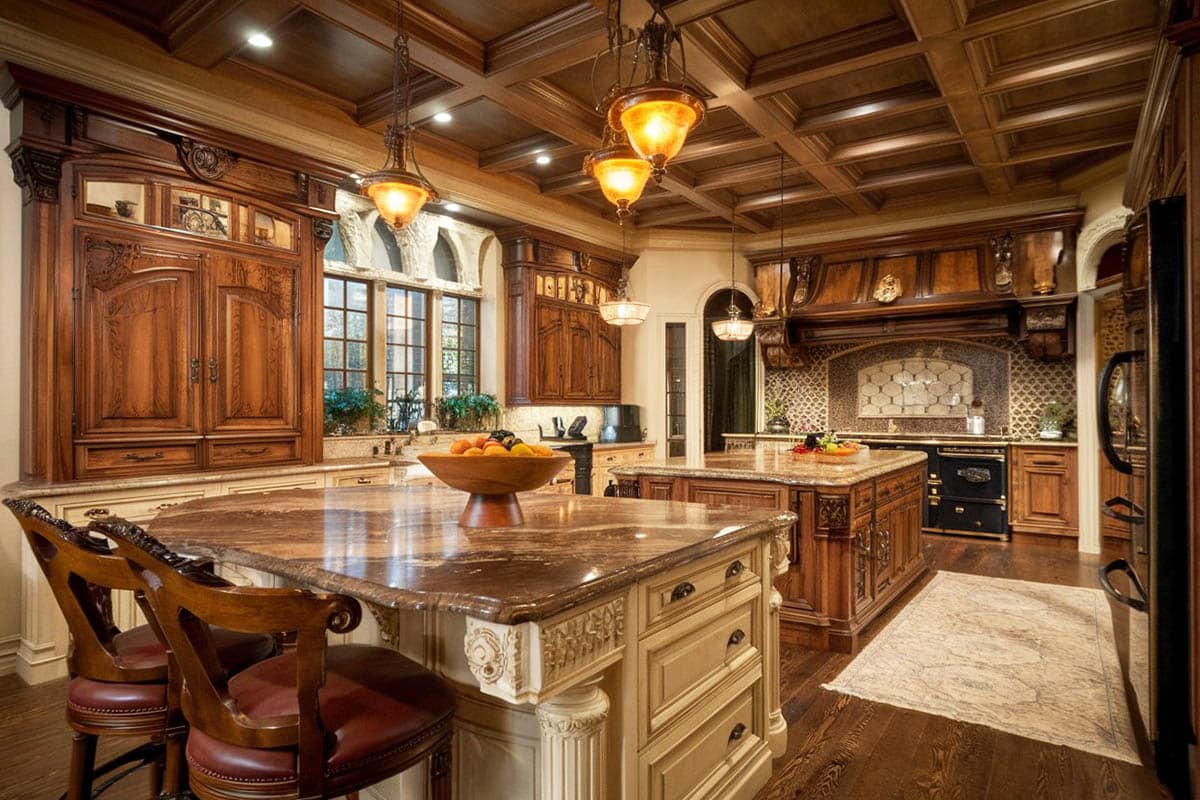
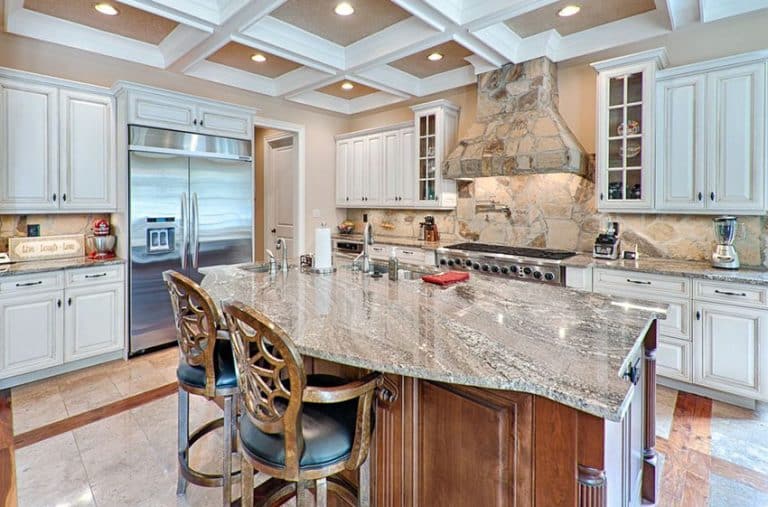
The beautiful Tuscan kitchen shown in the picture above is both spacious and luxurious. Its detailed coffer ceiling already sets the classic/traditional vibe of this kitchen as it boasts of moldings and details typical of classic interiors. Rustic mahogany floors and off-white walls set a warm background to the space, allowing the cabinets’ weathered wenge finish to stand out. In this design, storage space is given priority, especially on the wall cabinets and counters.
Much of the space is dedicated to cabinet storage and displays, while counter space remains mainly on the large kitchen island. The matte wengue finish has a weathered look and has classic Italian motifs like turned spindles, decorative corbels with acanthus leaf carvings, and wooden panels with stenciled flower paintings. This kitchen also has a separate island counter, which is higher than the standard counter height. It uses a countertop made from the solid Mahogany frame with ceramic tiles in its center. The bae cabinet is white instead of wengue, making it look like a separate piece from the rest of the kitchen.
Tuscan Kitchen Color Palette Comparison
Tuscan color isn’t one palette, it’s a family of them, and the one you pick changes how the room reads more than the cabinet door style ever will. Here’s how the six most common directions actually behave in a real kitchen, including where each one gets you into trouble.
| Palette | Colors | Best For | Pair With | Watch Out For |
|---|---|---|---|---|
| Terracotta & Ochre The classic |
|
Kitchens with good natural light and terracotta or stone floors already in place. | Natural hickory or oak cabinets, matte granite, wrought iron. | Going all in. When the floor, walls, and counters are all orange-based, the room reads flat. Break it with one cool element. |
| Cream & Buttermilk The bright one |
|
North-facing or small kitchens that need every bit of light they can get. | Cherry or dark walnut floors, weathered paint finishes, exposed beams. | Cream next to bright white trim. One of them will look dirty. Keep the whole room warm or commit to the contrast. |
| Olive & Sage The counterweight |
|
Rooms where the floors and walls are already heavily warm-toned and need relief. | Ochre stone floors, limestone counters, brass or unlacquered bronze. | Green that leans mint or gray. It slides modern fast and loses the old-world feel entirely. |
| Walnut & Espresso The formal one |
|
Large kitchens with high ceilings and windows on more than one wall. | Light yellow stucco walls, polished granite, generous layered lighting. | Small rooms. Dark cabinets on three walls in a modest kitchen feel closed in no matter how nice the wood is. |
| Limestone & Stone Gray The modern lean |
|
Anyone who wants the Tuscan feel without the saturated orange commitment. | Rough plaster walls, one warm wood island, hand-painted accent tile. | Drifting too neutral. Without at least one warm element, it stops reading Tuscan and starts reading transitional. |
| Tuscan Red & Wine The accent |
|
A single island or a run of lower cabinets. Rarely the whole kitchen. | Cream uppers, travertine floors, red-veined or salt and pepper granite. | Anything close to a true fire-engine red. Desaturate it until it looks like it’s been on the wall twenty years. |
How to actually use this: pick one palette as your base, borrow a single accent from a second, and stop there. The kitchens that go wrong are almost always the ones trying to run three palettes at once. And test paint on the wall before you commit, because Tuscan colors shift hard between morning and evening light. A terracotta that looked perfect at noon can go pink by six.
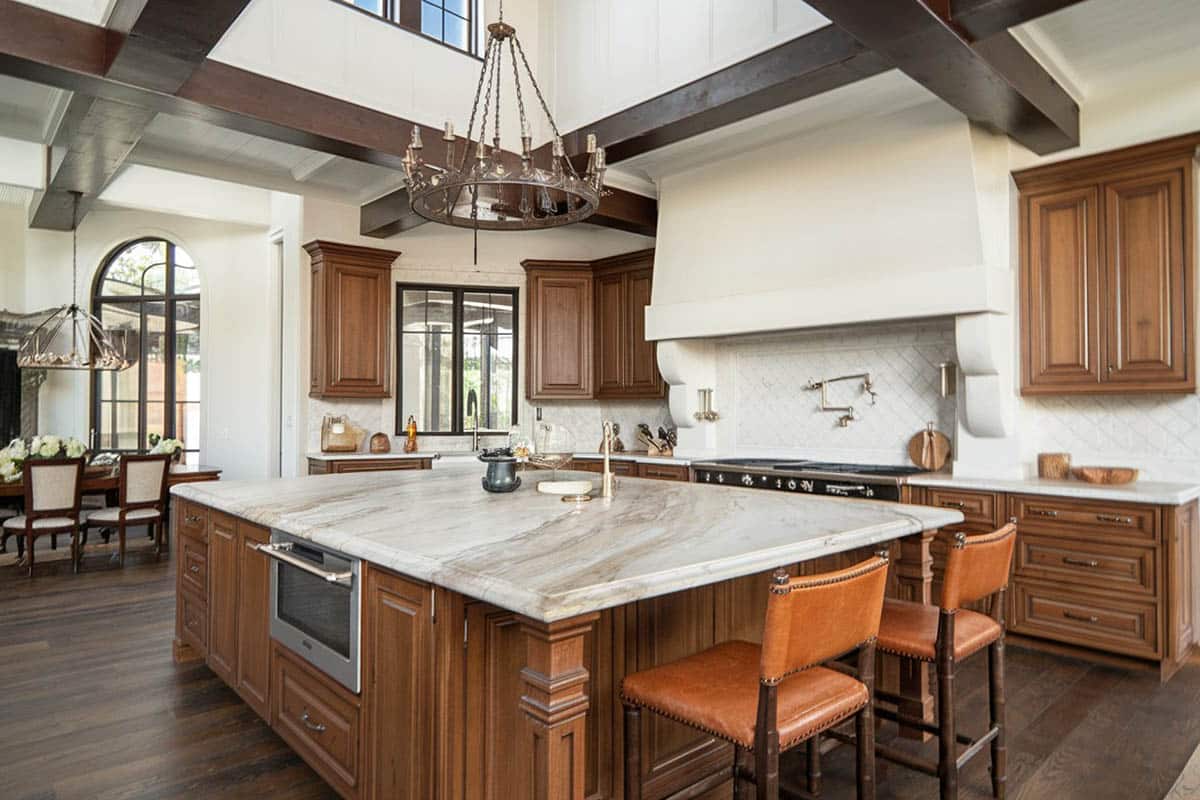
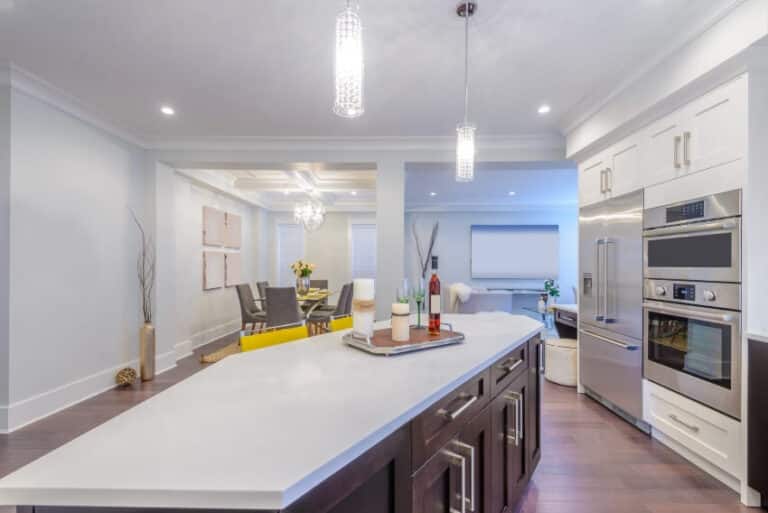
This is a good example of a modern adaptation of a Tuscan-style kitchen. It boasts details such as dark oak wood flooring and matching oak wood exposed ceiling trusses to give that classic antique feel, while the cabinets are made of solid walnut with a strong red undertone. This modern version uses a glossy white marble countertop instead of a matte finish, which is more typical of classic Tuscan designs. Still, the use of cast iron chandeliers and hand-painted mosaic tiles for its backsplash makes up for the glossy finish of the counters.
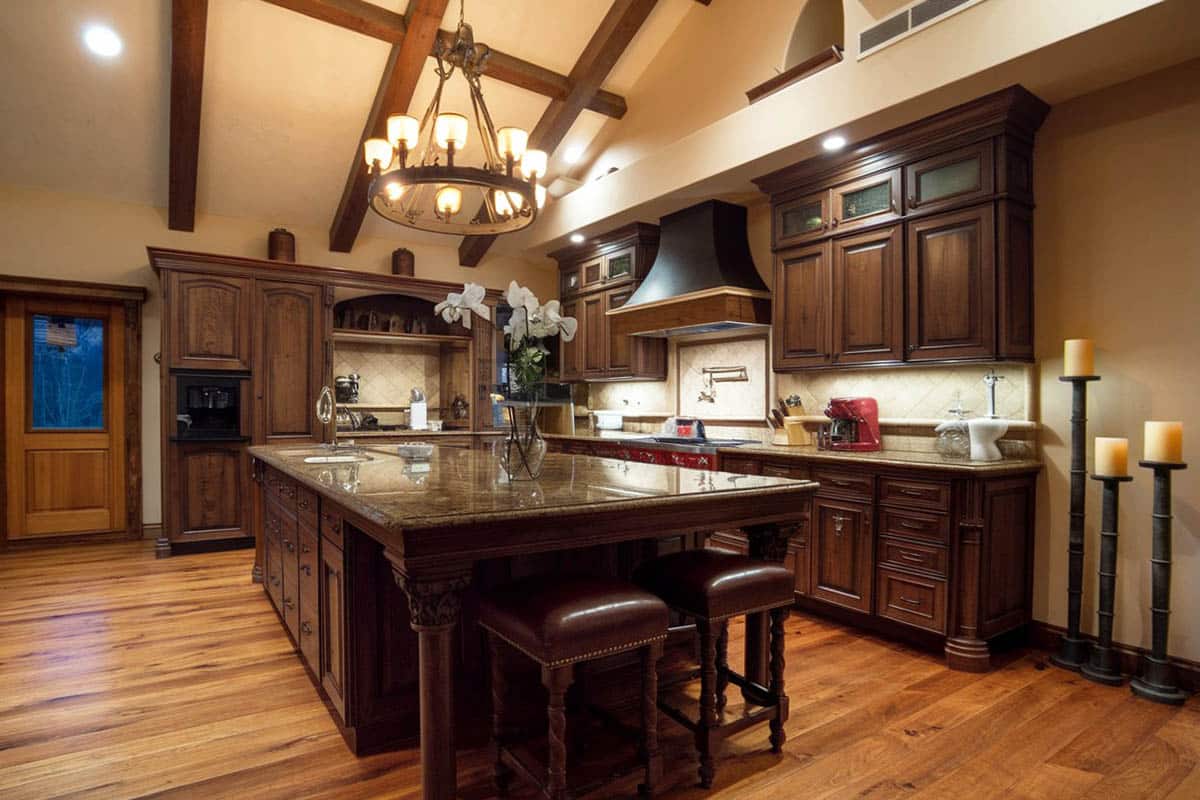
This is another excellent modern adaptation of Tuscan style kitchen design, which features rustic maple flooring, exposed mahogany ceiling trusses, beige-painted walls and solid walnut cabinetry. It uses matte granite stone for its countertop and mosaic ceramic tiles of the backsplash, adding a few hand-painted pieces at the rim of the range hood cover. The look is completed by adding cast-iron bar stools , a chandelier, and glass jars with preserved fruits as accessories. Using built-in or integrated appliances with cabinet fronts keeps true to the Italian style ambiance. Using vintage or retro appliances is another way to achieve the old-world charm look.

Fusing industrial details with classic Tuscan elements results in a very interesting look. The base of the space is perfect for Tuscan-inspired interiors, as it uses matte stone flooring and real limestone masonry on the walls.
The light-colored natural stones provide an excellent background for the weathered wengue base cabinets of the counters, as well as the Mahogany base of the island. It also adds interesting details such as faux nailheads on the edge of the island countertop to match the hammered iron range hood.

This small corner of this space already boasts of many details typically found on Tuscan kitchens. The room features a matte granite countertop paired with rustic cabinets, and natural stone flooring with a warm orange color tile.
Other standouts include overhead cabinets with glass doors to display ceramic wares and other items inside, classic Italian motifs, corbels and even glass bottles and jars with fruit preserves as accessories.

For those who prefer kitchens which have a brighter and more casual appeal, this variation of Tuscan style kitchen is a great option. Using light basic finishes such as white walls and natural granite tiles for flooring, the space is able to create a light backdrop for the rustic fruitwood finish of the cabinets.
The space also has a large window, which helps provide natural light into the space, illuminating the whole room adequately throughout the day and highlighting details such as the brick-clad ceiling with wooden trusses and the rustic finish of the cabinets.
At the center is a large island counter with a mint-painted base cabinet, a Mahogany countertop and a cast iron pot rack hanging right above it. The cool mint tone of the island gives a refreshing feel to the space, and matches the desk and green ladderback chair at the side of the kitchen.

While most Tuscan kitchens have a more casual feel, this design looks a little more formal because of its darker ambiance and finishes. It uses a dark oak finish for all the cabinets and counters, as well as yellow granite for the countertop.
The dark wood paired with the glossy countertop creates a sense of luxury and elegance in the space, breaking away from the casual feel of traditional Tuscan kitchens. Despite these variations, however, you will still see essential elements in Tuscan kitchens such as the importance placed upon storage space, glass door cabinets displaying valuable ceramics, and mosaic tiles depicting flowers and other Tuscan motifs.

Matte granite floor tiles and a warm light-yellow textured paint finish already give this kitchen a nice rustic ambiance. The cabinets maintain the light natural warm-toned color scheme by using Natural Hickory wood throughout, except for the fridge casing, which was painted in a dark wengue wood stain finish.
The natural stone countertop used on the main counters has a nice matte finish in contrast to the glossy stone used on the island. The backsplash uses marbled finish ceramic tiles and has accent tiles which were hand painted to create fleur patterns, and is framed with relief carved metal.

This gorgeous kitchen has a simple open design, making it a great venue for entertaining guests and family over food. The open space uses natural granite tiles with a yellow color and a variety of sizes to create a random geometric pattern on the floor surface, walls are off-white, and the ceiling boasts exposed natural teak wood beams and planks.
The kitchen itself is flanked by windows, providing adequate lighting into the space, helping illuminate the gorgeous Sequoia cherry cabinets with carved grape vines for accent. The kitchen also has a large island used mainly as additional preparation space and a casual dining area, allowing space for four cherry wood bar stools.

Dark cherry wood flooring, light beige walls and cherry wood planks in a chevron layout on the ceiling create a perfect backdrop for this rustic Tuscan kitchen design. It uses warm white lights to create a warm and romantic ambiance, as well as a combination of different wood finishes for that laid-back feel.
The main cabinets use a rustic walnut finish, and dedicate the corner for the oven tower, while the large L-shape island uses a weathered painting technique for its base cabinet, using a unique teal color for a pop of color. You will also see antique bar stools with fruitwood framing, matte mosaic backsplash tiles, as well as accessories typical of Tuscan kitchens such as plates, fruit baskets and plant vases.

Wittily blending some Moroccan details into the design, this eclectic Tuscan kitchen combines elements of Moroccan and Tuscan design styles to create a light yet casual design. The most notable Moroccan detail would be the vaulted ceiling of the kitchen, which was painted with Moroccan motifs and colors like green and orange, which is also associated with Tuscan design. The ceiling itself already creates a statement in the space, and helps emphasize the kitchen area.
The flooring uses pale maple wood, while walls are light oatmeal with a stucco finish. The cabinets all use Antique teak, combined with a cream yellow granite countertop. The central part is dedicated for cooking, while the right wall is mainly for baking and for storing other food items.

This kitchen has a very interesting look, as the whole floors and walls were clad in matte marble tiles, creating a natural pattern on the surface, which also makes it quite challenging to design because of the natural patterns of the stone.
The design, however, still fearlessly used solid chestnut cabinetry, with exaggerated corbels and other carved motifs. Because the walls and floors already look quite busy, the kitchen compensates by using the same wood finish all throughout the space, and using the same beige granite counters all throughout as well.

From this angle, you get a close-up perspective of the luxurious beige marble countertops and custom cabinetry of the wood island. Custom wood molding and finishes are evident throughout the space, giving it a very alluring design. The Italian style is also prominent in the arched windows, marble flooring, and backsplash.

This Tuscan kitchen looks large and spacious thanks to the high ceiling space. The area has an open floor plan, which makes the dining area directly accessible from the kitchen, making it a perfect central spot for entertaining. Cherry wood flooring was paired with a white-washed orange stucco paint finish for the walls and antique brick tiles on the ceiling and the arch opening, to complete the provincial rustic look.
The cabinets use natural Hickory topped with black and red granite counters, and an island that was painted in black and has latticework molding details, reflecting the diamond-patterned mosaic tiles used on the backsplash.

Arch windows, wooden beams and terracotta floor tiles already set an authentic classic provincial vibe to the space, and are further completed with the paneled cabinets made from solid natural oak.
The backsplash was tiled with diagonally oriented orange ceramic tiles, while the island uses a thick slab of solid cherry wood with metal corner brackets for its countertop. There is a large cabinet dedicated to displaying items in the kitchen, but all overhead cabinets still use glass doors.

Italian-style kitchens typically have an elegant, old-world vintage feel, while Tuscan kitchens tend to be a bit more country kitchen or even shabby chic in their overall feel. This large kitchen is a good example of such, as it combines a variety of natural finishes, as well as rustic finishing techniques, to achieve this look.
Definitely a functional kitchen, this design has spacious walkways in and around the kitchen area, allowing multiple users to freely move around and work efficiently. Large islands provide much-needed workspace, allowing one whole wall dedicated to range cookers and ovens.
The space is dominated by rough, rustic finishes, such as the ochre stone flooring, the stone masonry wall and the brick oven wall. Since most of the general surfaces were already warm-toned, the cabinets were painted in a cool sage green rustic finish to give it that well-used appeal and were topped with matte natural limestone to complete the look.

Going for a softer, more neutral look, this rustic Tuscan kitchen goes for simple cabinet silhouettes and uses natural hickory in a matte finish to set a soft warm ambiance to the space which complements the solid walnut flooring.
Walls are simply painted in a matte off-white paint, while the door and window frames also use natural Hickory wood to match the exposed wooden trusses on the ceiling. To add a bit of variety to the otherwise simple design, ceramic tiles in a diagonal checkerboard pattern were used on the backsplash wall, but use cream and mocha brown instead of black and white to maintain the rustic look.

Tuscan ideas with breakfast bars are inviting and a useful way to bring families together. This kitchen offers dark solid wood cabinetry with intricate scrollwork and a large custom island.
Rustic rough cut stone surrounds the large gas stove. Touches such as the wrought iron chandelier, dark bar stools, and glass door cabinets give this kitchen an old world design that is elegant and full of personality.

This soft, rustic Tuscan kitchen design has a light and soft color palette that would match both modern and period style designs.
Starting with the background, the space uses a plain white matte paint finish with added plaster texture, giving the interiors a Mediterranean look, and further extends the same finish to the high ceiling, which then adds ornamental wood beams to give it more dimension. The flooring of the area definitely sets the authentic vintage look of the kitchen, as it uses Moroccan star-shaped terracotta tiles, creating a gorgeous and elegant pattern on its surface.
For the cabinets, you will see that the large space allows you to create separate areas in the layout, separating storage, cooking and baking areas from each other, through wall niches in which the cabinets perfectly fit. The paneled cabinets were painted in a steel blue color in a weathered finish, while the large island keeps the natural color of the oak, enhancing the rustic feel of the space.

Some people prefer a more polished finish when it comes to their cabinetry, and if you want to achieve the casual Tuscan kitchen feel, this is a great example to take notes from.
Mahogany cabinets were given a light sheen using a satin top coat, while the countertops use a yellow-toned polished granite stone. To balance out the smooth finishes of the cabinetry, the floors, walls and even the ceiling were given more textured finishes. Flooring is natural limestone in a light yellow color, while the walls are of stucco finish in a golden yellow color, creating a warm and romantic ambiance in the space.

Elegant yet playful, this luxurious Tuscan kitchen boasts classic Italian-style cabinetry, paired with other upscale materials and finishes. A full wall was dedicated for storage, using paneled amber cherry wood cabinets with small glass cabinets on its upper portion and cabinet lights to display precious items.
There are two islands in the space. The one at the center has a dark wengue base and a red polished granite counter, while the other one is more of a bar island that uses light chestnut wood with neoclassic details.
Unlike most Tuscan kitchens, you will not see the baking area in this space, but on the other hand, you will see a large display cabinet on the side with open shelves for displaying various items, which is a very notable element in a Tuscan kitchen. Walls were given an off-white stucco finish to add to the rustic feel of the space, while a skylight and a large window help illuminate the area.

Coordinate is the key word for this gorgeous Tuscan kitchen, as it uses a uniform color scheme and wood finish all throughout the interior spaces. You will notice that all wood elements use the same Hickory wood color and finish, creating a very coordinated look.
The hickory wood will be seen on door and window frames, baseboards, cornices and other moldings and furniture pieces. This also sets a warm yellow undertone in the whole interior, especially as the kitchen uses natural sandstone flooring which also has a yellow-orange undertone. This kitchen has a unique octagonal island in the center, which reflects the shape of the recessed ceiling design.

A light cream and yellow weathered paint finish on the cabinets gives this kitchen a very vintage, aged appearance which boasts lots of personality and a lovely, soft texture. It was placed in the middle of the house, allowing converging traffic, making it a great place for family gatherings.
The cream colored cabinets easily complement the dark red undertones of the Cherry wood flooring, while the wengue island attempts to match itself with the other Italian furniture pieces in the interiors, such as the ladder-back armchair in the casual dining area.

This lovely design came about by fusing Tuscan elements with other period style designs, as well as modern aesthetics.
Light beige natural granite floors and stucco finished walls set a legitimate Tuscan style background for the kitchen, while the bright artificial and natural light combination gives the interiors a lighter, cleaner feel as often associated with modern designs.
The furniture finishes used in the kitchen are varied, making them look like individual movable furniture pieces instead of cabinets. You will see the use of teak wood, cherry, as well as matte white paint, combined with cream and red polished granite. The cooking area has a built-in commercial-grade cook top, and is accentuated by antique ceramic tiles placed on its adjacent wall, which form a lovely textured chevron pattern. You will also notice the use of Queen Anne style bar stools, as well as a very Tuscan kitchen element, a brick oven right at the corner of the space.

People tend to shy away from darker cabinet finishes and color combinations when it comes to designing Tuscan kitchens, as darker palettes evoke a more polished and intimidating feel. This design, however, demonstrates how you can use dark wood finishes, yet still achieve that casual and welcoming feel that people love about Tuscan kitchens.
The design starts off with a warm, textured base of natural limestone flooring, and light yellow stucco wall paint for a Mediterranean feel. Both natural and artificial lights adequately illuminate the space, therefore making it easier to use the dark American cherry wood for all its cabinets.
Yellow sandstone was used for the countertop, and its rough-cut upper edges were kept to give it a more rustic look despite its polished surface. Completing the whole look would be the massive solid American cherry wood beams on the ceiling, and the black cast iron pot racks and pendant lamps used as accessories.

This kitchen space is a little more narrow than the other examples, but the abundance of windows makes the space look larger.
Kitchen cabinets are all of the same material and finish, using sequoia cherry in a satin finish, topped with brown and white polished granite counters with a beveled nosing. The cherry wood cabinet is the same material used on the doors and windows of the space, so it looks well-coordinated as well. Flooring material is natural limestone for added texture and a subtle warm reflection, while the walls are painted in a combination of light yellow and plastered white.

A variety of textures and finishes were combined in this eclectic Tuscan kitchen, showcasing the elegance and cabinet craftsmanship of Italian designs, and at the same time, showcasing the warm and casual attitude of Tuscany.
Rustic oak wood flooring gave the kitchen a nice textured base, while the light cream stucco wall paint finish further adds a subtle texture to the surface. Kitchen cabinets use a combination of Mahogany in a satin finish and a white-painted base, creating a great balance, and both of which look great with the gray and gold marble countertop.
If you look closely, you will also notice the use of light cream slate tiles, as well as blue-tone brick tiles on the columns and backsplash walls, further adding color and texture to its surfaces. The cooking area is given more emphasis through the use of white marble tiles which were hand painted to depict an illustration of an old city.

This unique Tuscan kitchen is definitely the star of the house, as it is placed at the center of the open floor area and was given lots of space, allowing access from both the living and the dining areas.
The kitchen area is accentuated by a small vaulted ceiling, made from antique bricks, making you focus at the center of the space. The kitchen has a uniquely-shaped floor plan, allowing creative use of space and shapes to achieve the optimal layout.
Satin finished teak wood cabinets flank the walls, while a small antiqued black kitchen island is placed at the center, right below the vaulted ceiling to give it more emphasis. The bar counter is the mirror image of the main kitchen cabinets, giving it a trapezoid-like shape. Its front was clad with natural masonry stone, and is topped with salt and pepper granite. Many Tuscan kitchen ideas originate from warm earth tones and natural materials to create an inviting rustic appeal.

This is a gorgeous modern application of Tuscan kitchen design. Wood-framed doors and windows match the ornamental wood trusses on the ceiling, while the floors also keep a rough, matte appearance, by using rustic ceramic tiles.
The kitchen is quite small, but it does apply important Italian kitchen elements such as a matte finish in a combination of off-white and sage green, and a unique backsplash wall, which in this case, uses rustic ceramic tiles in a combination of greens, whites and browns. An old barn table was used for the dining table, while the dining chairs use white linen slip covers, to complete the rustic Tuscan kitchen look.
Marble counters are a rarity in the kitchen because of their expense. If you’re fortunate enough to own marble counters, wall tiles, or flooring, take steps to avoid stains that could mar the exceptionally luxurious appearance. – Kitchen Ideas You Can Use, Updated Edition, Chris Peterson
To showcase highly specific designs, some images on this website use advanced AI-generation software to illustrate ideas and room inspiration. See our editorial policy to learn more.