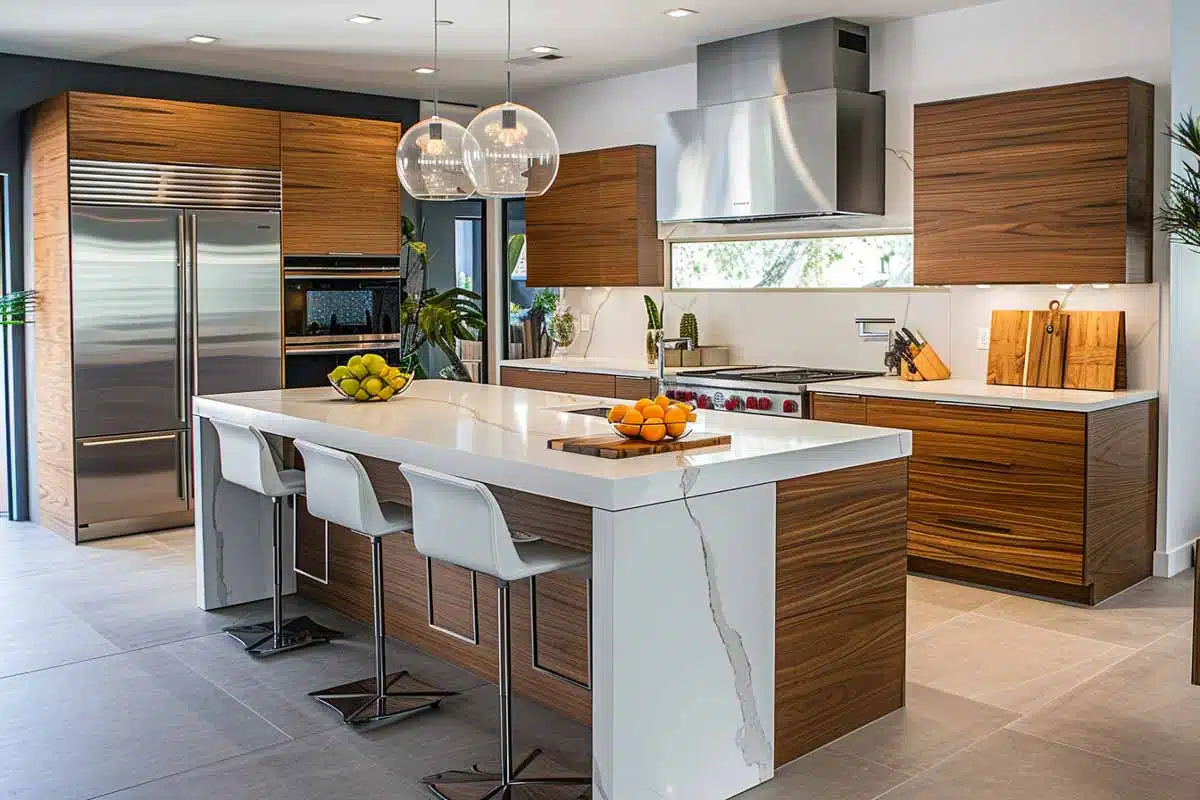
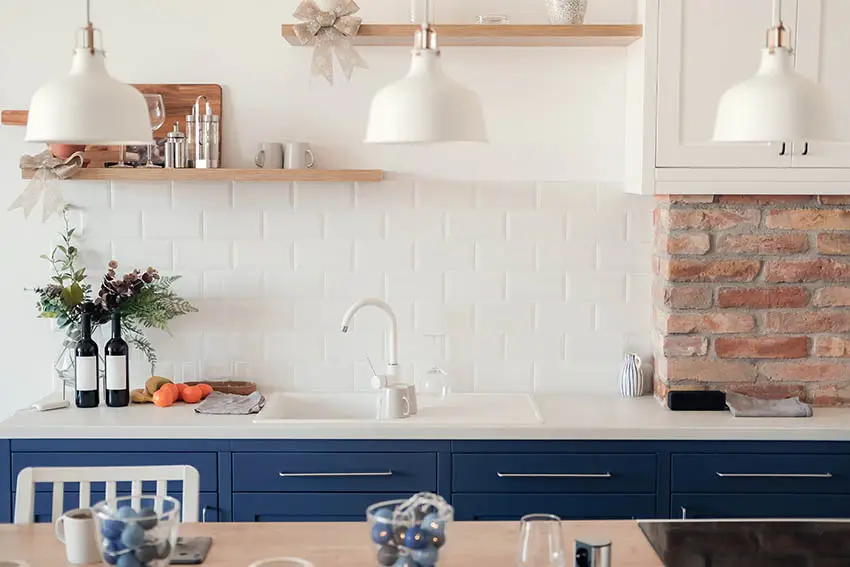
Choosing Kitchen Counter Stools: Designer Tips For The Perfect Fit

How do you know you’re getting the right size when choosing kitchen counter stools? In this guide, I’ll break down the things to know and the steps to ensure you get the right measurements so your stools are comfy and stylish.
Tips For Choosing Bar Stools For Your Kitchen
Let’s start with the numbers (the designer’s cheat sheet)

Upload a photo and get instant before-and-after room designs.
No design experience needed — join 2.39 million+ happy users.
👉 Try the AI design tool now
- The optimum seat-height formula: Seat height = Countertop height – 9 to 12 inches
Common pairings to use:
- Standard kitchen counter is 34 to 36″, so go with a 24 to 26″ high seat
- Bar counter height is 40 to 42″, so go with a 28 to 30″ high seat
- Breakfast bar height is 42″(See more about different depths including, width and depth here.)
- Spectator height counters are 46 to 48″, so go with a 32 to 34″ high seat
Now that we’ve covered the seat height basics, let’s take a look at another important factor, the amount of spacing to use per stool. Here’s a breakdown:
- For backless or armless stools, you’ll want to plan on 21 to 24″ spacing per stool (center-to-center)
- For seats with arms or wide seats, plan on 24 to 30″ spacing per stool
- Always aim for 4 to 6″ of space between the seat edges so your hips don’t bump.
Now that we’ve covered seat height and spacing, let’s take a look at the necessary countertop overhang & space needed for your knees.
- Kitchen island countertops where people sit need an overhang depth of 10 to 12″ for comfortable access for knees. Any less and you’ll feel jammed against the cabinet base, which is no fun for anyone.
- Your knee clearance from the front edge of the top to the stool’s seat line needs to be 10 to 12″ when used with 36″ high counters and 12 to 14″ when used at 42″ bars.
Let’s also take a look at footrest comfort for stools, so you have all of the bases covered when it comes to comfort.
- The top of the footrest should sit at 7 to 9″ from the floor.
How to measure so you only have to buy once
To start, measure from the floor to the top of the counter. Check for an apron or trim under the counter, and if there is, subtract its depth from the available knee space. Decide how many can fit by dividing the usable island length by your spacing number above. Remember that you should have about 36″ to 42″ space behind the seats for room to pull back and as a walkway.

Choose the right seat profile
Here’s a breakdown of some of the styles and their differences.
- Backless: Offers no backrest, but provides clean sightlines, is easy to tuck in, and best for tight walkways.
- Low back: Gives casual support without blocking views and is a great choice for open plans.
- High back / winged: Provides lounge-level comfort for longer sitting and offers a more formal look.
- With arms: Will add to the overall width but feels more comfortable and premium.
Should you choose a swivel or a fixed stool?
Choose a swivel if you want it to be easier to get in and out of, and a more kid-friendly option. The downside is they can swing and create wall nicks if you’re not careful. Go with a fixed stool if you want a quieter seat that provides a tidier alignment for neat freaks and photo-ready kitchens.
Materials & maintenance (Designer picks by lifestyle)
- Performance fabric (Crypton/solution-dyed): Gives a soft feel, is stain-resistant, and is a family favorite.
- Top-grain leather: Ages beautifully and is wipeable. Choose medium toned surfaces to better hide potential scuffs.
- Bouclé / textured weaves: Give off a luxe feel, but pick performance versions or use for low-mess homes.
- Wood seats: Warm and durable choice, but add a cushion if you spend a lot of time at the island.
- Metal frames: Slim, modern, and sturdy. Watch for cold to the touch feel, so pair with upholstered seats.
- Rattan/cane: Has an airy texture for a coastal or organic modern design. Make sure to seal for easier wipe-downs.
Finish mix tip: Match stools to your kitchen cabinet’s hardware tone or fixture finish, but avoid a perfect copy. Example: Use brushed brass pendants and stools with a brass footrest and a walnut frame for a layered warmth.
Color strategy (make it look intentional)
- Blend: Match with your cabinet tone for a calm, built-in look.
- Bridge: Pull the veining color from your quartz countertops into the stool’s fabric.
- Pop: Choose one saturated hue like navy, olive, or terracotta and repeat it in 2 to 3 accents nearby.
- Dark seats and light frames hide spills, while light seats and dark frames emphasize an elegant silhouette.
Comfort details most people miss
- Seat width: 17 to 18″ for slim profile stools and 19 to 22″ for seats that feel more like a dining chair.
- Seat contour: A slight scoop or cushion = longer sitting comfort.
- Back pitch: A gentle recline looks luxe and supports better posture.
- Quiet return swivel: Auto-centers the stool so your island always looks tidy and chairs are in line.
- Glides: Add felt glides to protect your wood floors and use nylon for tile or stone.
Safety & family notes
When it comes to weight and stability, heavier bases tend to tip less, which is important for families with kids. For a no-tip footrest, choose a front stretcher that’s welded or screwed, and not stapled. When it comes to family use, choose easy-clean fabrics with a rub count of 50k+, and a stain-repellent finish. You can also purchase removable covers to prolong their lifespan or look for models that come with them.
Style pairings (matches that win)
- Modern / Minimal: Go with a low-back or backless stool with a metal frame and a leather seat.
- Transitional: Choose an upholstered low-back chair in a performance fabric, with wood legs, and a metal kickplate.
- Farmhouse / Cottage: Select a Windsor-back or X-back chair with painted wood and add a linen seat.
- Coastal / Organic: Go with rattan/cane with light oak frame and performance linen seat fabric in sand or sea-glass.
- Industrial: Buy a powder-coated iron chair, with visible welds, and saddle leather seats.
For more examples, check out the different barstool styles here.
Quick barstool buying checklist
| Step | What to Check | Recommended Range / Rule | Designer Tip |
|---|---|---|---|
| 1 | Measure your counter height | Floor → top of countertop | Include finished materials like stone or butcher block in your measurement. |
| 2 | Determine ideal seat height | Counter height – 9 to 12 inches | 10 inches is the sweet spot for most kitchens, with enough legroom without feeling low. |
| 3 | Confirm overhang depth | 10 to 12 inches | Ensures enough knee space for comfort and proper stool alignment. |
| 4 | Plan stool spacing | 21 to 24″ (armless) or 24 to 30″ (with arms) | Leave 4–6″ between seat edges for comfort and easy movement. |
| 5 | Select seat width | 19 to 22 inches | Wider seats feel more like dining chairs—perfect for long conversations. |
| 6 | Check footrest height | 7 to 9 inches below the seat | Keeps feet supported and posture relaxed. |
| 7 | Choose materials wisely | Performance fabric, leather, or sealed wood | Match to lifestyle—easy-clean fabrics for families, leather for longevity. |
| 8 | Pick frame finish | Match or complement hardware & lighting | Layer finishes (brass footrest + walnut legs) for depth without looking the same. |
| 9 | Add protective glides | Felt for wood floors, nylon for tile | Prevents scratches and allows quiet repositioning. |
| 10 | Optional comfort upgrades | Swivel, return swivel, or padded seat | Swivel for easy access, auto-return for tidy alignment when not in use. |
To showcase highly specific designs, some images on this website use advanced AI-generation software to illustrate ideas and room inspiration. See our editorial policy to learn more.