Types of Sliding Doors (7 Design Ideas to Find the Right One)

In any structure, whether it is a house or a building, doors are crucial. They are not merely there for decoration. Doors are used for both people and equipment. It is therefore important that the type and size of the door be appropriate for the structure it is being fitted for. Over the years, different types of doors have come to life. One of the most commonly used doors in any structure are sliding doors. As the name suggests, the sliding door is moved by sliding a panel to one side horizontally. A lot of sliding doors are placed parallel to a wall. They have a track on top and on the bottom which allows the door panel to be moved from one side to the other. Sliding doors can be made from glass, wood, or metal.
Sliding doors have been in use for a long time. In fact, archeological evidence shows sliding doors were used in Roman houses in Pompeii, Italy. The first automated sliding doors were invented by Lew Hewitt and Dee Horton in 1954. They were inspired to invent sliding doors when they had difficulties with swing doors in high winds in Corpus Cristi, Texas.
Sliding doors come in more flavors than you might expect. Here are the seven types we’ll cover, and where each one earns its way.
- Pocket doors
- Patio and French doors
- Bypass doors
- Sliding barn doors
- Folding and accordion doors
- Multi-slide glass wall doors
- Telescoping sliding doors
Door Opening Styles
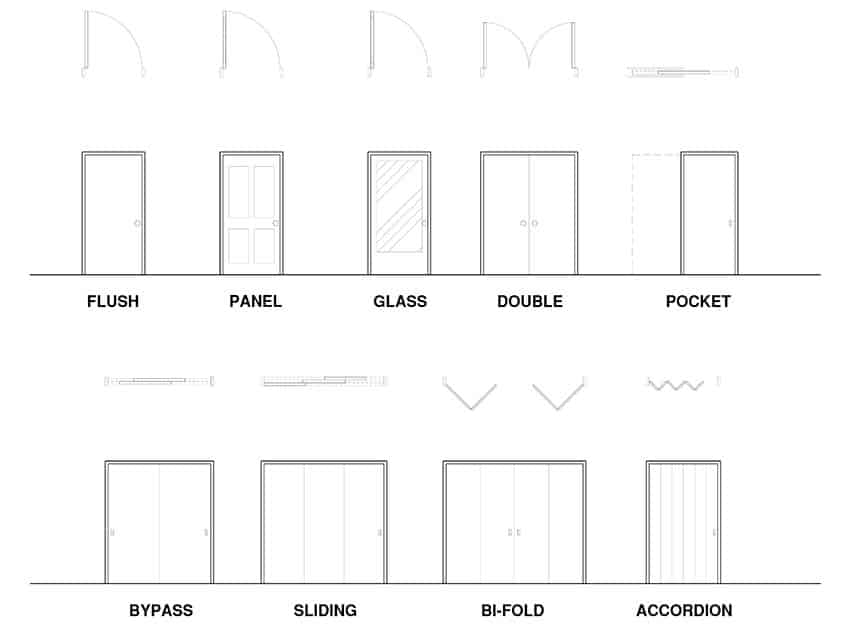
In a big open space, glass sliding doors offer separation without making the space look smaller. An example is having a home office using glass sliding doors. They offer privacy but do not cut off the space because you can still see the room and still allows natural light to penetrate through.
Pocket Doors
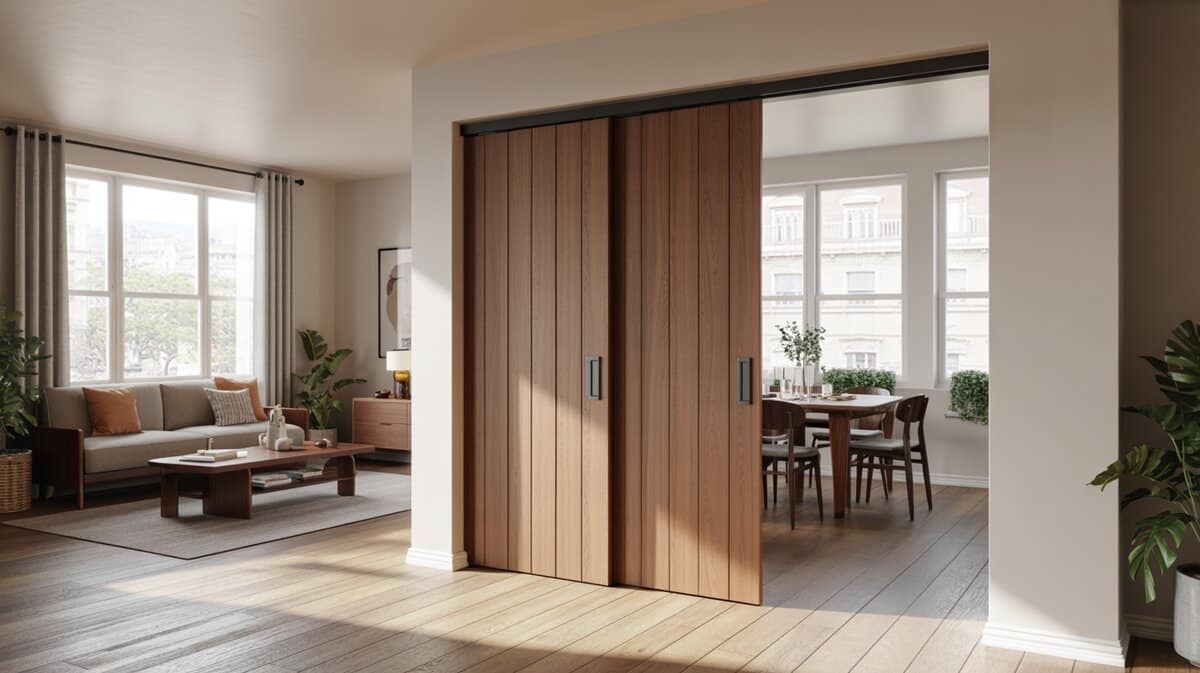
Pocket doors are types of sliding doors that have a single panel without any hinges. The panel of the pocket door disappears into a hollow cavity (or “pocket”) in the wall. The door panel is mounted on rollers that glide along an overhead track. This type of sliding door is popular for small and tight spaces where there is not enough room for a regular swinging door. Examples of spaces that can be installed with pocket doors are small bathrooms or half baths/powder rooms, closets, laundry rooms, and home offices. Read more about the types of shower doors here.
In larger spaces, a pocket door can be used to separate two rooms. An example of this is between a living room and a dining room. Instead of using regular doors, pocket doors create an ideal separation but does not clutter the hallway and still allows a continuous flow of the space when the door is opened. It also saves space because the door does not take up space.
However, installing pocket doors require professionals to check on the walls where they will be installed. The paint used for the doors should also be taken into consideration to make sure it does not stick to the wall and prevents it from sliding smoothly.
Patio Doors
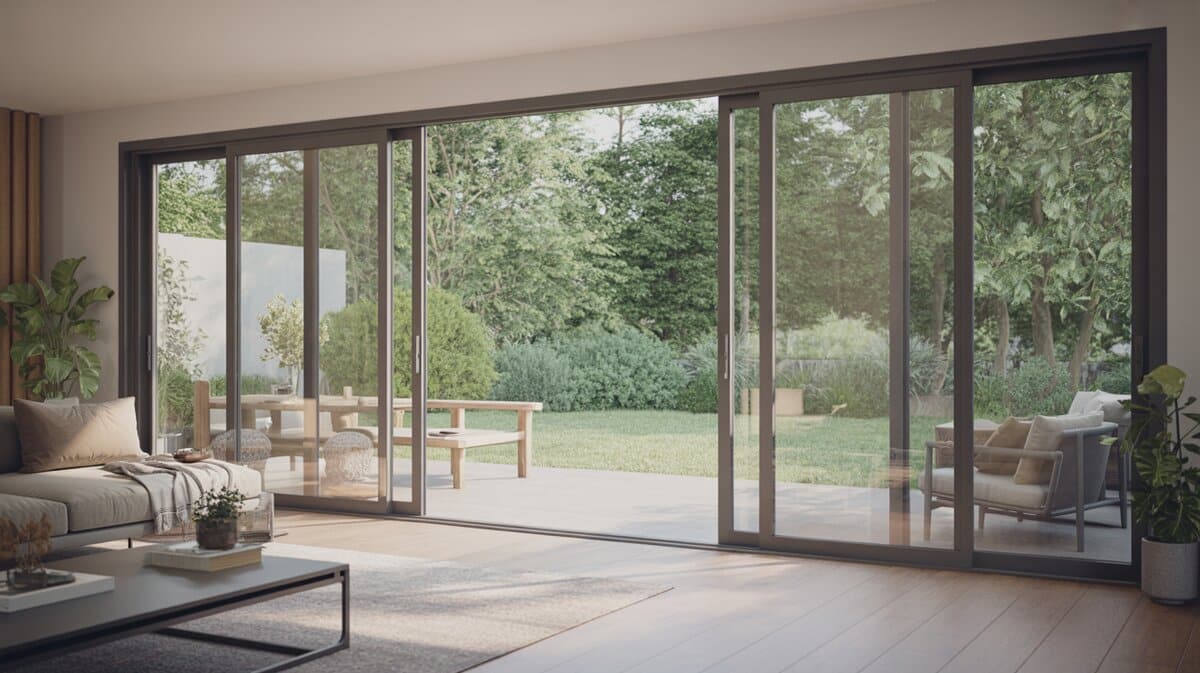
A patio door is what we usually picture what a sliding door looks like. It has two panels wherein one stays in place and the other one slides over to one side. It is also called a French door. French doors are a pair of glazed patio doors that hinge at opposite sides and meet in the middle. They create a large entryway when both panels are opened. However, not all French doors are suitable for outdoor spaces.
Sliding patio doors are commonly rectangular in shape and are made from glass. They are often placed to separate the indoor space from the outdoor one. For indoor use, they can also be used to separate the living room from the dining room.
Bypass Doors
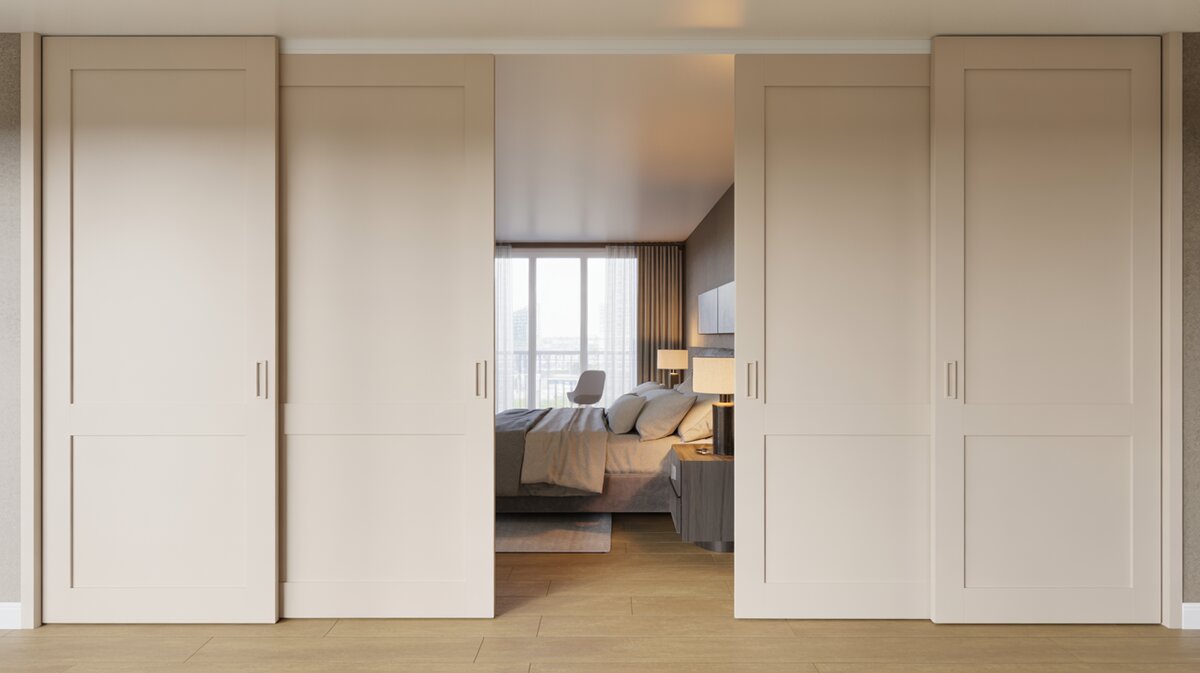
Bypass doors have two adjacent and fixed panels. This means that they have tracks both above and under the door. This type of sliding door moves in one direction when opened. This commonly used sliding door requires more space compared to other types. Bypass doors are often used for closets or wardrobes.
Sometimes, bypass doors are used to separate the bedroom with the bathroom. They are usually made from wood or glass. A glass bypass door gives another function: a whole body mirror. This makes it even more suitable as a wardrobe or closet door. It can also be used for a small office space next to a bedroom to create separation and privacy.
Sliding Barn Doors
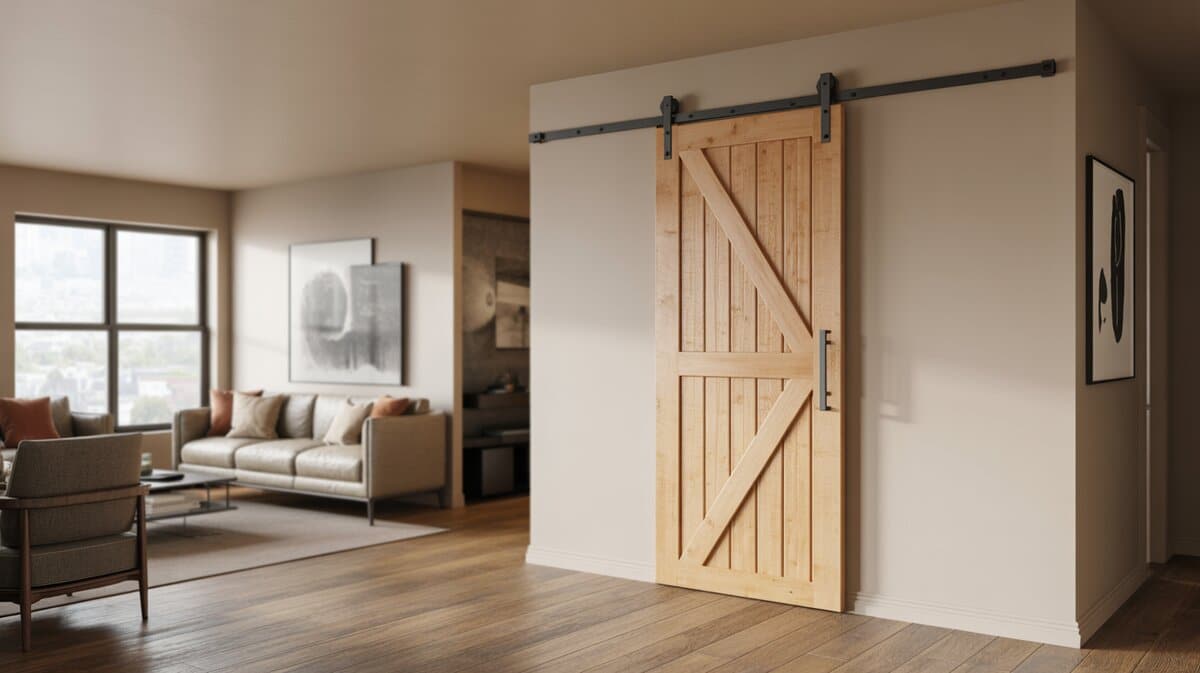
Sliding barn doors are popular and have several benefits that make them a great choice for use as an interior door. For one they create a focal point and can give your room charm and a rustic to modern look depending on the type of door you install. They also look great whether they are in the open position or closed. Another thing about sliding barn doors is their ability to save space by not having to swing open.
Folding & Accordion Doors
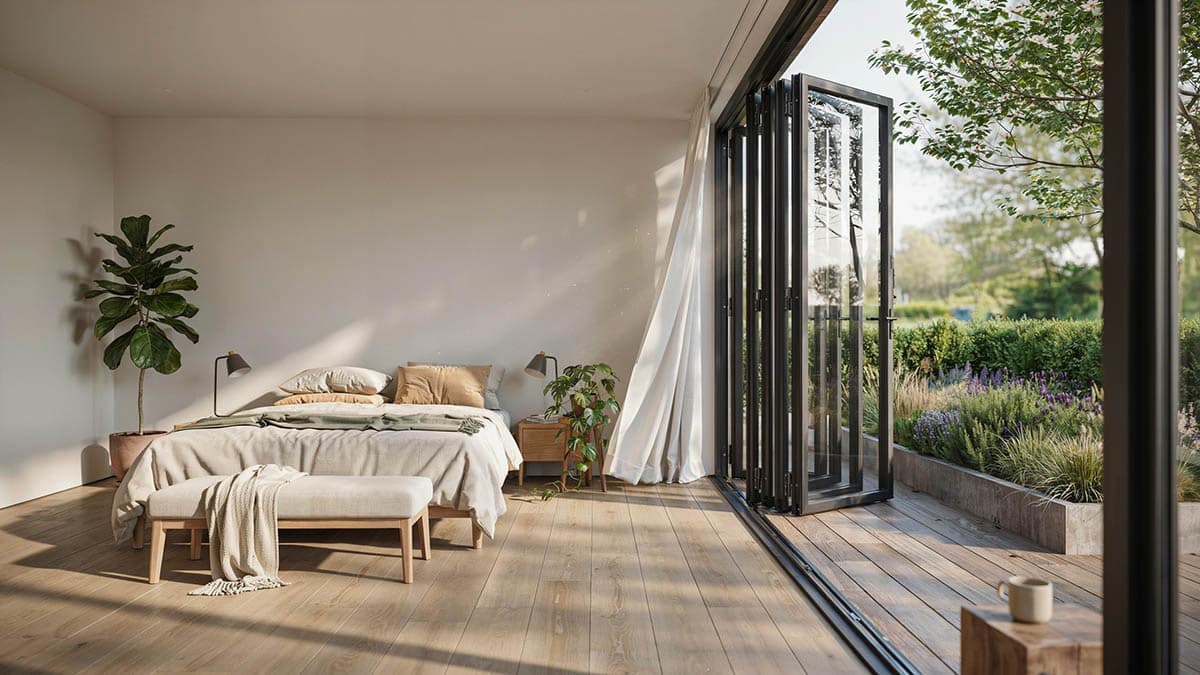
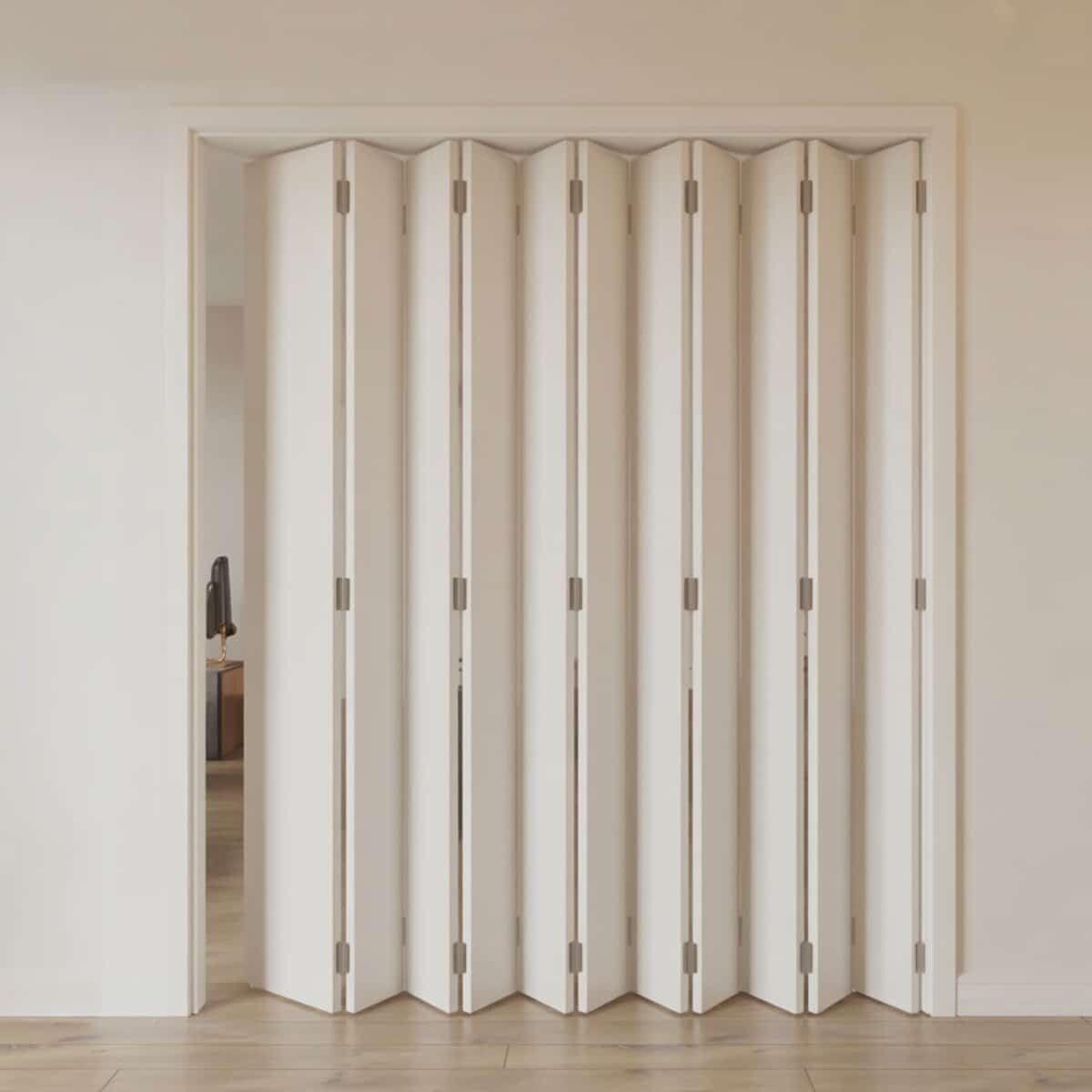
Folding doors or panoramic doors make a great addition to bedroom’s or living rooms that want to open up to present a true indoor/outdoor living experience. When closed a folding door looks much more like windows giving them an attractive look that enables more unobstructed views than many other types of sliding doors. You can select how many panels you would like for your folding doors, helping you better control the airflow in to your home.
Due to their unique design an accordion door doesn’t require as much room to operate as many other types. Folding accordion doors are the ideal choice for small areas such as hallways, closets or bathrooms where space is limited.
Multi-Slide Glass Wall Doors
Multi-slide doors are what you reach for when you want a whole wall to disappear. Several large glass panels glide along parallel tracks and either stack to one side or tuck into a pocket in the wall, so there’s barely any frame left in view.
They shine in living rooms and kitchens that open onto a patio, deck, or pool. On a nice day, you slide everything back, and the line between the room and the yard basically vanishes. Closed, they’re still a wall of glass pulling light deep into the house.
They cost more than a standard patio slider, and the wider you go, the more you’ll want a pro on the install. For true indoor-outdoor living though, nothing else quite matches the effect.
Telescoping Sliding Doors
Telescoping doors take the patio slider idea and add panels. Instead of one panel sliding behind another, three or more panels move in the same direction and stack neatly at one end. You get a much wider opening without cutting a pocket into the wall to hide anything.
Because the panels nest together, they clear a lot of space with very little track on show. That makes them a smart middle ground for a wide opening where a single sliding panel feels cramped and a full glass wall isn’t in the budget.
You’ll see them on patios most often. They work just as well indoors, splitting a large room while leaving you the option to open it right back up.
Sliding Door Types Compared
Still weighing your options? Here’s a quick side-by-side to help you narrow it down before you commit.
| Door Type | Best For | Space It Needs | Usually Made Of |
|---|---|---|---|
| Small baths, closets, room dividers | A hollow cavity inside the wall | Wood or glass | |
| Patio / French | Living room out to a patio or yard | Wall width for one sliding panel | Glass |
| Bypass | Closets and wardrobes | Wall space beside the opening | Wood, glass, or mirror |
| Sliding Barn | Statement dividers and feature walls | Open wall next to the doorway | Wood or metal |
| Folding & Accordion | Indoor-outdoor walls and tight spots | Very little, the panels fold up | Glass or wood |
| Multi-Slide Glass Wall | Whole-wall indoor-outdoor openings | A stacking zone or wall pocket | Glass |
| Telescoping | Wide openings with no wall pocket | A stacking zone at one end | Glass |
Frequently Asked Questions

What’s the most common type of sliding door?
The sliding patio door, hands down. It’s the two-panel glass door most people picture when they hear “sliding door,” and you’ll find one on the back of houses everywhere. One panel stays put while the other slides across.
Are sliding doors cheaper than swinging doors?
It depends on the type. A basic bypass closet door can come in cheaper than a hinged one. A big multi-slide glass wall will not. What you’re really paying for with sliding doors is the floor space they save, since nothing swings out into the room.
What’s the difference between a patio door and a French door?
A sliding patio door slides sideways on a track. A French door is a pair of doors hinged on opposite sides that swing open and meet in the middle. People mix up the terms because you can get patio doors in both styles, but the way they open is the real giveaway.
Which sliding door saves the most space?
Pocket doors. They slide straight into the wall, so when they’re open they take up zero floor or wall space. That’s why they’re a favorite in small bathrooms and tight hallways where a swinging door would just get in the way. Read more about sliding door sizes here.
To showcase highly specific designs, some images on this website use advanced AI-generation software to illustrate ideas and room inspiration. See our editorial policy to learn more.