White Kitchen Cabinets vs. Dark Cabinets: What To Choose
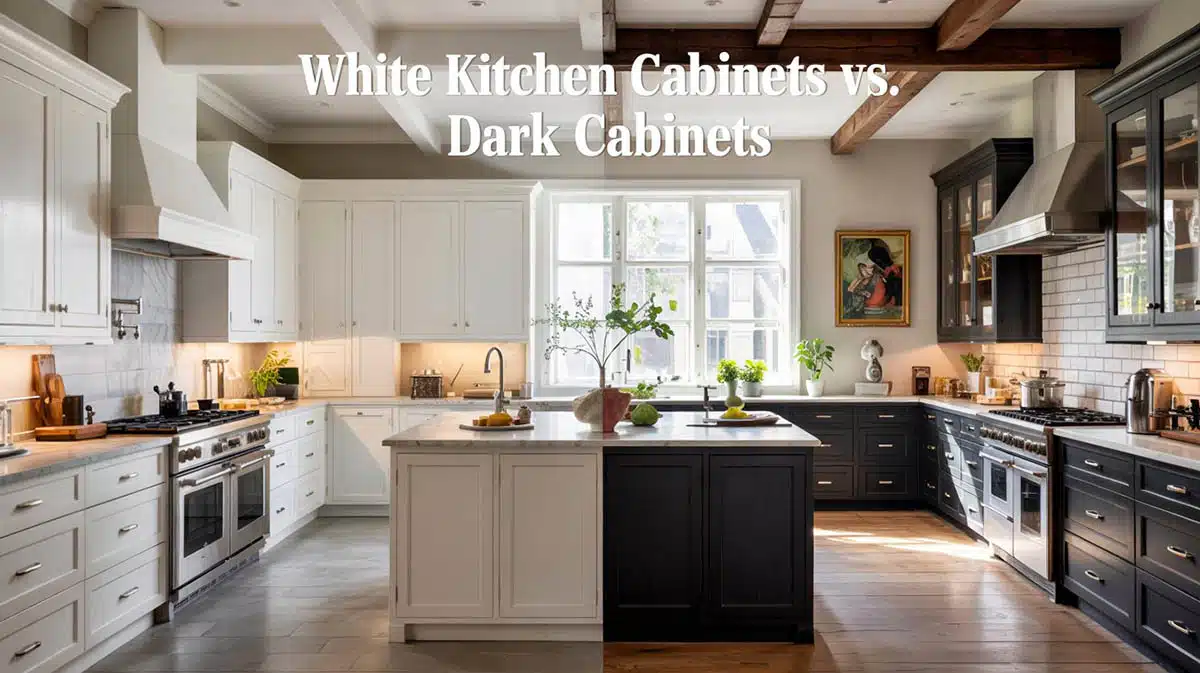
Anytime you’re choosing between white kitchen cabinets and dark cabinets, you’re not really picking a “color,” you’re choosing how the room will feel to you every day. There are some good reasons to choose one color over the others, and below I’m going to share the reasons for each, along with some tried-and-true advice to help you pick. So let’s take a closer look at white kitchen cabinets vs. dark cabinets to help you decide.
How Designers Look at Cabinet Color
If you ask an interior designer what tone to use for your kitchen, before most ever decide on white or dark, they’ll want to know a few things about your home and your preferences. One of the most important considerations is how much natural light this kitchen gets. After that, they’ll want to know if the room is small and enclosed, or open to other spaces. Some other factors that may impact your decision are if you’re planning on selling within the next 5 to 10 years. Do you want the kitchen to feel airy and bright, or are you more drawn toward the cozy and dramatic? Both white and dark cabinets can be beautiful and feel designer, but they do totally different jobs in a design.

Upload a photo and get instant before-and-after room designs.
No design experience needed — join 2.39 million+ happy users.
👉 Try the AI design tool now
Why Choose White Kitchen Cabinets

There are a lot of reasons that interior designers keep going back to white, and it remains a timeless choice that never seems to go out of style. That’s why so many designers treat white as their safest long-term choice. White cabinets can work with practically any style, such as modern, traditional, coastal, and farmhouse. Their lighter, neutral background makes them much easier to update with new hardware, lighting, and a backsplash instead of a going through a full remodel.
Color expert and designer Maria Killam puts it simply:
“White kitchen cabinets offer the most timeless look and the one you’d least tire of over the years.” Maria Killam | Timeless Color
Another designer-backed point is that white cabinetry can visually enlarge a room. White and lighter-toned cabinetry reflects light, making smaller kitchens feel brighter and more open.
Deslaurier designer Adele Jacobs says:
“In smaller kitchens, the light cabinets will make your space feel a whole lot more open.” Adele Jacobs | Deslaurier
That’s one of the reasons that those with a compact or low-ceilinged kitchen often go with white, because they want it to feel bigger.
Pros of White Cabinetry
- Visually expands the room. White’s best for those with small or low-light kitchens that need help feeling more open.
- Plays nicely with colors, materials, and finishes. It’s easy to change hardware, wall color, counter & backsplash materials, and still have a fresh, cohesive look.
- Resale-friendly. A neutral, light-toned kitchen appeals to the widest pool of buyers and can make a home sell more easily when you’re ready to list it
Downsides of White
- They show dirt, splatters, fingerprints, and everyday grime more quickly. From a practical standpoint, these designs can be beautiful, but unforgiving when it comes to showing imperfections.
- Any chips, cracks, or hairline seams in the paint stand out more.
- More cleanup maintenance. If you cook with oil, have young kids, or aren’t a “wipe the cabinets constantly” person, you’ll notice they require a bit more elbow grease to remain spick and span.
- Not all whites are equal.
Designers are starting to push back against cold, stark, blue-undertone whites that feel more like a doctor’s office than a home. Several pros now warn that these can look flat and harsh, and may even push you to need to repaint sooner. Homes and Gardens
So going forward, when you select your white, you may want to lean in toward those with soft, warm white or cream tones, rather than stark whites that look too clinical. To avoid looking too stark, you can try pairing these designs with wood, stone, and texture so it doesn’t feel just like a lab.
Why Choose Dark Cabinetry

There are plenty of reasons designers love the dark side as well. Dark cabinetry has shifted from feeling risky to a refined statement over the last several years. Designers appreciate that these darker shades bring more mood, depth, and a sense of luxury when the space is large and bright enough to handle it. When properly used, dark kitchen cabinets are a daring design choice that can elevate your home’s design. While it’s true that neutral and bright tones have long been popular in kitchens, designers look to these tones to make bold statements, so kitchens feel rich, tailored, and unforgettable, as long as the architecture and lighting support them.
Pros of Dark Cabinets
- Hide wear and tear better. Dark surfaces are excellent at disguising most small scuffs, stains, and day-to-day use, making them an excellent consideration for busy families.
- Add drama and character. These darker shades instantly make a kitchen feel more intimate, high-end, or like a “boutique restaurant,” depending on your hardware and finish selections.
- They work beautifully with light counters and walls. The contrast between light and dark surfaces can be stunning and very designer-looking when balanced with lighter elements like paint, finishes, countertops, and backsplash.
Downsides of Dark
Often, designers are also honest about where dark cabinets do fall short.
- They absorb light, which can make a small or poorly lit kitchen feel even more cramped and gloomy.
- In trend cycles, very dark kitchens (especially solid black) can look “of the moment. This makes them date more quickly and require a remodel, costing both time and money, compared to classic white.
- Many designers now add a warning to take care when using matte black as these very dark, non reflective kitchens need thoughtful lighting and contrast, otherwise they can feel much too heavy.
White vs. Dark: What Works Best for Your Kitchen Design?
To help you decide, here’s a quick checklist to help determine which choice is better.
1. Do you have a small, closed-off kitchen with limited natural light?
Designer lean: White or light cabinets
You’ll need to pull out every trick in the book to bounce light and visually open the room so it works. In this case, going with white or soft off-white cabinets, plus lighter walls, will usually feel best over the long term.
2. Do you have a large kitchen with high ceilings and good daylight?
Designer lean: You can safely go with dark or a two-tone design, such as darker cabinetry and lighter island, or lighter uppers and darker lower units. If you have enough space and light, your dark cabinets will feel more cozy, and not claustrophobic. This opens up rich hues like deep navy, charcoal, espresso, or walnut which can look incredible in a kitchen with the right environment.
3. Are you a little messier, have kids, or cook heavily?
Designer lean: Consider mid-tone or darker lowers. Pairing white uppers and darker lower cabinets is a smart compromise that allows you some of the airiness but hides most of the everyday wear where they get the most action.
4. Are you planning to sell within 5 to 10 years?
Designer lean: Having white or light, with layered warmth, offers the widest appeal. Designers and Realtors often prefer white kitchens because they’re broadly appealing and “safer” for resale. You can still keep it interesting and enhance your whites with hardware, lighting, and texture, so it doesn’t feel like a generic copy.
5. You love bold, moody spaces and rarely tire of them.
Designer lean: Dark may genuinely be the right choice for you. There’s no doubt that if you want more character and feel drawn to more dramatic spaces, these darker tones may fit your personality and sense of style. The key is using proper colors, lighting, lighter counters or backsplash, and maybe a softer-toned island to give more balance.
How to Decide: A Simple Check-List
When I’m stuck between white and dark with a design client, we distill it down to three questions:
- Light & size – Is your kitchen floor plan small or dim? Go white or light.
- Large and bright? Going with dark or two-tone is on the table.
- Maintenance personality
- Hate cleaning? There’s slightly more advantage to going darker, or at least having darker lowers.
- Very tidy? Going with white is less of a headache.
- Personality of the home
- Is it airy, coastal, traditional, or are you planning to sell soon? Go with white or soft off-white.
- Is it urban, dramatic, or do you want a “wow” moment? Choose deeper tones in the right areas.
Designer Takeaway
At the end of the day, selecting white kitchen cabinets vs. dark cabinets isn’t a right-or-wrong choice; it really depends on your home, preference, and lifestyle. White works best when you want timeless, and bright, with cabinets that keep the room feeling open. Dark shines best when you want mood, some richness, and a bit of drama in a space that can support it. For another article similar to this check out our comparison of light vs dark countertops.
To showcase highly specific designs, some images on this website use advanced AI-generation software to illustrate ideas and room inspiration. See our editorial policy to learn more.