Bed Against the Wall vs. Floating in the Center Layout
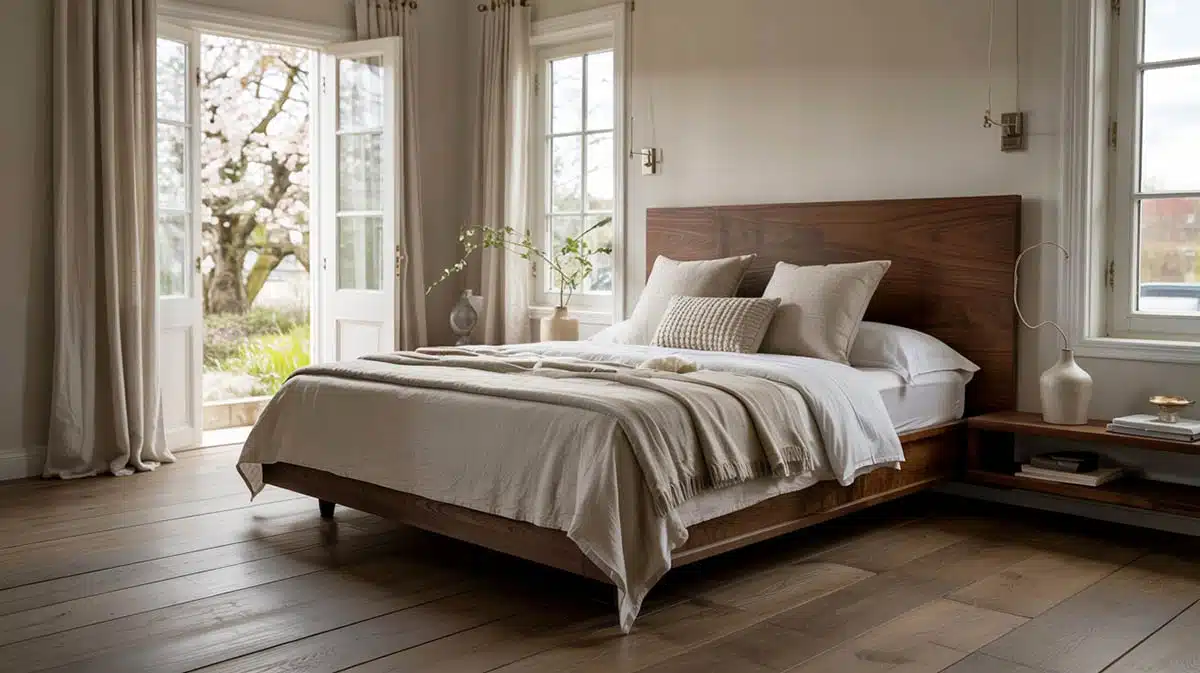
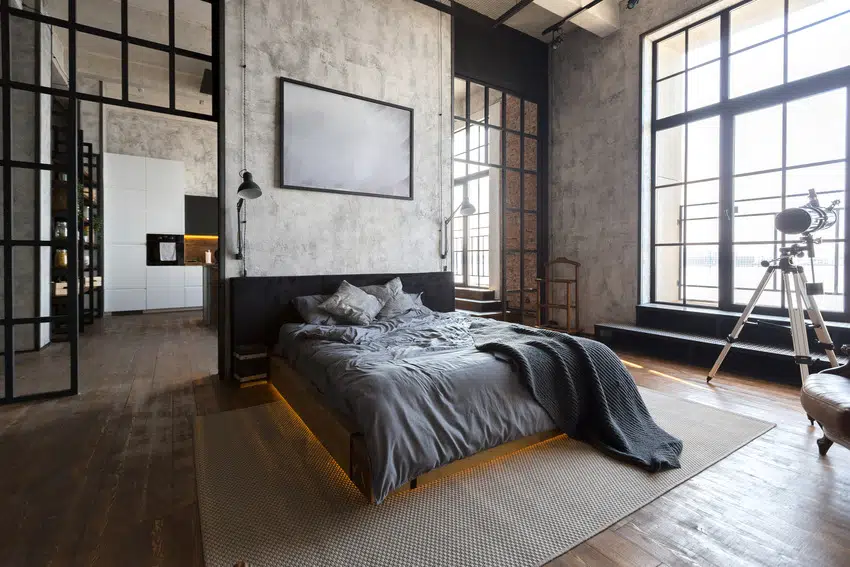
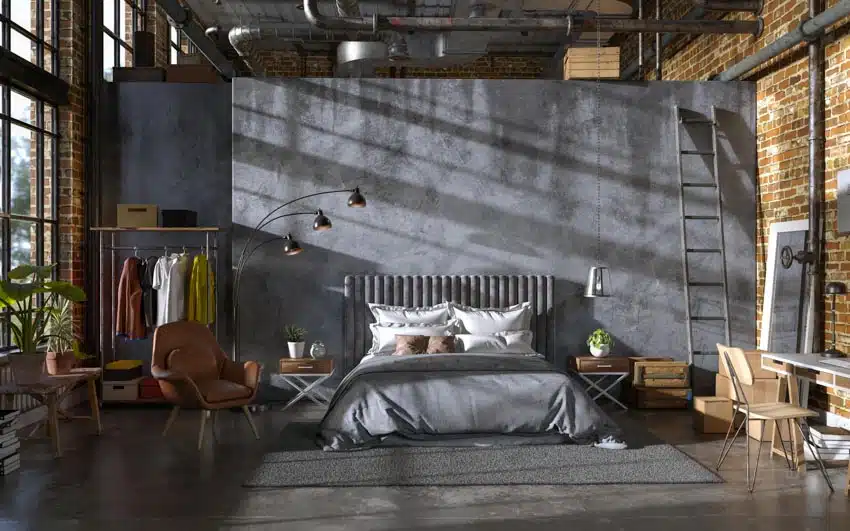
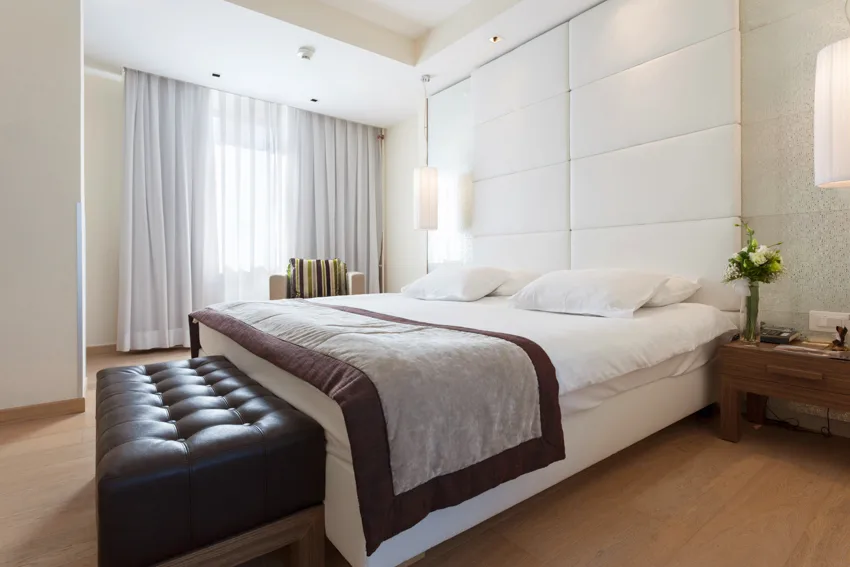
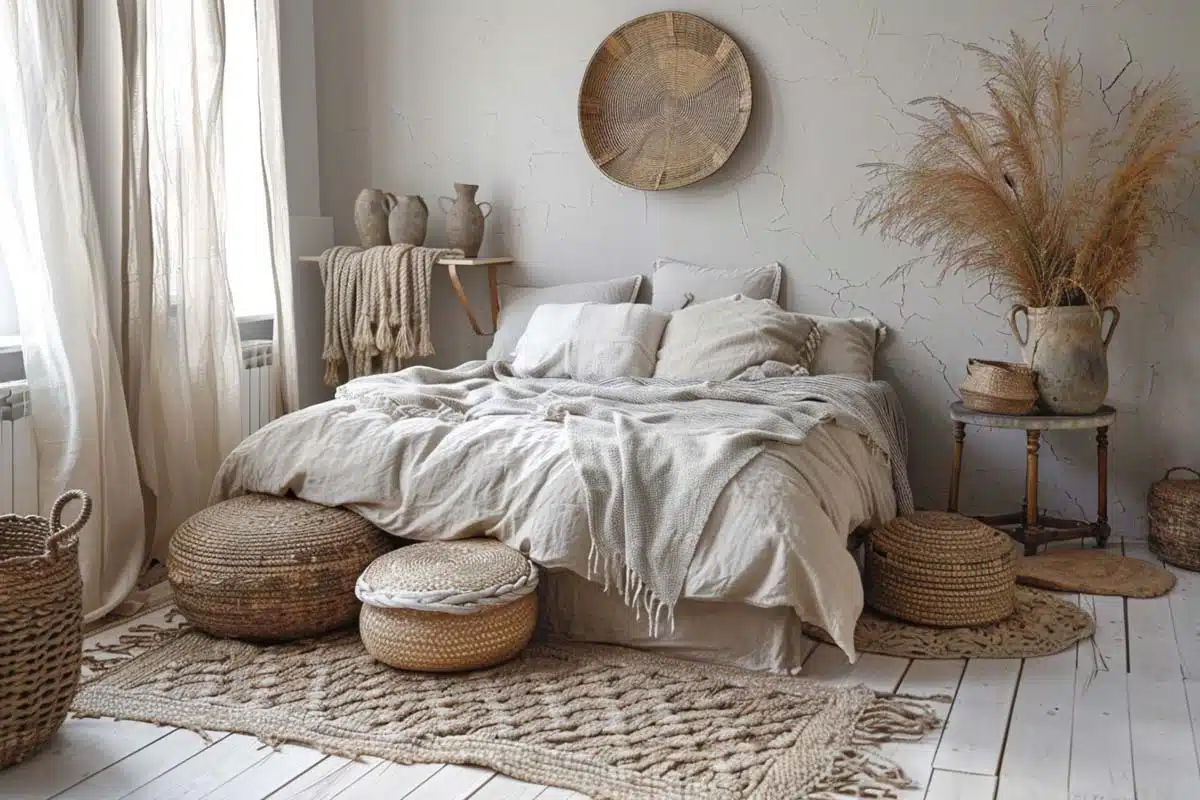
Really well-designed bedrooms are built around furniture placement, movement, scale, and style. An against-the-wall bed placement is often used since it provides breathing room and maximum utility. Some like to use a floating bed position because it anchors the composition and provides symmetry. Below, I’ll take a closer look at a bed against the wall design, Vs. a floating in the center layout to help you decide what’s best for your home.
Let’s start with a bed arrangement comparison so you can quickly see the major differences.

Upload a photo and get instant before-and-after room designs.
No design experience needed — join 2.39 million+ happy users.
👉 Try the AI design tool now
Comparison of a Bed Pushed Against the Wall Vs. Floating Bed
| Aspect | Bed Against Wall | Bed Floating in Center |
|---|---|---|
| Space Efficiency | Maximizes open floor area; great for small rooms. | Uses more floor area; best for medium–large rooms. |
| Access & Nightstands | One side may be blocked; a single nightstand is typical. | Access on both sides; balanced dual nightstands. |
| Visual Impact | Low visual weight; the room feels bigger and simpler. | Creates a focal point; hotel-like symmetry and presence. |
| Circulation | A walkway is usually along one side only. | Even predictable walk paths around the bed. |
| Storage Options | Under-bed storage is easy; wall shelves above headboard. | Room for benches/console at foot; less wall storage above head. |
| Lighting | One wall sconce or pendant may suffice. | Pair of sconces/pendants ideal; ceiling light centered over bed. |
| Acoustics & Drafts | Wall shields head from drafts/noise. | More exposed to windows/vents; plan HVAC & curtains. |
| Cleaning & Made-Bed Ease | Harder to make if a side touches the wall. | Easier to make and offers access to all sides. |
| Best For | Small rooms, kids’ rooms, studios, tight door/closet clearances. | Primary bedrooms, guest rooms with space, statement designs. |
Quick decision rules
Choose Against Wall if: You have a room width that is smaller and under 9′ (2.74 m) for a full or queen mattress, and a door or closet that swings into your ideal side clearance, or you need a desk/play area.
Choose Floating if: You can maintain 30″+ (76 cm) of space on both sides and 36″+ (91 cm) at the foot, and you want more symmetry, with two nightstands, and a curated look.

Bed Against Wall: Why Choose and How to Make it Work
Using a bed against the wall in the corner frees up floor space for a desk, dresser, or play area. This works best for a smaller space and is also great for kids’ rooms or studios where multi-use zones are important. Placing the bed with your head near the wall can also feel more cozy and protect you from drafts and noise.
There are a couple of things to watch out for with this setup. For instance, making the bed can be a bit trickier if one side touches the wall. In addition, two-person access can be uneven, causing one person to potentially need to crawl or slide out to access their side of the bed. If you’re placing it in the corner, you may be limited to one nightstand, which limits storage and the place to put an additional table lamp.
Design Tips For a Bed Against The Wall
- Headboard: Use a slim, full-width or wall-mounted headboard to widen the “bed zone.”
- Lighting: Offset a single sconce or a wall-mounted swing arm on the open side. Add a low-glare plug-in pendant over the pillow line.
- Storage: Choose lift-up or drawer platform beds; add a shallow shelf ledge along the wall for books/phone.
- Layout: Leave at least 12″ (30 cm) between the mattress and wall if at all possible. Using a narrow walkway with a shallow nightstand is preferable to a fully blocked side.
Bed Floating in the Center: Why Choose and How to Make it Work

By floating your bed in the center, you’ll benefit from hotel-style symmetry with an equal amount of space on either side. You can choose to have two nightstands and matching lights, which works best for couples. This arrangement also makes it easier for couples, since both have equal access from both sides. In addition, there’s a predictable flow with the same spacing, making it easier to navigate to the closet and bath.
On the other hand, you will need a larger space, and this type of floor plan may feel cramped if you don’t have enough room. You’ll also want to consider the placement of the HVAC vents, windows, and glare, which may need extra planning.
Whenever possible, center your bed on the wall opposite the bedroom door so you see the bed and nightstands as you walk in. – Andrea DeRosa, Co-Founder & Principal Designer at Avenue Interior Design.
Exact Clearance Guidelines
To help you with deciding which placement is best, your room must have enough clearance to move comfortably. Designers follow a standard range for spacing for furniture placement so the room feels balanced and there is space to move freely. Below are some general guidelines to reference.
| Item | Minimum | Comfortable / Notes |
|---|---|---|
| Side clearance (each side) | 24″ (61 cm) | 30″ to 36″ (76 to 91 cm) |
| Foot clearance | 30″ (76 cm) | 36″ to 42″ (91 to 107 cm) |
| Nightstand width (each) | — | 18″ to 24″ (46 to 61 cm) typical |
| Bench at the foot | 12″ to 18″ (30 to 46 cm) from bed | Keep a 30″+ (76+ cm) walkway from the bench |
| Closet doors (clear area) | 36″+ (91+ cm) | Measured in front of the closet |
| Entry door swing buffer | 10″ to 12″ (25 to 30 cm) | Beyond the full door arc |
Mattress Sizes (Handy Reference)
| Mattress | Inches | Centimeters |
|---|---|---|
| Twin | 39″ × 75″ | 99 × 191 cm |
| Full / Double | 54″ × 75″ | 137 × 191 cm |
| Queen | 60″ × 80″ | 152 × 203 cm |
| King | 76″ × 80″ | 193 × 203 cm |
| Cal King | 72″ × 84″ | 183 × 213 cm |
Typical Room Size Fit
| Bed Size | Tight Fit | Ideal Fit |
|---|---|---|
| Queen | 10′ × 10′ (3.05 × 3.05 m) | 10′ × 12′ – 11′ × 12′ (3.05 × 3.66 – 3.35 × 3.66 m) |
| King | — | 12′ × 12′ – 13′ × 13′ (3.66 – 3.96 m square) |
Common Room Scenarios
- Narrow room (10′ wide or less) with queen: Place against the wall or off-center with one side at 24″ and the other at 30″+.
- Square room (12′ × 12′) with king: Float it and you’ll likely still keep 30″ to 36″ all around the sides.
- Door and closet on adjacent walls: Float it so both inswings keep 36″+ or space free.
- Window wall with a view: Float it to face the view. Install blackout shades and a sheer curtain layer to manage the extra light.
- Kids/teen room: Position it against the wall to create play or desk space. Add a wall shelf to work as a nightstand.
Step-by-step Layout Method
To make sure you can get all of your furniture to fit, you should map it out before moving anything. To start, mark your bed footprint and tape out the mattress size plus the headboard’s thickness. Ensure you have at least 30″ minimum pathways to the closet, bath, and the window. Place your nightstands and make sure each one fits 18″ to 24″ wide with access to reach the lamp. Test your room’s door arcs by opening them fully to verify 36″+ in front. Center your rug under the front two-thirds of the bed.
For a Feng Shui–friendly layout, you can use the following tips. If you’re placing against a wall, position so you can still see the door. If floating, keep the headboard against a solid wall rather than up against a window if possible.
Design Tips
- Rug sizing: Use an 8′ × 10′ rug under a queen, a 9′ × 12′ under a king. Place the rug so it starts under the nightstands and extends 18″ to 24″ beyond the bed’s foot.
- Lighting: Center the ceiling fixture over the bed; add two sconces or pendants 6″–9″ above the nightstand surface, 8″–12″ from the headboard edge.
- Headboard height: Go for a height of 48″ to 54″ for queen; go taller, up to 60″+ in rooms with 9′ ceilings and a floating layout to anchor the bed.
- Foot furniture: An upholstered bench measuring 48″ to 60″ wide adds both style and function. Keep a 12″ to 18″ gap to the bed and 30″+ to the walkway further out.
FAQs
Can I float a bed in a small room? Yes, you can if you keep 24″ or more on both sides and 30″ at the foot. If not, move it against or near a wall.
What if a window is centered where my headboard would go? Use a solid headboard with blackout shade and curtains to treat the window as a backdrop.
Are platforms better for against-wall beds? Often this is the case. You can use models with drawers or lift storage to compensate for lost nightstand space and keep the clutter down.
To showcase highly specific designs, some images on this website use advanced AI-generation software to illustrate ideas and room inspiration. See our editorial policy to learn more.