Modern Driveways (Materials to Use, Tips & 25 Stunning Design Ideas)

In this gallery of modern driveways, you’ll find a variety of materials, designs, and ideas for inspiration. A custom driveway design can enhance your home’s beauty and curb appeal. These pictures feature a variety of driveway styles and materials to showcase some of the types of surfaces popular today. Currently, asphalt, concrete, gravel, brick pavers, slate, and cobblestone are some of the most popular types of driveway materials in use for luxury homes. Each type of material has pros and cons, which will be discussed below.
Modern Driveway Materials And Design Tips
Selecting a driveway material today is about far more than simply finding a surface to park on—modern options let you tailor appearance, durability, environmental impact, and maintenance requirements to fit your climate and your design goals. Below is an expanded look at popular materials, each explained from a designer’s perspective, so you can weigh their strengths and limitations.
Cobblestone – Cobblestone driveways instantly evoke old‑world charm and come in a surprising range of colors—from warm beige and taupe to dramatic charcoal and even muted greens. Because the individual stones are hand‑set, labor costs are high and the surface is intentionally irregular, making snow removal tricky in cold climates. Designers often specify cobblestone as an accent band or apron (near the street or garage door) rather than paving the entire drive, pairing it with a smoother material—such as concrete pavers—for cost control and easier maintenance. A high‑quality polymeric sand between joints reduces weed growth and keeps stones from rocking.
Concrete – Concrete remains the workhorse of modern driveways; its higher installation cost over asphalt is offset by a 30‑ to 40‑year lifespan when properly maintained. Unlike decades past, plain gray slabs are no longer the norm. Color can be integrally mixed into the pour, acid‑stained afterward for layered patina, or dusted with powdered pigments for subtle variegation. Surface treatments range from broom‑finished for slip resistance to stamped patterns that mimic stone or wood. In freeze–thaw zones, request an air‑entrained mix and seal every two to three years to resist de‑icing salts. If you crave extra curb appeal, designers frequently score large concrete panels into geometric grids and infill joints with turf or polished river rock for a sleek, modern take on the classic motor court.
Permeable Pavers – Permeable interlocking concrete pavers (PICP) sit atop a gravel sub‑base that allows rainwater to filter into the soil rather than running into storm drains—ideal for municipalities with strict runoff codes. The pavers come in modular rectangles and squares that can be mixed to create herringbone, basket‑weave, or stacked‑bond patterns. Though the upfront cost is higher than standard pavers, homeowners often recoup it through reduced drainage requirements or storm‑water fees. Annual vacuum‑sweeping (rather than power‑washing) prevents the joint aggregate from washing away.
Exposed‑Aggregate Concrete – This material hides everyday tire marks and oil drips better than smooth concrete. Pea gravel or crushed quartz is seeded into the surface, then the top layer of cement paste is washed off to reveal a textured, slip‑resistant finish. Exposed aggregate pairs well with minimalist or mid‑century façades and is less prone to visible cracking because hairline flaws are camouflaged by the stone mix.
Asphalt – Traditional hot‑mix asphalt remains the most budget‑friendly solid surface, but its deep‑black color can fade to gray and soften during extreme heat. Polymer‑modified “superpave” mixes and chip‑seal overlays extend longevity and introduce color flecks that disguise aging. For an eco‑minded twist, porous asphalt incorporates larger aggregate to create voids for water infiltration—similar in concept to permeable pavers but with a seamless black appearance.
Tar and Chip – Tar and chip driveway are primarily constructed with asphalt in liquid form and stone. They can be inexpensive to install and provide a lot of traction for cars. The downside to tar and chip is that it can require maintenance if you live in an area with snow removal requirements. Otherwise, they may need to have another layer added after about 7 to 10 years of use. Another form similar to this is a crushed shell driveway, which uses little pieces of clam, scallop, and oysters to create a more eco-friendly choice.
Resin‑Bound Gravel – With resin‑bound systems, washed aggregate is coated in a clear, UV‑stable resin and troweled to a ¾‑inch‑thick layer over a concrete or asphalt base. The result is a smooth, stone‑carpet look that remains permeable, so puddles vanish quickly. Resin‑bound gravel comes in neutral stone colors, glass‑chip blends for sparkle, or even glow‑in‑the‑dark additives along driveway edges for subtle night lighting. Pricing is comparable to stamped concrete, and periodic power‑washing keeps the surface looking fresh.
Porcelain Pavers – Porcelain tiles aren’t just for kitchens or bathrooms, these outdoor‑rated ¾‑inch porcelain pavers now span driveway loads when installed with pedestal supports over reinforced concrete. They’re stain‑proof, fade‑proof, and available in luxury looks like vein‑cut marble or warm woodgrain. Expect to pay near the top of the material spectrum, but maintenance is virtually zero beyond occasional sweeping.
Reinforced Grass or Gravel Grids – For homeowners prioritizing green space, plastic or concrete grid systems offer a hybrid solution: cells filled with topsoil and turf seed or decorative gravel create a drivable surface that visually blends into the landscape. These grids excel on secondary parking pads, curved spur drives, or overflow guest spaces. Keep in mind that healthy turf requires irrigation and periodic fertilizing, so factor ongoing lawn care into your decision.
Modern Driveway Materials Comparison
Most driveway decisions come down to a trade off of some kind. The materials that look best are rarely the ones that work best with a snowplow, and the ones that last 80 years cost more than the car parked on them. Here’s how the common options actually stack up, with installed prices for 2026. One thing worth knowing before you read the cost column: the base under the surface matters more than the surface itself. A properly compacted six inch gravel base will outlast a cheap install of any material on this list.
| Material | Durability | Lifespan | Cost per Sq Ft | Climate It Suits Best |
|---|---|---|---|---|
| Gravel | Low. Shifts, ruts and needs raking, but it can’t crack. | Indefinite with top ups every 1 to 2 years | $1 to $3 | Rural and dry. Long approaches where paving is unaffordable. Skip it if you plow. |
| Tar and Chip | Moderate. Great traction, but the surface sheds stone over time. | 15 to 25 years, new layer around year 7 to 10 | $2 to $5 | Mild winters and sloped drives. Snow removal tears it up. |
| Asphalt | Good. Flexes with frost instead of cracking. Softens in real heat. | 15 to 30 years, reseal every 3 to 5 | $5 to $10 | Cold north and freeze thaw country. The default for a reason. |
| Poured Concrete | Very good. Rigid, so it cracks at the joints rather than flexing. | 30 to 40 years | $6 to $12 | Mild to hot, south and west. Up north ask for an air entrained mix and seal it. |
| Exposed Aggregate | Very good. Hides oil drips and tire marks better than smooth concrete. | 30 to 40 years | $8 to $15 | Hot and sunny, or anywhere rainy. The texture is genuinely slip resistant. |
| Concrete Pavers | Excellent. Individual units move with the ground and swap out one at a time. | 25 to 50 years | $10 to $20 | Freeze thaw regions. Nothing handles heaving soil this gracefully. |
| Brick Pavers | Excellent. Color runs through the brick, so chips don’t show. | 25 to 50 years and up | $12 to $25 | Temperate and traditional. Handles frost fine with a good base. |
| Permeable Pavers | Excellent, with a catch. Joints need vacuum sweeping once a year. | 20 to 30 years | $12 to $25 | High rainfall and towns with stormwater rules. Can lower runoff fees. |
| Slate and Flagstone | Good, though thin stones crack under vehicle weight. | 25 to 40 years | $15 to $30 | Dry climates only. Wet slate is slick, and a sloped drive makes it worse. |
| Cobblestone | Outstanding. Effectively permanent. The joints are the weak point, not the stone. | 75 to 100 years and up | $20 to $40 | Temperate. The uneven surface fights every shovel and plow blade. |
Installed costs, 2026. Regional labor rates swing these numbers by 20 percent or more, and permits typically add $50 to $200.
Reading the Chart: If you live where the ground freezes, the flexible options win. Asphalt and pavers both move with heaving soil. Poured concrete doesn’t, which is why northern driveways so often develop that one long crack down the middle around year twelve. If you live somewhere hot and dry, flip this. Concrete and exposed aggregate hold up beautifully, and you never have to think about de icing salt. And if you’re comparing the cheap end to the expensive end, run the math per year instead of per square foot. Gravel at $2 that you top up forever isn’t necessarily cheaper than pavers at $15 that outlive your mortgage. It just spreads the pain differently.
Designer Recommendations
Match material to architecture: Cobblestone or exposed aggregate complements traditional and rustic homes, while large‑format concrete slabs or resin‑bound gravel suit modern minimalist façades.
Plan for climate: Freeze–thaw cycles demand materials with built‑in drainage or flexible joints (asphalt, permeable pavers). Intense UV exposure favors color‑fast surfaces like porcelain or stained concrete.
Blend textures for interest: Use contrasting borders—such as a charcoal paver frame around a lighter concrete field—to break up expanses and tie driveway colors to roofing, shutters, or stone veneer.
Think long‑term maintenance: Smooth surfaces simplify snow removal; permeable options may need annual vacuuming; resin systems resist oil stains but cannot be spot‑patched easily.
Factor lighting and edges: Low‑profile LED bollards or recessed strip lights along drive edges enhance safety and elevate nighttime curb appeal, regardless of material.
Modern Driveway Ideas
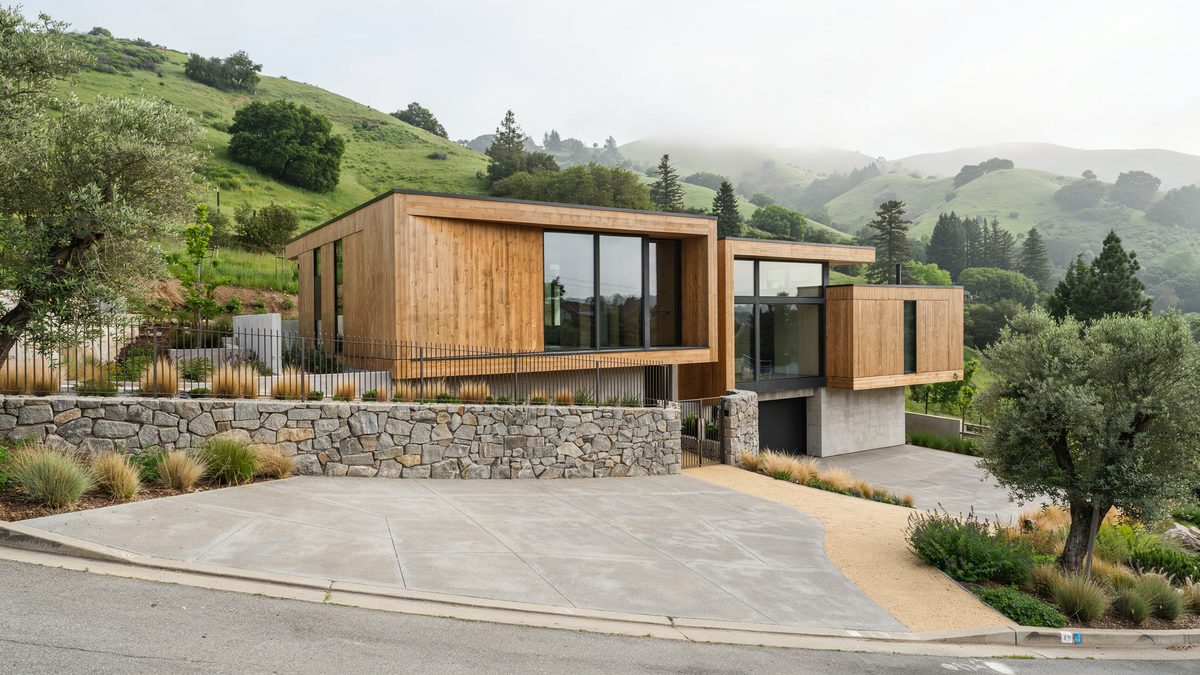
A contemporary hillside home with a stacked stone retaining wall and an irregular square concrete driveway. Breaking the pour into large slabs, rather than one uninterrupted sheet, gives the eye something to follow and hides the control joints every concrete drive needs anyway.
Circular Driveways
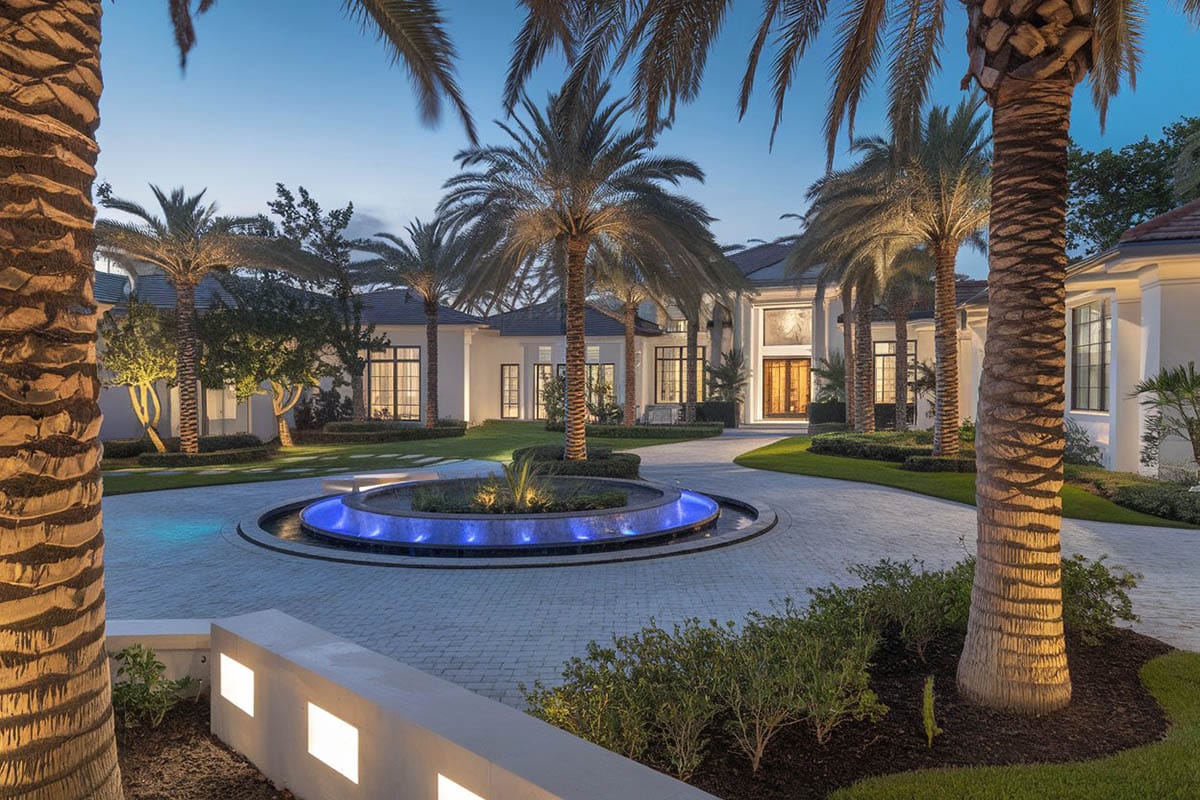
This gorgeous luxury home features an amazing circular driveway with pavers that are covered by a sealer to give it a high glossy sheen. The drive wraps around a stunning water feature with multiple fountains and is surrounded by a lush tropical garden with a walkway leading to the home’s front entrance.
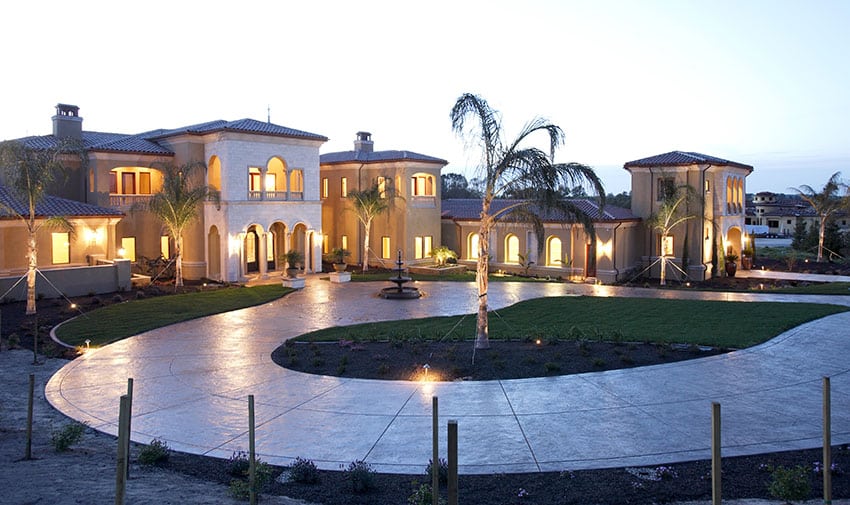
This luxury home features a beautiful stamped concrete circular driveway that winds around a large central fountain. The landscaping surrounding the circular driveway consists of grass, flowering plants, and tropical palms.
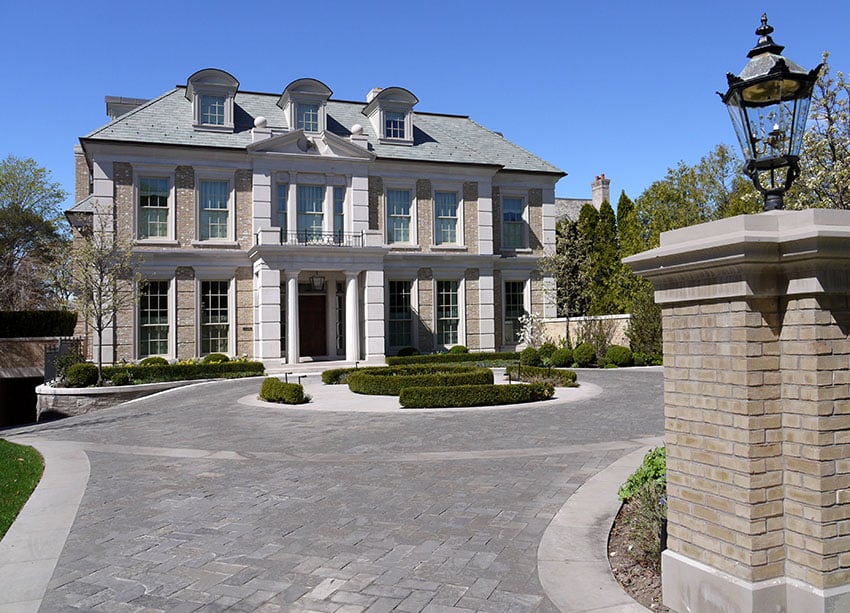
The prestigious estate home has a circular driveway with gray pavers and concrete that wraps around a central island with small hedges. The driveway also slants off to an underground garage to the side.
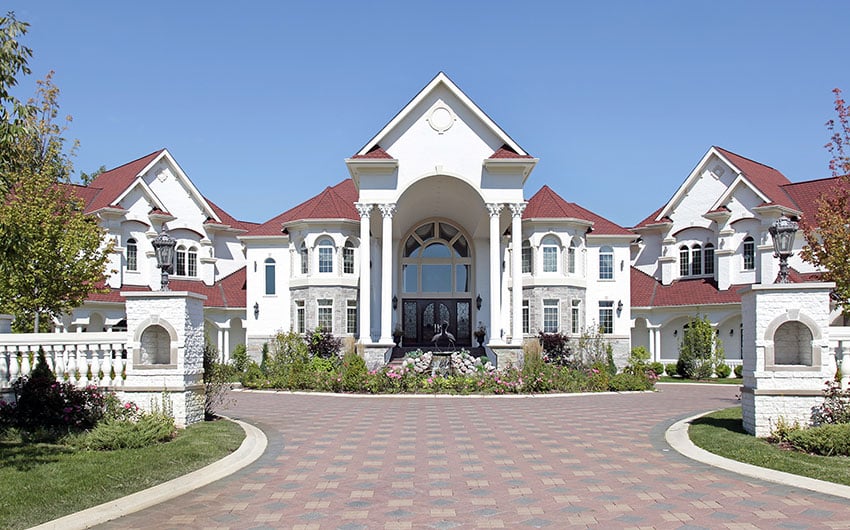
Custom design circular driveway using different color brick pavers with concrete side forms.
Paver Driveway
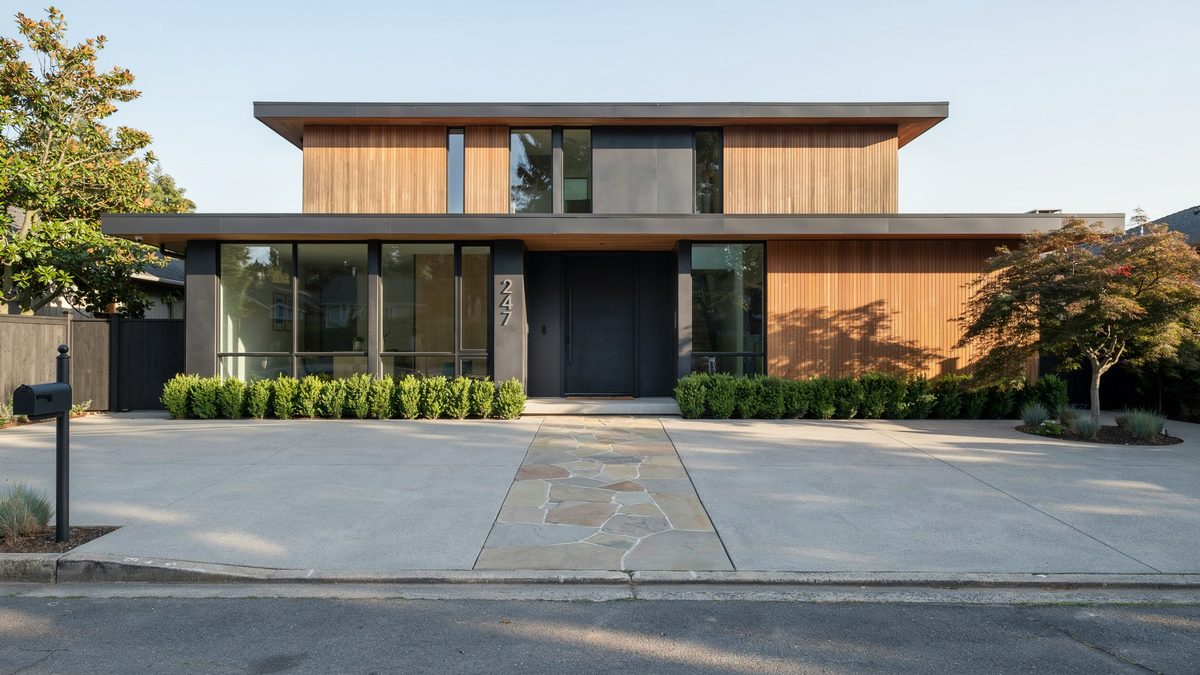
This driveway pairs a poured concrete field with a band of irregularly shaped pavers set down the middle. It is a good trick if you like the look of a full paver drive but not the price of one.
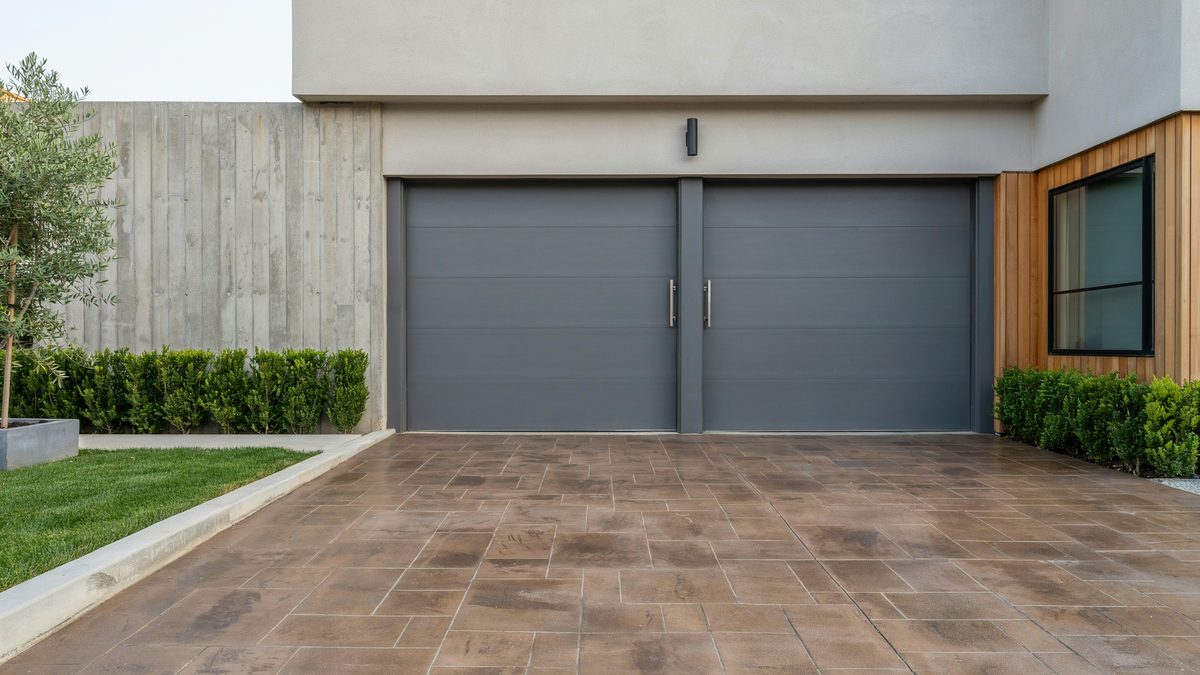
Brown concrete pavers laid in a random pattern run right up to the garage doors here. A random layout hides the occasional cut paver far better than a strict grid does, which matters on a drive that has to bend around a garage apron.
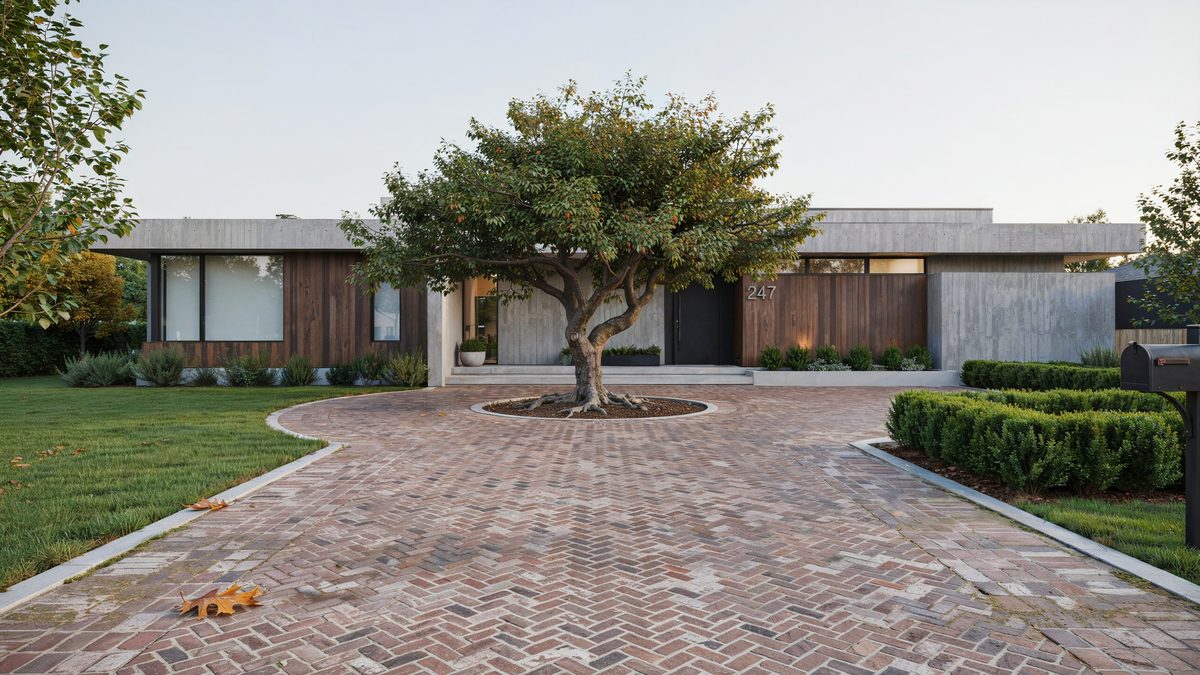
A brick paver driveway built around a mature tree left standing in a circular opening. One can only speculate that the tree was there before the house, and the owner liked it enough to pave around it.
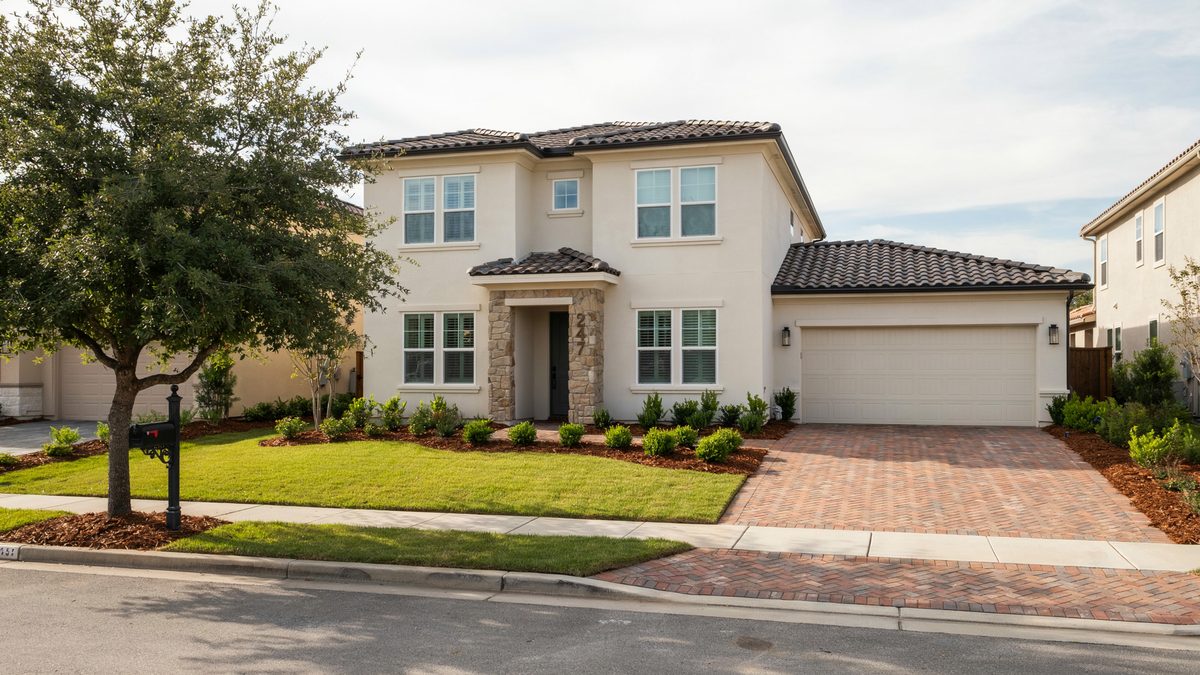
Brick pavers turn up constantly on modern driveways. This stucco home uses a warm red brick drive against a cream facade and a clipped green lawn, and the two colors do more for the curb appeal than any amount of landscaping would.
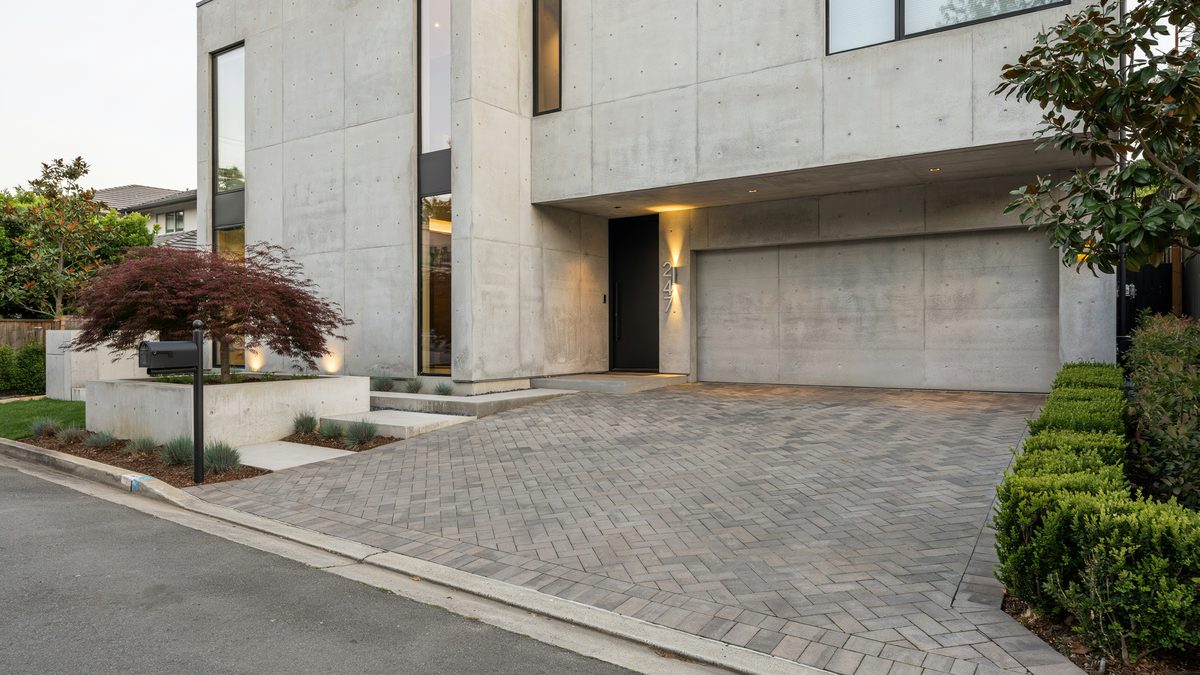
An interlocking paver driveway with stones fitted tightly in a herringbone pattern. Sand swept between the stones keeps them from shifting, and as long as the base underneath is built properly, the pavers will not settle or heave through freeze and thaw cycles.
Brick Driveway
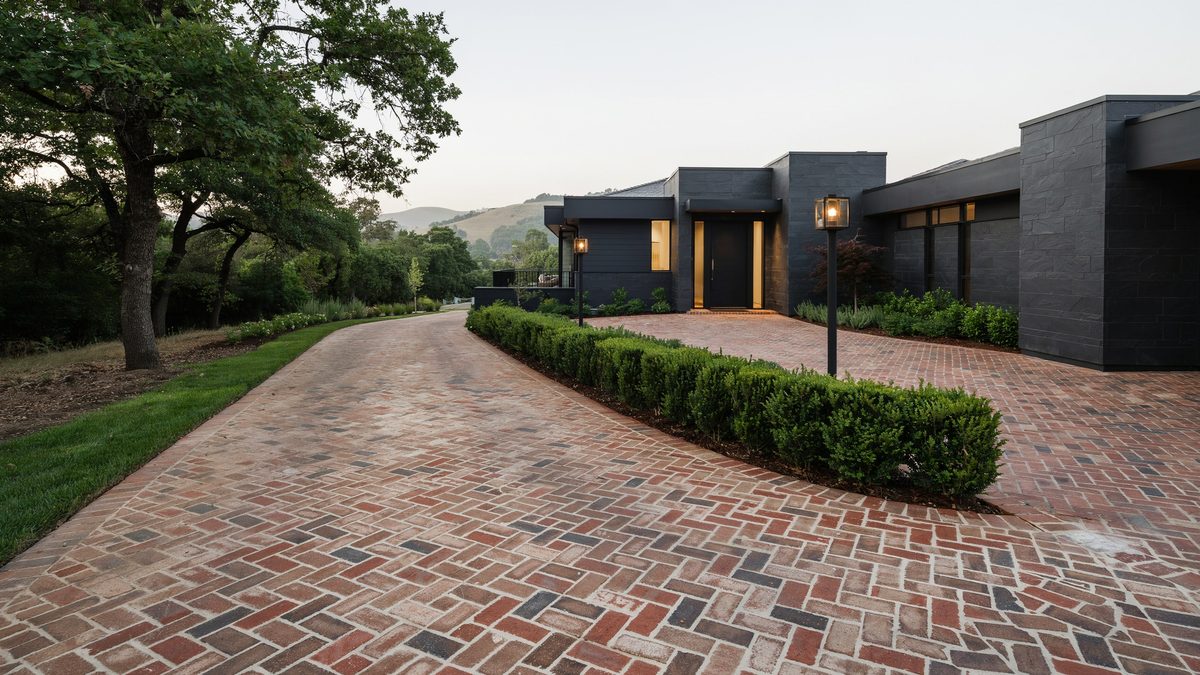
Red and charcoal accent brick winds its way toward the house past a low hedge. Irregularly sized interlocking bricks make a classic look easy to pull off, since nothing has to line up perfectly.
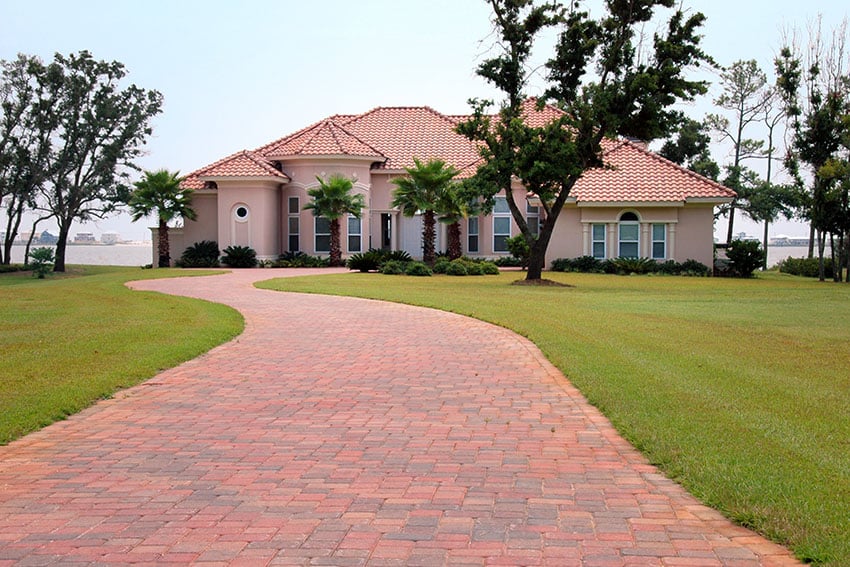
Winding brick driveway leading to a waterfront home.
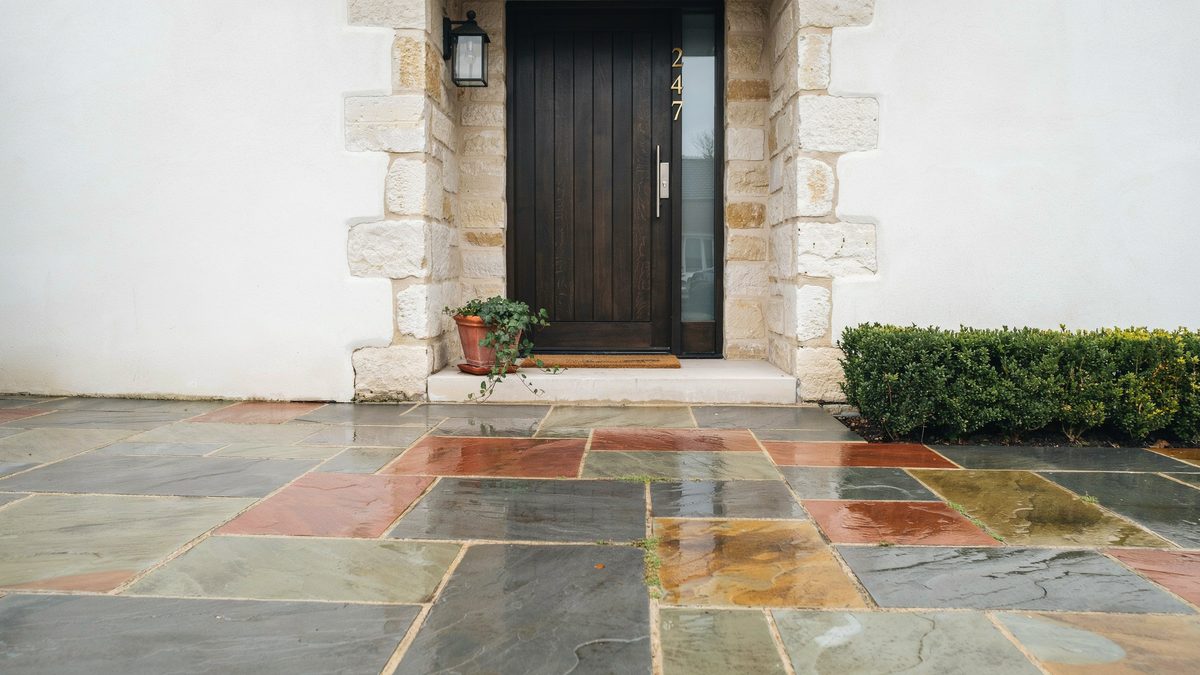
Slate paving at a front entry, with irregularly cut stones in rust, gray and green. Slate is beautiful wet, which is also the problem: it gets slippery, so it is a poor choice for a sloped drive or a rainy climate.
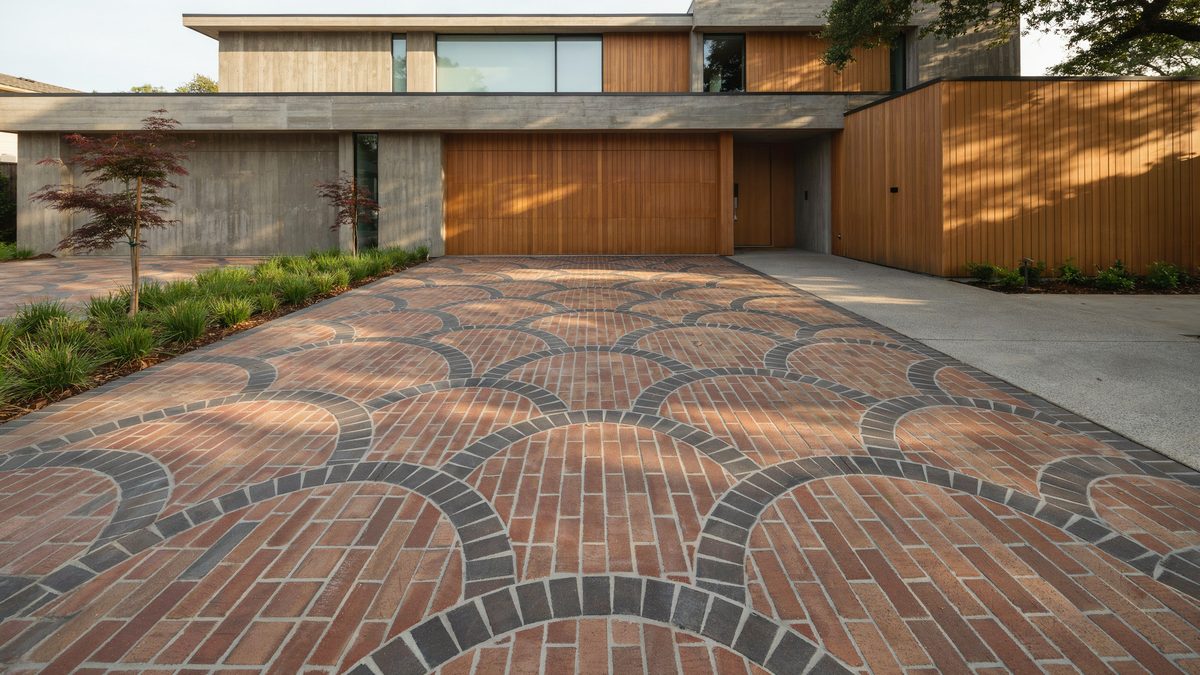
Custom brickwork laid in overlapping semi circles, each arc outlined in charcoal brick. It is a lot of labor, but a pattern like this gives an otherwise plain rectangle of driveway real presence.
Concrete Driveway
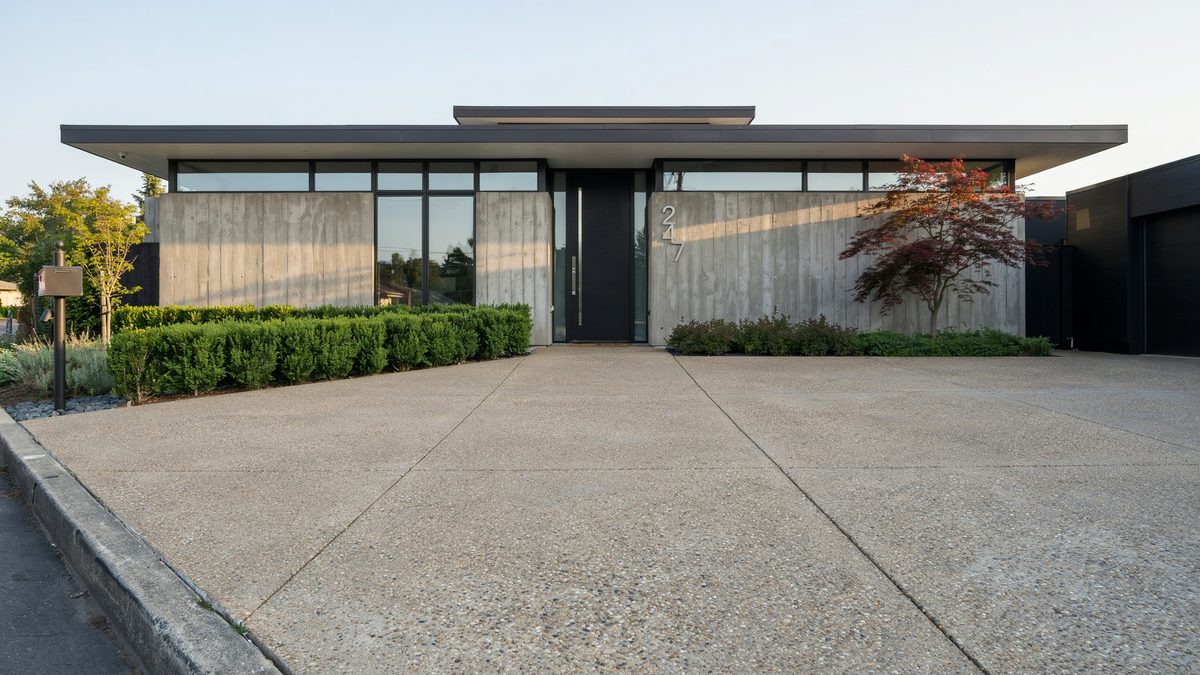
A concrete and aggregate driveway at a low, flat roofed home. The style is usually called exposed aggregate, since the stone chips are left partly proud of the surface. It hides tire marks well and the texture adds grip.
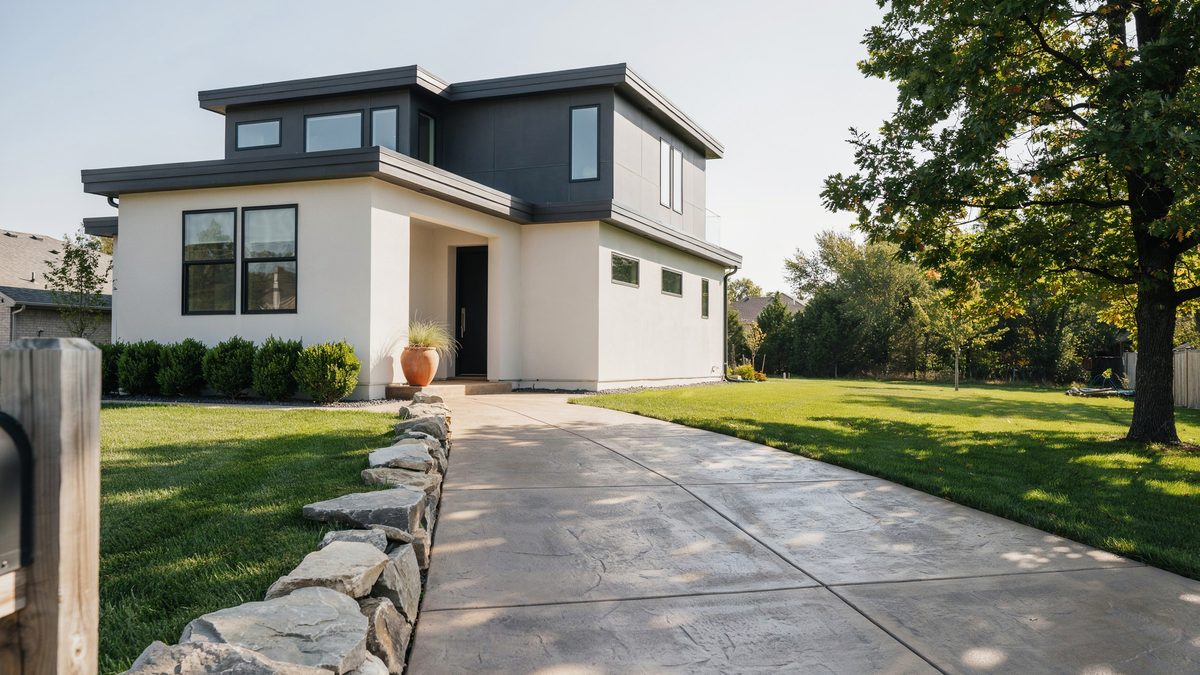
Smooth concrete poured in large squares, with a rough rock border separating the drive from the lawn. The joints between panels help with drainage and give the cracks somewhere predictable to go.
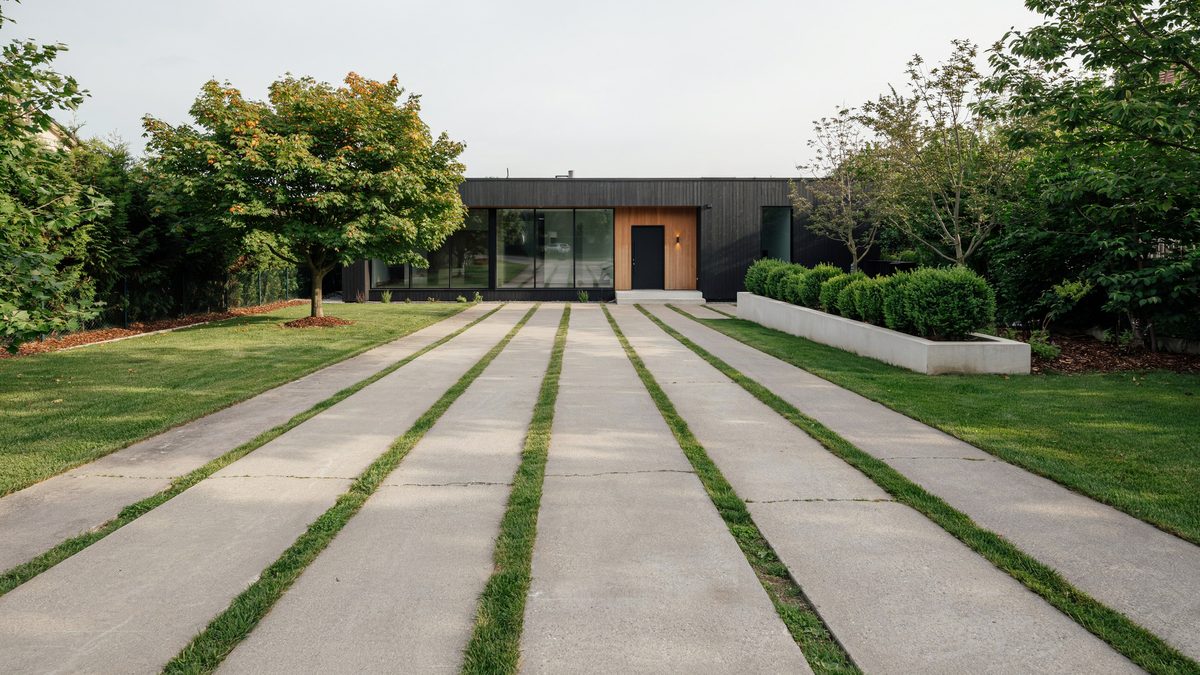
Concrete strips with grass growing between them make a pattern that is definitely head turning. It is also the only driveway design where someone can reasonably be asked to go mow the driveway.
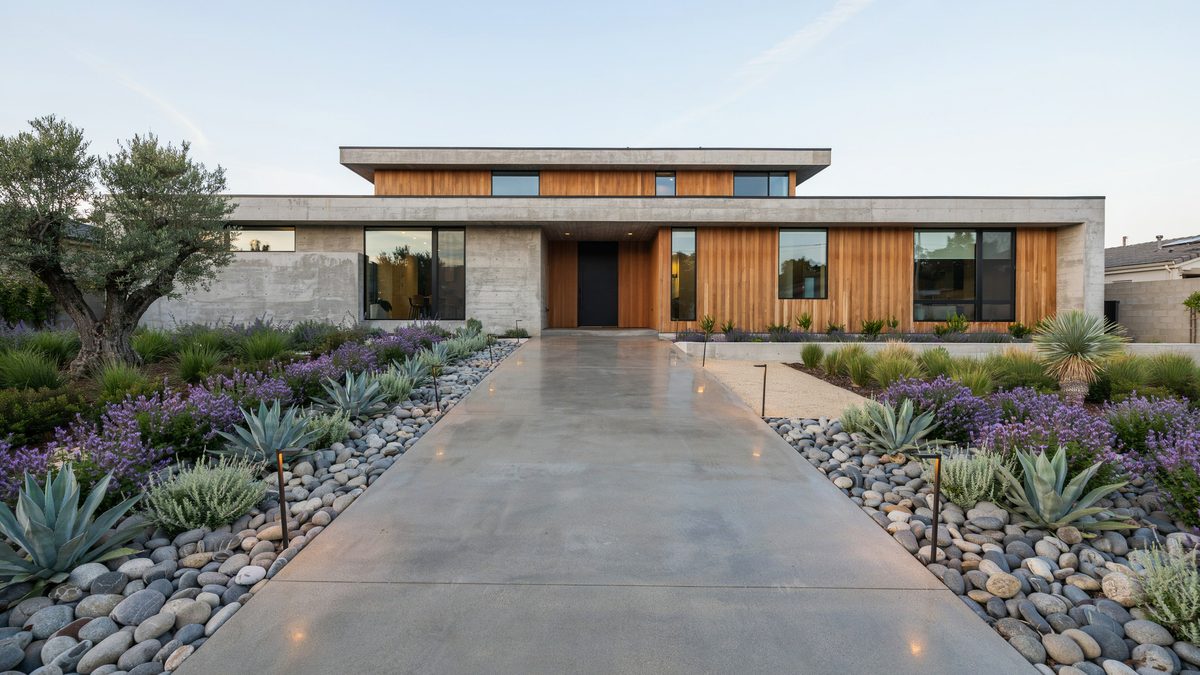
A concrete driveway leading to a modern home, edged with river rock and drought resistant plants. Low water planting along a drive is worth considering anywhere the strip beside the pavement is a pain to irrigate.
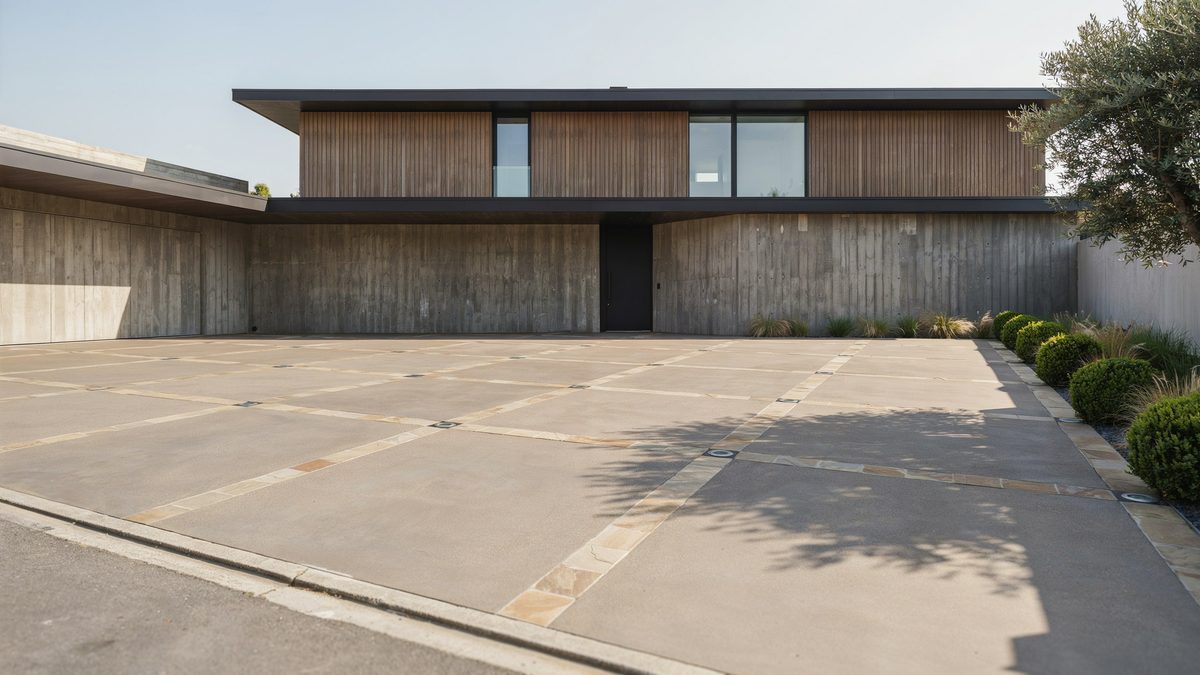
Poured concrete scored into a wide geometric grid with pale stone infill panels. The layout echoes the horizontal lines of the house, which is what keeps it from reading as busy.
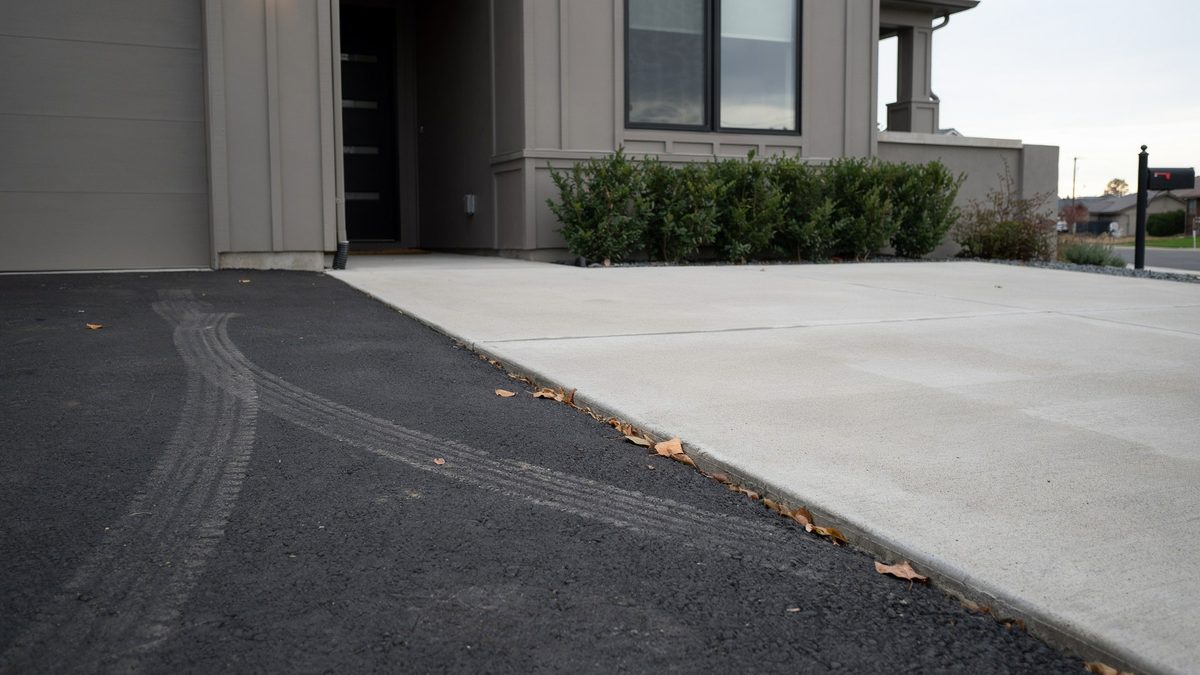
Here asphalt runs up to a poured concrete apron near the garage. Splitting the two materials this way puts the harder wearing surface where cars turn and sit, and keeps the cheaper one on the long approach.
Gravel Driveway
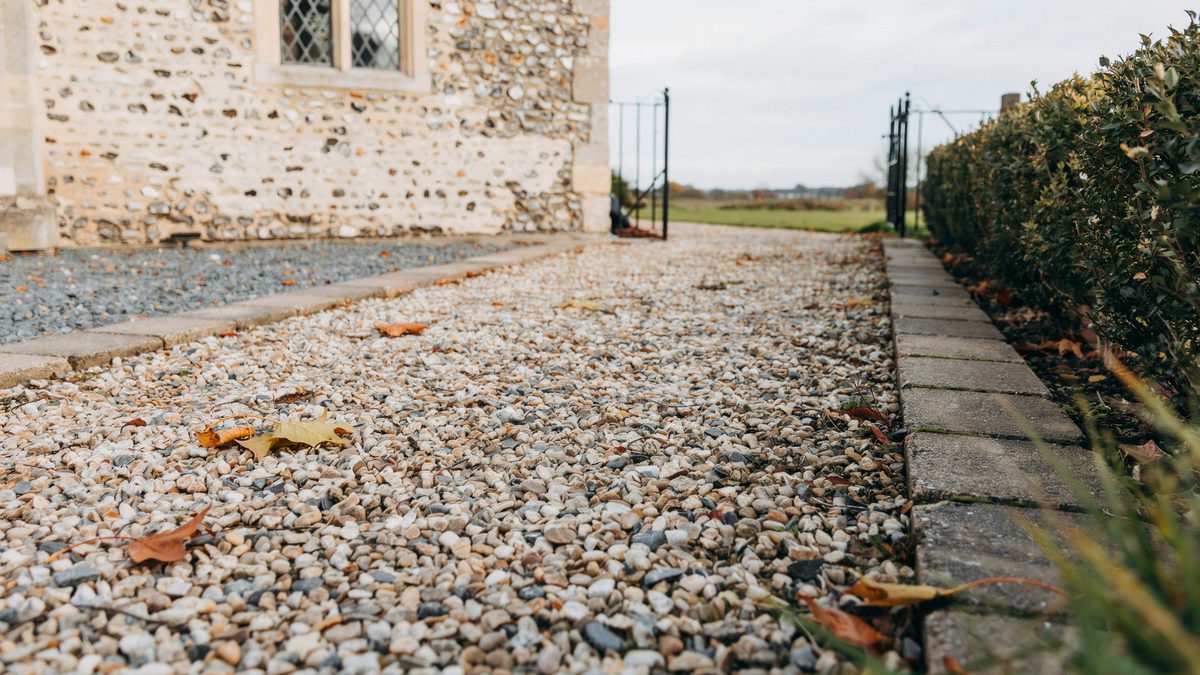
Loose gravel framed by gray paving stone edging at a countryside house. The stone border is doing real work here, holding the gravel in place so it does not migrate into the flower beds after every rain.
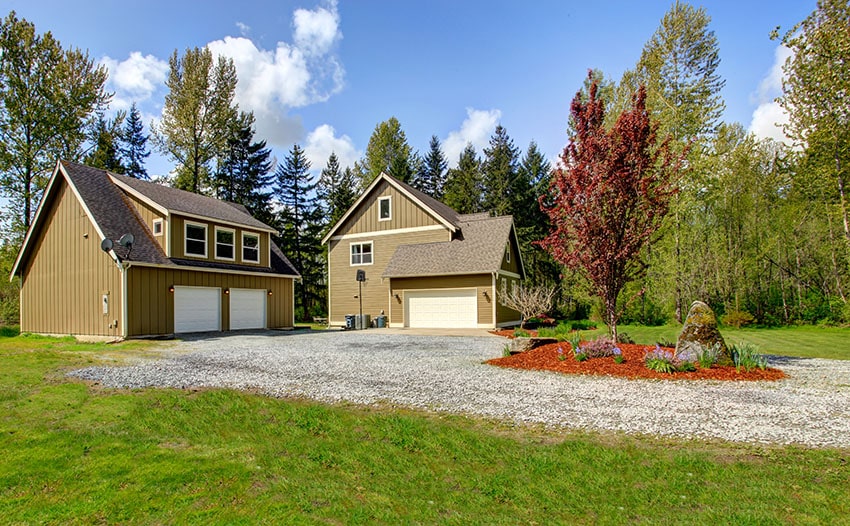
Loose gravel driveway at country home. Before you spread gravel to create a driveway like this,, prepare the ground. You’ll want to make sure you have a hard surface without any topsoil. In addition, make sure your surface has adequate drainage and side forms to keep the gravel from spreading outward.
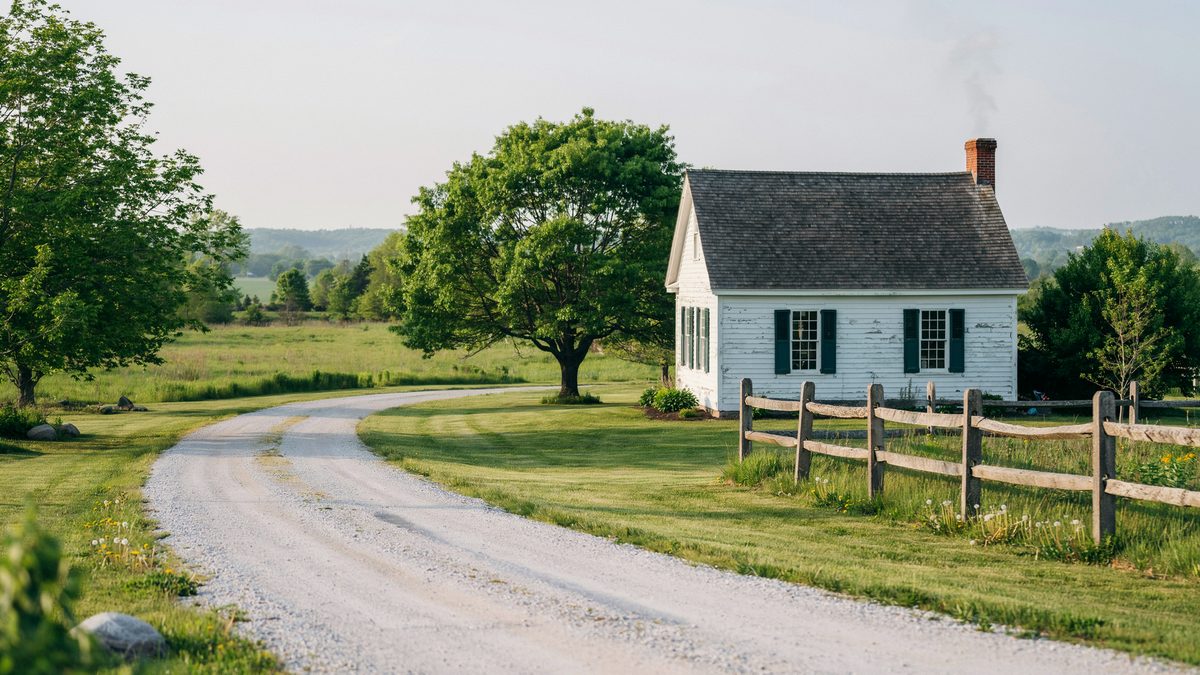
A gravel drive curving across a meadow to a small clapboard cottage, with a post and rail fence along the yard. On a long rural approach, gravel is often the only material that makes any financial sense.
Cobblestone
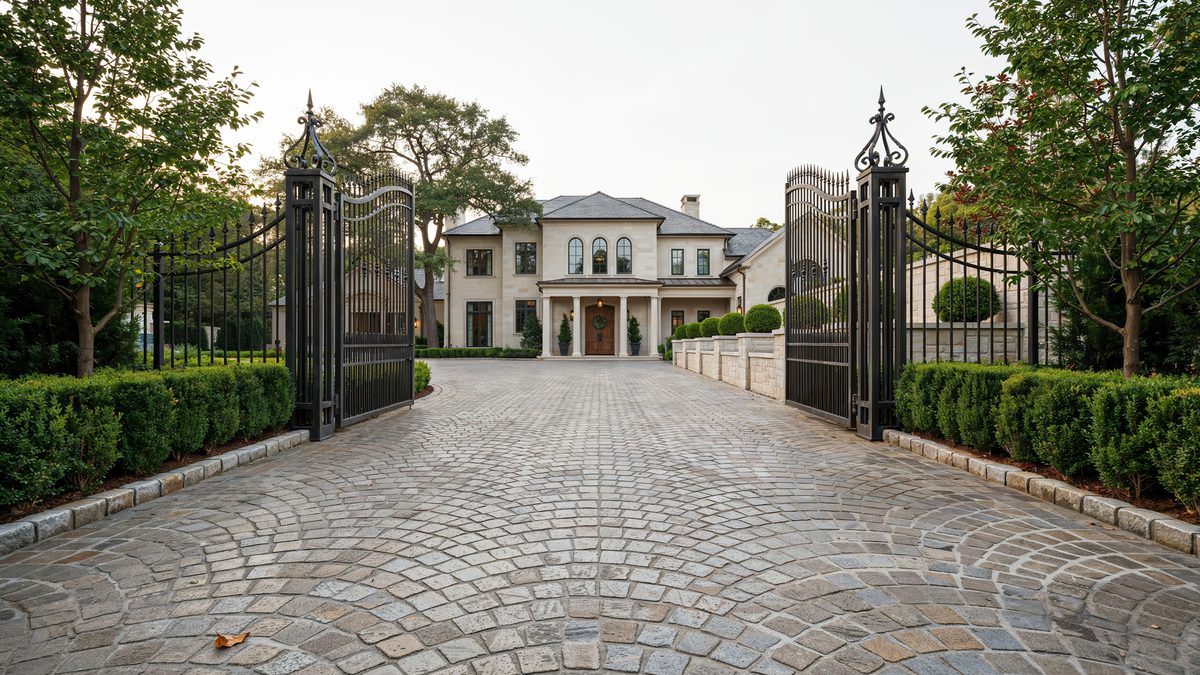
A cobblestone paver driveway leads past open wrought iron gates and clipped hedges to this home’s grand entrance. Also known as Belgian block, cobblestone reads as old world the second you pull in, and the fan pattern here keeps a very wide drive from feeling like a parking lot. Cobblestone is not what one might expect for a modern material, but they hold up surprisingly well and look beautifully when paired with more contemporary homes.
Tar and Chip Driveway
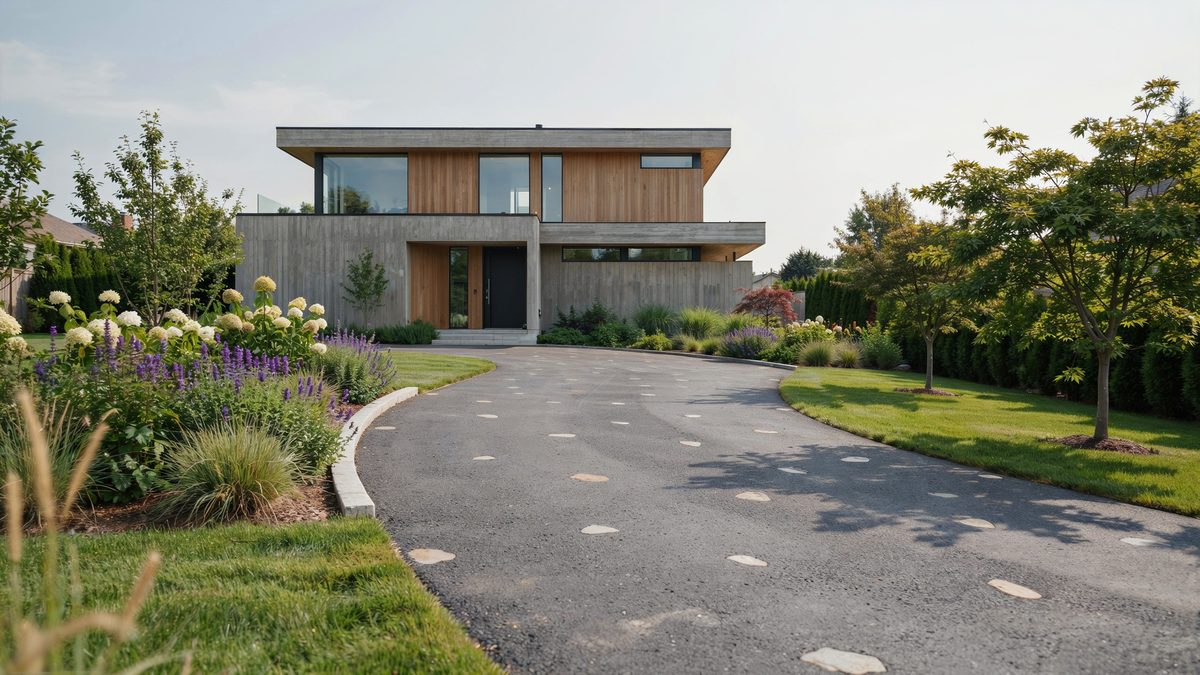
A curving tar and chip driveway with grassy islands and a flowering garden bed alongside. The loose stone surface gives cars plenty of traction, and the curve slows arrivals down enough to actually notice the planting.
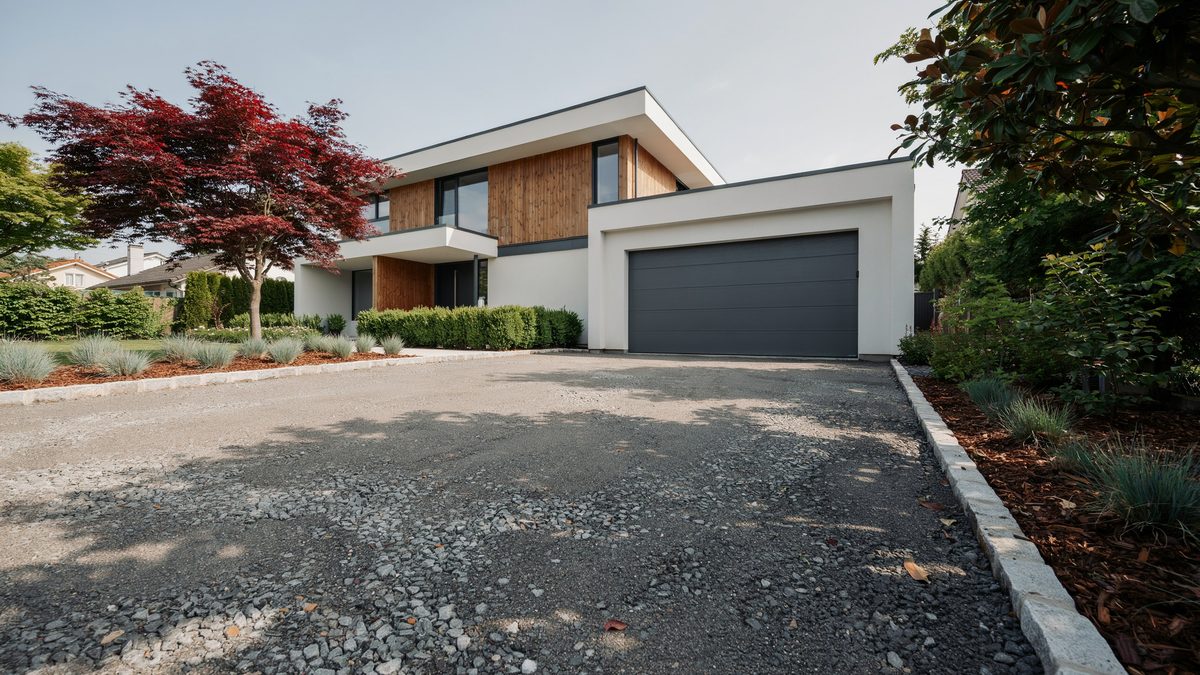
Another modern home with tar and chip paving, this one running straight back to a two car garage. It is an excellent alternative to a traditional asphalt driveway when you want texture instead of a flat black surface.
Visit this page to see more types of driveways for the home.
To showcase highly specific designs, some images on this website use advanced AI-generation software to illustrate ideas and room inspiration. See our editorial policy to learn more.